Up next in 10



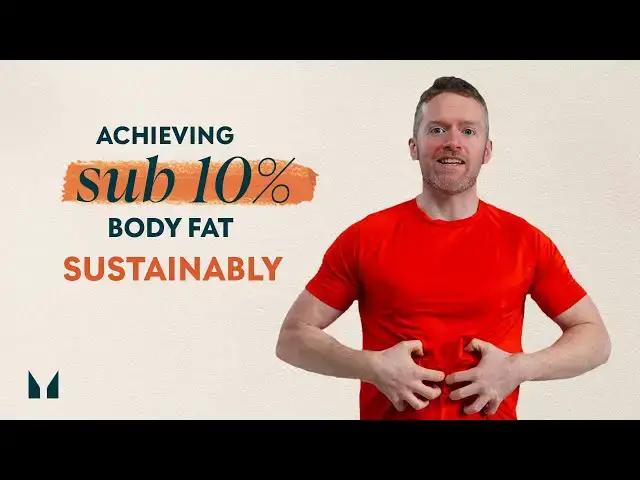
Expert nutritionist explains the steps to reduce your body fat using food, sustainably.
Richie Kirwan, nutrition expert, dives into how to get below 10% body fat. Richie will cover the importance of calories, protein, fat and carbs and how to figure out how much you need to help you drop body fat while maintaining as much muscle as possible on your quest for sub 10%.
If you want to get your body fat percentage to the low teens or below, from a nutritional perspective, you have two main goals: number 1 is to lose body fat and number 2 is to maintain as much muscle as possible while doing it.
***
Chapters:
00:00 - Introduction
01:50 - Calorie deficit
04:56 - Protein
07:25 - Fats
09:00 - Carbs
10:35 - Slower weight loss rate
11:15 - Reality of dieting
*********************************
Subscribe to our channel: https://www.youtube.com/user/MyproteinUK?sub_confirmation=1
Show More Show Less View Video Transcript
0:00
what do you have to do to get below 10%
0:02
body fat let's talk about
0:04
[Music]
0:07
that how's it going guys my name is
0:09
Richie Kerwin and today we're going to
0:10
talk about that completely arbitrary 10%
0:13
body fat number that people love to put
0:16
on the pedestal of ideal body
0:18
composition we'll cover the importance
0:19
of calories protein fats and carbs and
0:22
how to figure out how much you need to
0:24
help you drop body fat while maintaining
0:26
as much muscle as possible on your quest
0:29
for so 10% let's get started if you want
0:32
to finally get your body fat percentage
0:34
to the low teens or below from a
0:36
nutritional perspective you have two
0:38
main goals number one is to lose body
0:41
fat obviously and number two is to
0:43
maintain as much muscle as possible
0:45
while doing it so let's talk about both
0:47
when it comes to losing body fat if
0:48
you're looking for some sort of Magic
0:50
Bullet I've got bad news for you because
0:52
every single diet that has ever helped
0:54
someone lose body fat in the history of
0:57
all diets has done so by creating a
1:00
calorie deficit that means you're going
1:02
to need to eat fewer calories than you
1:04
burn until you get to your goal body fat
1:07
percentage all the most well-known diets
1:09
be they lowfat or gluten-free keto South
1:12
Beach carnivore whatever all of them
1:14
work because they get people to cut out
1:16
a load of foods from their diets which
1:18
makes them automatically eat fewer
1:20
calories and lose weight but you're
1:22
better than those people because you're
1:24
watching this video and you don't have
1:25
to try some stupid fat diet to lose
1:27
weight you're welcome now there's a lot
1:29
to in this video so bear with me the
1:31
principal way weight loss works is very
1:33
simple just eat fewer calories but in
1:36
practice it's not easy at all especially
1:39
when we live in a world where you can
1:40
have a kebab a curry a bucket of fried
1:42
chicken all followed by cake and ice
1:44
cream delivered straight to your house
1:46
within minutes of ordering and all
1:47
without leaving the comfort of your
1:48
chair but that's a conversation for
1:50
another video so let's start with
1:51
figuring out the calorie deficit you
1:53
need for fat loss there are two ways I
1:56
recommend firstly you can calculate your
1:58
maintenance calories that's how many
1:59
calories you need to maintain your body
2:01
weight there are loads of websites that
2:03
use your height weight age gender and
2:06
activity levels to calculate how many
2:08
calories you need to maintain your
2:09
current weight don't worry about which
2:12
one to use they're all pretty much the
2:14
same and by that I mean they're all
2:16
educated guesses of your calorie needs
2:18
the reason it doesn't matter is because
2:20
you're going to be adjusting your
2:22
calories over time so it doesn't matter
2:24
much where you start so once you know
2:26
how many calories you burn to maintain
2:28
weight if you want to lose body fat you
2:31
just need to eat fewer calories than
2:33
that but how many well remember what I
2:36
said about the two goals of getting sub
2:38
10% body fat one is obviously fat loss
2:41
and the other which is just as important
2:43
is muscle maintenance that's important
2:45
because the bigger the calorie deficit
2:46
you use the faster you lose body fat but
2:49
you are also more likely to lose muscle
2:51
the current research that we have shows
2:53
that slow rates of fat loss are better
2:55
for maintaining muscle when someone is
2:57
getting very very lean now if you have a
3:00
lot of body fat to lose you're less
3:02
likely to lose muscle while losing body
3:04
fat so you can have a bigger calorie
3:06
deficit but if you're below 20 to 15%
3:09
body fat slow is going to be better
3:12
starting your diet with an approximately
3:14
20% deficit is probably a good place to
3:16
start so for example if your maintenance
3:18
calories are about 3,000 calories per
3:20
day that means you'll reduce them by 600
3:23
calories 20% of 3,000 bringing your fat
3:26
loss calories down to 2,400 calories per
3:28
day you can spread that out over the
3:30
entire week if you'd like so on weekdays
3:32
you could have fewer and on weekends you
3:34
could have more calories just to make
3:36
the weekends a little bit more social
3:38
and enjoyable but how do you even know
3:41
if your calorie deficit is working well
3:43
you also need to measure your progress
3:46
without monitoring your progress you
3:47
have no idea if what you're doing with
3:49
your diet is actually working the
3:51
easiest way to do that is by weighing
3:53
yourself you want to do it daily so you
3:55
can get a weekly average because your
3:57
weight can actually fluctuate hugely
3:59
from from day to day so a weekly average
4:01
is a much better indicator of your
4:03
progress there are plenty of other ways
4:05
to measure your progress too taking
4:06
measurements around your hips and waist
4:08
or taking progress photos but the scale
4:10
is probably the simplest especially at
4:12
the start now I mentioned you're going
4:14
to need to make adjustments over time
4:16
because your weight loss will eventually
4:19
slow down and even stop even if you're
4:21
still eating what was a calorie deficit
4:23
for you at the start of the diet this is
4:26
totally normal and happens because when
4:27
you lose weight well bodies need less
4:30
energy and there's also some metabolic
4:33
adaptation to dieting this just means
4:35
your metabolism slows down a little to
4:37
compensate for the reduced calories the
4:39
only thing you can do at this point is
4:41
to drop calories a little bit lower to
4:43
get back into a new calorie deficit
4:46
again it sucks but that's unfortunately
4:49
how metabolism works so far we've only
4:51
spoken about calories the next important
4:53
nutrient to talk about is protein there
4:56
are three reasons you may want to make
4:58
sure you get enough protein protein
4:59
while losing body fat number one protein
5:02
is the most satiating macronutrient
5:04
meaning it helps keep you feeling Fuller
5:06
for longer than other nutrients like
5:08
carbs or fats number two protein helps
5:11
to maintain muscle and if you're cutting
5:13
the whole goal should be to maintain as
5:15
much muscle as possible while losing
5:17
that body fat and number three protein
5:20
has a higher thermic effect of food
5:22
meaning it requires more energy to
5:24
process it than carbs or fats while the
5:26
effect is small in the long term a
5:28
higher protein diet may be more
5:30
beneficial for fat loss than an equal
5:31
amount of calories from carbs or fats so
5:34
how much protein do you need well we
5:36
have researched to show that as little
5:38
as 1.2 G per kilogram of body weight per
5:41
day is enough to spare muscle while
5:43
losing weight as long as you're doing
5:45
resistance exercise but the research has
5:47
also shown benefits for body composition
5:49
with doses as high as 3.4 G or even 4.4
5:53
gam of body weight per day but I'm not
5:55
saying you should eat that much protein
5:57
so how do we calculate your lean weight
6:00
simply multiply your height in Me squar
6:03
by 25 so if you're 170 cm tall that's
6:06
1.7 m and your lean weight is 1.7 m
6:11
squared by 25 which is 72.2 kg this is
6:16
what I use to calculate protein intake
6:17
for all my clients so if your ideal
6:19
weight is 72.2 kg just multiply your
6:22
weight in kilograms by 1.6 for example
6:25
and that's how much you should eat in
6:27
terms of protein that works out at 115.6
6:30
g of protein per day hopefully spit up
6:32
evenly over three or four meals for some
6:34
of you that probably doesn't sound like
6:35
a lot but there's evidence that that's
6:38
enough to maintain muscle on a long diet
6:40
but you can always eat more great Whole
6:42
Food protein sources include lean meat
6:44
eggs fish dairy products like yogurts
6:46
cheeses Quark the reduced fat versions
6:49
may make it easier to control calories
6:50
too and vegetarian sources like tofu
6:53
textured vegetable protein or TVP micro
6:55
protein products like corn beans peas
6:58
and lentils protein powders can be a
7:00
cheap and convenient option too if
7:02
you're having trouble getting enough
7:03
protein from your diet alone now one
7:05
last thing on maintaining muscle while
7:07
dieting I've said that protein is
7:08
important but all the protein in the
7:11
world won't save your muscle if you're
7:13
not training in the gym resistance
7:16
exercise is simply the most important
7:19
signal you can give to your body to hold
7:21
on to muscle while you're dieting it's a
7:24
far stronger effect than eating more
7:26
protein okay so let's move on to Fat
7:29
along protein fat is an absolutely
7:31
essential macronutrient and there are
7:33
essential fatty acids which means you
7:35
absolutely need to get them in your diet
7:37
to stay healthy on top of that if your
7:39
diet is too low in fat for an extended
7:41
period of time it can have some serious
7:44
effects on your health low fat intake
7:46
can affect your hormone levels like
7:48
testosterone and you can end up feeling
7:50
weak tired all the time and you can even
7:52
see a major drop in your sex drive and
7:55
nobody wants to lose their libido just
7:57
for the sake of a six-pack so how much
7:59
how much fat should you eat well we
8:01
don't actually have an official bottom
8:02
level of fat intake but if we speak
8:05
somewhat conservatively starting with
8:07
0.8 G of fat per kilogram of body weight
8:10
is a decent place to start so if you
8:12
weigh 70 kg that works out at about 56
8:15
gram of fat per day as a minimum again
8:19
keep an eye on how you're feeling and if
8:20
you start feeling really fatigued and
8:23
lose your sex drive or will to train
8:25
increasing your fat intake might help
8:28
get you feeling better again great fat
8:30
sources include nuts and nut Butters
8:32
seeds grind them up so you can actually
8:34
get the fats out of them olive oil and
8:36
oily fish at least twice a week and if
8:38
you don't like oily fish consider taking
8:39
a fish oil or an algo oil supplement to
8:42
make sure you're getting your long chain
8:44
omega-3 fatty acids keep your saturated
8:46
fat intake low again for health purposes
8:49
by reducing your intake of fatty red or
8:50
processed Meats coconut oil butter and
8:53
cream the one thing to be careful about
8:55
with fats is that they have a lot of
8:57
calories per gram so they can be easy
8:59
easy to overeat and don't provide a
9:01
whole lot of satiety which brings us on
9:03
to carbs now carbs have been given a
9:06
pretty bad reputation for people who
9:07
clearly don't understand nutrition
9:09
science and think that carbs make you
9:11
fat they don't excess calories do you'll
9:15
often hear that carbs aren't essential
9:17
so we don't need them now while they may
9:20
not be essential for Life carbs do offer
9:22
a lot of benefits they help improve
9:25
training quality they reduce fatigue in
9:26
the gym and in general Whole Food Source
9:29
of carbs are much more filling than fats
9:31
and provide fiber which is very
9:33
beneficial for your long-term Health on
9:35
top of that carbs stored as glycogen in
9:37
your muscles may even help with muscle
9:39
growth and may help reduce muscle
9:41
breakdown long story short carbs are
9:44
awesome try and fit as many in as you
9:47
can while still being in a calorie
9:49
deficit and losing weight and the whole
9:50
fat loss experience will be a lot easier
9:53
and more productive for you I really
9:55
recommend getting the majority of your
9:56
carbs from whole food sources like whole
9:58
grains such as such as oats or whole whe
10:00
products starchy tubers like potatoes
10:02
and sweet potatoes fruit and vegetables
10:04
and even beans peas and nles they'll
10:07
provide you with a load of vitamins
10:09
minerals and phytonutrients to help keep
10:11
you healthy they'll also provide a lot
10:13
of fiber to keep you feeling Fuller for
10:15
longer oh and if your calories get
10:17
really low like at the later stages of a
10:19
fat loss phase it can be a good idea to
10:21
try and eat the majority of your carbs
10:23
before training sessions to make sure
10:25
your sessions are as good as they can
10:28
possibly
10:29
nobody likes working out when they don't
10:31
have any energy so make sure you carb up
10:34
before training now before we finish up
10:35
I also want to mention something about
10:37
your rate of weight loss like I said if
10:39
you have a bigger calorie deficit you
10:41
lose weight faster while some people
10:43
like that because it can keep them
10:44
motivated personally I think a slower
10:47
rate of weight loss is better one it's
10:49
easier to manage because you're not
10:51
dropping your calories crazy low which
10:53
will just make you feel deprived really
10:55
quickly a hard deficit right from the
10:57
start can lead to people just getting
10:59
sick of a diet giving up and robbing a
11:02
bakery at gunpo and number two like I've
11:05
said slower rates of weight loss will
11:07
help you maintain more muscle mass which
11:09
makes getting below 10% easier in the
11:11
long run which brings me to something
11:13
most people don't mention about trying
11:14
to get below 10% body fat time and
11:18
patience sticking to a strict diet for
11:21
months at a time is damn hard especially
11:24
if you've never been that lean before
11:26
you're going to need to be strict with
11:27
your food and you might not be able to
11:29
enjoy social functions as much as you'd
11:31
like your appetite hormones will
11:32
eventually get a little deranged no
11:34
matter how much protein or veggies or
11:36
Fiber you fit into your diet because
11:38
most people's bodies actively try to
11:40
fight against weight loss that's a
11:42
remnant of our Evolution because losing
11:44
weight when food wasn't secure could end
11:45
up being fatal that's not so much a risk
11:48
these days so you're going to need a lot
11:51
of patience a lot of mental resolve and
11:53
some damn good reasons for wanting to
11:56
get to 10% body fat which brings me to
11:58
this question why do you want to get
12:00
below 10% body fat anyway it's the most
12:02
arbitrary number in the world of Fitness
12:05
10% looks different on everyone and you
12:07
might not even like how you look that
12:10
lean you don't need to be 10% body fat
12:12
for health reasons and in fact getting a
12:13
lot lower than that has some serious
12:15
negative health effects too so what do
12:18
you think has that answered your
12:19
questions about how to get below 10%
12:21
body fat as always if you have any
12:22
questions let me know in the comments
12:23
below and remember to like And subscribe
12:25
to the my protein YouTube channel for
12:27
more great evidence-based nutrition
12:29
[Music]
12:33
information
#Fitness
#Weight Loss
#Obesity
#Nutrition
#Bodybuilding