Up next in 10



“What's really interesting about neural networks is the way that they think or the way that they operate is a lot like human intuition”
Show More Show Less View Video Transcript
0:00
I get to talk to people all the time about how they use AI in their work and in their lives
0:05
and also how it has changed them as people. There's many different ways of knowing things and many different ways of understanding things
0:12
Computers, science, what both of those ways of seeing the world are trying to do
0:16
is reduce the world into a set of really clean universal laws that apply in any situation
0:23
If X is true, then Y will happen. And what language models see instead is a dense web of causal relationships between different parts of the world that all come together in unique, very context-specific ways to produce what comes next
0:43
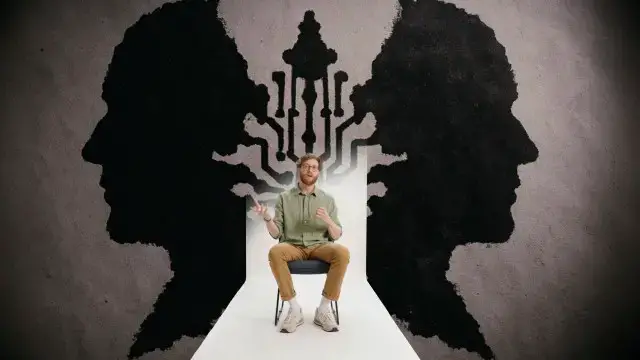
And what's really interesting about neural networks is the way that they think or the way that they operate is a lot like human intuition
0:50
Human intuition is also trained by thousands and thousands and thousands of hours of direct experience
0:56
The reason I love that is because I hope that it makes more visible to us the value and importance of intuitive thought
1:06
My name is Dan Schipper. I'm the co-founder and CEO of Every, and I'm the host of the AI and I podcast
1:12
chapter one the limits of rationalism from socrates to neural networks
1:21
i think rationalism is one of the most important ideas in the last like 2 000 years rationalism
1:30
is really the idea that if we can be explicit about what we know if we can really reduce what
1:39
we know down into a set of theories, a set of rules for how the world works. That is true
1:46
knowledge about the world. And that is distinct from everything else that kind of messes with our
1:52
heads, messes with how we operate in society. And you may not have heard that word, or maybe you
1:59
have, but it is built into the way that you see the world. For example, the way computers work
2:07
or the way vaccines work or the way that we predict the weather or the way that we try to
2:12
make decisions when we're, you know, thinking about, I don't want to be too emotional about this. I want to get really precise about my thinking on this issue. Even the way that we
2:21
do therapy, a lot of therapy is about rationalizing or rationalizing through what you think and what
2:29
you feel. All that stuff comes from an extensive lineage of ideas that started in ancient Greece
2:35
really blossomed during the Enlightenment and now is like the bedrock of our culture and the way
2:41
that we think about the world. I think the father of rationalism is Socrates, the philosopher
2:46
Socrates is one of the first people to really examine the question of what we know and how
2:53
what is true and what's not true, to be able to describe what we know and how we know it
2:58
to make that clear and explicit so that only people that knew the truth, that knew how the
3:05
world really works, were the ones that were steering the state. That really became the birth
3:11
of philosophy, is this idea that if you inquire deeply into what is usually kind of like the
3:19
inexplicit intuitions that we have about the world, you can find, you can identify a set of
3:25
rules or a theory about what the world is like and what's true and what's not that you can lay
3:33
out explicitly and that you can use to decide the difference between true and false. I think that you
3:40
can trace the birth of rationalism to this dialogue Protagoras. And in the dialogue, it's a debate
3:47
between Socrates on the one hand and Protagoras. And Protagoras is what we call a sophist and it's
3:53
wear the term sophistry, which means like kind of, you know, someone who says really compelling
3:59
things, but is actually full of shit. What Protagoras and Socrates are debating is can
4:06
excellence be taught? And excellence, the word is often translated in English as virtue, but I think
4:13
a more appropriate translation is excellence. And in ancient Greece, like that kind of excellence
4:17
was really prized. It's sort of like a general ability to be good at important things in life and in society
4:30
And they approach it from very different angles. Protagoras believes that everyone has the capacity, every human has the capacity to be excellent
4:38
And he tells this big myth about how we as humans gain the capacity to be excellent
4:43
And Socrates is saying, no, no, no, I don't want any of that. what I want is I want a definition. I want you to say explicitly what it is and what it's not
4:51
and what are the components of it. And that's a really big moment. At least the way that Plato
4:57
writes it, Socrates kind of like takes apart Protagoras and it's pretty clear by the end that
5:05
Protagoras doesn't know, doesn't have any way to define in a non-contradictory way
5:12
what excellence is, what it means to be good. And the implication is that then he doesn't know it
5:22
And that sort of set Western society on this path of trying to find really clear
5:31
definitions and theories for the things that we talk about and to identify knowledge
5:41
the ability to know something or whether or not you know something with whether or not you can
5:45
really clearly define it. And that idea became incredibly important in the scientific enlightenment
5:53
Thinkers on the philosophy side like Descartes and on the science side like Newton and Galileo
5:58
took this idea and used it as a new method to understand and explain the world. So what it
6:04
came is, can we use mathematics to explain and predict different things in the world? And from
6:15
Socrates to Galileo to Newton, they continually reinforced this idea that in order to truly know
6:22
something, you have to be able to describe it explicitly. You have to have a theory about it
6:26
You have to be able to describe it mathematically, ideally. The world around us is shaped by this
6:34
framework. So everything from smartphones to computers to cars to rockets to cameras to
6:41
electricity, every appliance in your house, vaccines, everything in our world is shaped
6:47
with this idea or this way of seeing the world. It's been incredibly impactful. And you can find
6:55
this too in the rest of culture. Like anytime you see, you know, a book or a movie or a blog post
7:02
or whatever talking about like the five laws of power or like the five laws of negotiation
7:09
All that stuff is ways that that physics has has and rationalism in general has like sort
7:14
of seeped into the everyday everyday way that we think about the world
7:21
And to be clear, it's been super successful. But in areas of the world like psychology or economics or neuroscience it has been really hard to make progress in the same way that physics has made progress I think if you look for example
7:37
at the social sciences, a lot of the way that the social sciences are structured is inspired by
7:44
physics. What we're trying to do is take very complex, higher-level phenomena, so like maybe
7:49
maybe psychology or economics or any other branch of social science. And we're trying to reduce it
7:56
down to a set of definitions and a theory and a set of rules for how things in that domain work
8:03
And what's really interesting is if you look at those fields, so like psychology, for example
8:07
it's in the middle of a gigantic replication crisis. Even though we spent like 100 years
8:13
doing psychology research, the body of knowledge that we've been able to build there
8:18
in terms of its universal applicability, our ability to find universal laws
8:26
in the same way that Newton found universal laws, seems pretty suspect
8:33
And we feel like we can't stop doing it because we have no better alternative
8:40
Another really interesting an important part of the world that this way of looking at things didn't didn't work for in many
8:49
ways is AI. So this is this is usually the part of an explanation where I try to define it and
8:55
like what is AI? And what's really interesting is there's no universal agreed upon definition for
9:04
this in the same way that there's we've struggled to come up with a universal definition for
9:09
what it is to know something or a universal definition for what anxiety is, for example
9:14
in psychology is another is another really good example. There are a lot of ways to kind of like
9:18
gesture at what AI is. But really, it's like, obviously, maybe not obviously, AI stands for
9:26
artificial intelligence. And, and the AI's project is to build a computer that can think and learn in
9:34
the same way that humans learn. And because of the way that computers work, for a very long time
9:43
that was a really hard problem. AI started as a field in the 50s at Dartmouth. And you can like
9:50
actually look at the original paper. They were very optimistic. They were like, you know, maybe
9:54
like, you know, a summer's worth of work and we'll have nailed this. And the way that they defined it
9:58
is to be able to reduce down human intelligence into a system of symbols that they could combine
10:05
together based on explicit rules that would mimic human intelligence. And so there's a really
10:11
clear through line from Socrates' original project to the Enlightenment to the original
10:19
approach that AI theorists took called symbolic AI, the idea that you could embody thinking in
10:28
essentially like logic, logical symbols, and transformations between logical symbols, which is very similar to just basic philosophy. And there are actually a lot of early successes
10:42
For example, the two founding fathers of AI, Herbert Simon and Alan Newell, built this machine
10:48
that they called the General Problem Solver. And what's really interesting is it wasn't even
10:52
built as a computer because computers were extremely expensive back then. They originally codified the general problem solver on paper and then executed it themselves by hand. Actually, I think one of them had their family do it with them to try to simulate how a computer would work to solve complex problems
11:10
And the general problem solver, they tried to reduce down complex real-world situations into simple logic problems that look a little bit like games
11:25
And then they tried to see if they could build a computer that would solve some of those games
11:30
And they were actually quite successful at first. What they found was it worked really well for simple problems
11:37
but as problems got more and more complex the search space of possible solutions got really
11:46
really really really big and so by representing the problem in that way the systems that they
11:53
built started to fail as soon as they moved away from toy problems to more more complex ones i think
11:59
i think a really interesting and simple example of this is thinking about how you might decide
12:05
whether an email in your inbox is spam or whether it's important
12:12
And you might say something like, if it mentions that I won the lottery, it's spam, right
12:18
And so that sort of like if-then rule is a lot like the kinds of rules
12:23
that early symbolic AI theorists were trying to come up with to help you solve any problem, is to codify like
12:30
if xyz is true then here's the here are the implications what happens is if you look at
12:37
that really closely there are always lots of little exceptions so an example might be if it says
12:43
emergency maybe you want to put that at the top of your inbox but very quickly you'll have spammers
12:49
obviously being like just put emergency at the in the subject line and they'll shoot to the top so
12:54
then you have to kind of like create another rule, which is it's emergency, but only if it's from
13:00
my coworkers or my family. But computers don't really know what coworkers or family is. So then
13:09
you have to define, okay, like how does, how is it going to know what a coworkers or what a family
13:13
member is? So what you can do is, um, maybe it's like a coworker is anybody from my company
13:21
and so if it says emergency and it's from anybody in my company put it at the top of my inbox
13:25
but what you may find is that there are certain people at your company who are annoying and uh
13:32
want your attention even if you don't really want them to contact you and so they start putting
13:37
emergency into their inbox and uh and now you have to create another rule which is like don't let
13:44
people who are abusing the privilege of getting to the top of my inbox abuse it even if they're
13:49
coworkers. And what you find is anytime you try to create rules to define these things
13:55
you always run up against exceptions. If you want to, for example, define what an important email is
14:02
you have to define pretty much everything about the world. You have to create a world full of
14:07
definitions. And that project of making the entire world explicit in definitions just didn't work
14:15
It's too brittle. It's too hard. There's too much computational power required to loop through all the different definitions to decide, you know, if this email is important or not. And it's just there are too many definitions to create. It's just it's too big of a project
14:32
and so that symbolic AI project worked in some limited domains and there were these things
14:36
called expert systems for example in the 70s and 80s that tried to for example
14:40
reduce medical diagnosis down to a set of rules and they were somewhat successful
14:45
but even in a case like medical diagnosis trying to reduce down
14:50
to a simple set of rules something like do you have measles or maybe even do you have anxiety or depression turned out to be really complicated and really really hard And in fact impossible to get right 100 of the time in an explicit way
15:08
The alternative, which originated around the time that AI itself originated, but really wasn't
15:16
taken that seriously until probably the 80s and 90s, is what's called a neural network
15:22
and a neural network um it is inspired by the way our brains work it doesn't work exactly the same
15:27
way but it's inspired that way it is inspired from brains and it basically consists of um layers of
15:35
artificial neurons that are connected to each other and what you can do with a neural network
15:41
is you can uh get it to recognize patterns by giving it lots of examples you can you know for
15:49
example, if you want to, if you wanted to recognize like whether an email is important
15:54
what you can do is you can give it an example, say like, you know, here's an email from a co-worker
15:59
and have a guess the answer. And if the answer is wrong, what we've done is we've created a way to
16:07
train the network to correct its wrong answer. And what happens is over many, many, many, many
16:16
iterations in many, many different examples, what we find is without any explicit set of definitions
16:25
or explicit rules about like, you know, this is an important email or this is a cat or this is a
16:30
good move in chess, the neural network learns to recognize patterns and is able to do a lot of the
16:38
more complex thinking style tasks that early symbolic AI was unable to do
16:45
language models are a particular kind of neural network that operates by finding complex patterns
16:54
inside of language and using that to produce what comes next in a sequence so what we've done with
17:00
language models is fed them basically you know all of the text on the internet and when we feed
17:06
them a piece of text we'll give them you know a big chunk of a big chunk of text and then we will
17:11
say based on this chunk what's the next word that comes after this chunk and and language models
17:16
learn that there are many many thousands of partially fitting rules that they can apply
17:22
based on the previous history of text they've seen to predict what comes next and all of those rules
17:28
are inexplicit they're they're kind of like you can you can observe them in the overall behavior
17:33
of the network but they don't exist anywhere in the in the network you can't go and look inside
17:38
of a neural network and find like this is exactly, this is the entire set of rules that it has
17:45
You may be able to find a couple, but you can't find a definitive list
17:49
in the same way that if I like took a microscope and looked in your brain
17:54
I would not be able to find that. I would not be able to find the list of rules
17:57
that you use, for example, to recognize a cat or do the next move in chess
18:02
They're represented all inexplicably. And what's really interesting about neural networks is the way that they think or the way that they operate is a lot like, it looks a lot like human intuition. Human intuition is also trained by thousands and thousands and thousands of hours of direct experience
18:21
often the our best metaphor for our minds are the tools that we use so a really good example is
18:31
freud has one of the most impactful models of the mind and the way that he came up with that is he
18:38
used the steam engine as a metaphor so it's an explicitly steam engine based idea in the 20th
18:44
century the metaphor for our minds moved into being like a computer that became the kind of
18:50
thing that we all wanted to be like. We wanted to be logical and rational and operate like a
18:56
machine to make the best decisions possible. And I think one of the most interesting things about
19:04
that way of thinking is it makes invisible to us, and this I think relates a lot to the
19:11
like sort of Socratic enlightenment type of thinking as well, it makes invisible to us
19:16
the importance of our intuition in being the foundation of everything that we do
19:26
everything we think, everything that we know. In a lot of ways, you can think of rationality as
19:30
emerging out of intuition. So we have this sort of squishy, inexplicit, intuitive way of
19:37
understanding what's going on in the world. And our rational thought comes out of that
19:43
and is able to, once intuition sort of sets the frame for us
19:49
is able to go in and sort of manipulate things in a more methodical, rational, logical way
19:58
But you sort of need both. And neural networks are the first technology we've ever invented
20:06
that works a lot like human intuition. And the reason I love that is because I hope that it makes more visible to us the value and importance of intuitive thought. And that actually loops back and takes us all the way back to Protagoras
20:27
and is sort of the thing that we lost in this birth of rationalism and back in Callius's house
20:36
because Protagoras is arguing that everyone teaches us excellence all the time. He's arguing
20:42
he's using stories and myths and metaphor to help us understand something that he knows from his own
20:49
personal experience. And Socrates is saying, well, if you can't define it, if you can't tell me
20:55
exactly the rules by which you know something, then you don't know it. And that way of thinking
21:01
about the world has been very successful for us, but it also kind of blinded us to how important
21:07
that idea that everyone teaches us to be excellent, that stories and personal hands-on experience
21:16
give us a way of knowing about things that we may not be able to explicitly talk about
21:22
but we still know just as much as we know things that we can explicitly say
21:28
And it was only when we began to embody that way of being in the world
21:34
or that way of knowing things, that way of thinking into machines that we started to get actual artificial intelligence
21:42
There's many different ways of knowing things and many different ways of understanding things
21:47
and we may not understand all of the particulars of how humans for example how our minds come to
21:56
certain conclusions intuitively and we may not understand all the particulars of how
22:00
language models for example come to any particular output but that doesn't mean that we don't
22:06
understand them it just means that we understand them in a different way than we might be used to
22:10
so for example if you use chat gpt all the time you develop an intuition for what it's good at
22:17
and what it's not good at and when it might be hallucinating and when it when it might not be
22:20
in the same way that you might develop an intuition for when a friend of yours is sad or when a friend of yours is not being totally truthful with you and that not a universal set of rules that applies to everyone in every situation or even to your friend in every situation It just a sort of like intuitive feel that is a core part of understanding but that we
22:38
normally discount. History shows that it is better to have to be open to more ways of seeing and
22:47
working with the world. And that in this particular era, it's very important to be able to
22:54
work with things that are a little bit mysterious and be comfortable with that
23:04
Chapter 2. Seeing the World Like a Large Language Model I am, I've always
23:12
been like a real huge note-taking nerd. I love taking notes, especially because when I started my first company
23:18
I started my first company in college. And I ended up selling it. I flew from my college graduation to
23:24
Boston to finish negotiating the deal to sell it. So that whole situation for me was this trial by
23:31
fire of like, I felt like I had to, I was like an information firehose. I had to learn so much
23:36
in order to successfully run a software company as a, I guess I was 20, 21, 22. And the way that
23:44
I felt like I could do that best was to start taking notes is to be like, okay, I learned this
23:50
thing from a book and it's about how to hire someone for how to hire people for example and
23:55
i know i think it'll be relevant for me but i don't know when it's going to be relevant so i'm going to write it down and i'm going to try to create like the perfect organizational system
24:03
to categorize all this stuff so it will come back to me when i need it
24:07
and if you really take seriously that question of like how do you build the perfect note-taking
24:14
your organizational system, you actually run into the same problems that early symbolic AI
24:20
theorists run into and philosophers have been running into for a long time, which is how do we
24:25
create the perfect system to organize reality? How do you know where to put a particular note
24:32
is the same sort of question as like, how do we know what we know? And so when I first bumped into
24:41
the language models, I realized that they had this ability to be sort of flexible and contextual
24:51
in a way that meant that I didn't have to create the like perfect organizational system to teach
24:58
a computer how to like organize my notes. It operated in this way that was rule-less and fuzzy
25:05
and flexible, and I had just never seen a computer do that before
25:10
Like the first experience of seeing that line of words go across your screen
25:15
it's kind of in your voice a little bit, and it's kind of like picking up where you left off
25:19
and it kind of understands all the little contextual cues that tell it about what you're talking about
25:25
that no computer previously could do. The interesting difference between the way that a language model might see the world
25:34
and maybe another kind of computer is computers, science. What both of those ways of seeing the world are trying to do
25:43
is reduce the world into a set of really clean universal laws
25:49
that apply in any situation. It is to say, if X is true, then Y will happen
25:55
Like really clear cause and effect, really clear chains that are universal and context-free
26:02
and what language models see instead is a dense web of uh causal relationships between different
26:13
parts of the world that um that all come together in unique very context specific ways to produce
26:22
what comes next and i think language models do something really really unique which is that
26:27
they can give you the best of what humanity knows at the right place at the right time in your
26:34
particular context for you specifically where you know for example previously on the internet
26:40
you could get an answer that was written by someone else for like a very general
26:44
reader or a very general situation and maybe you'd have to like hunt through a wikipedia page to find
26:50
like the one sentence that answers answers your question language models go one step further which
26:56
is they uh they reduce down the their response to you to be to be written for you at the at in your
27:08
context in your place and in your time if you look at the history of machine learning from symbolic ai
27:14
we're trying to break down um intelligence into a set of definitions of uh you know a theory and a
27:21
set of rules for how thinking should work um all the way up to neural networks and language models
27:26
where it's it's much more contextual it's much more about pattern matching it's um much more
27:31
about interpreting the richness of of of a particular situation um and and and using all
27:38
the all prior experience in a um sort of in an inexplicit way to predict what comes next
27:44
that sweep of um of the history of ai in a lot of ways is speed running the history of philosophy
27:54
so philosophy started um with this um with this attempt to make explicit what it is to know
28:03
something um now we're in this place where it's like actually like it's all kind of like fuzzy and
28:07
pattern matching and it's very very contextual and relational um but it's also not anything goes
28:12
and it's being done in a way that we've created a positive tool
28:17
that you can use and build stuff with in your life. We're not just sort of
28:21
deconstructing everything around us. And so in a lot of ways, machine learning and AI
28:26
is speed running philosophy and it's gone a little bit of a step further
28:31
because it's built something with it that you can do, a way of being in the world
28:34
that you can, or a tool you can use. And I think, A, that's just like
28:38
critically important and very interesting. And B, um i think a lot of the changes that have happened in both philosophy and in uh ai and machine
28:48
learning are going to happen in the rest of culture so um moving from this uh this way of
28:56
thinking about knowledge which is about um which is about making everything explicit finding theories
29:01
and definitions and rules for how to understand the world to a more balanced appreciation for both
29:08
that and the the way that a more intuitive relational fuzzy pattern matching type uh
29:14
experiential contextual type way of um of of knowing about the world uh has to has to be
29:22
underneath the like the rational stuff in order for that the rational stuff to work at all and
29:28
it's really about um recognizing the the more intuitive ways of knowing about the world as
29:37
being the sort of original parent and partner of rationality and appreciating that for what it is
29:47
You know, a lot of what we've been talking about is that
29:51
looking for one general rule or one general theory about a particular part of the world
29:59
sometimes is really valuable and sometimes leads us down dead ends. And instead, what we have to
30:08
pair it with is deeply contextual understanding based on experience that allows us to work with
30:18
the richness and novelty of any particular situation to understand what comes next
30:22
And that's what language models are able to do. And it sort of begs the question of
30:28
like should we stop looking for general theories and uh for example should we um you know not be
30:34
trying to unify quantum physics with um newtonian mechanics um i definitely think that it's awesome
30:42
that we're trying to unify those things and trying to build a universal theory but i think it's also
30:48
worth thinking about what that will actually tell us and how far that will will get us once we have a
30:57
universal theory of physics if we if we do get there and my contention or the way that i feel
31:04
is it will it will be beautiful and it'll be amazing and it will tell us a lot but also
31:07
there are many many many many parts of the world that it won't touch at all that we still um even
31:13
if we have a universal theory of physics like that probably won't filter into our understanding
31:18
of depression it's like what is depression how does it cause how do you treat it what is anxiety
31:22
how does it cause how do you treat it we've been searching for those things for a really really long time and we've had a lot of like different answers like if you ask freud he'd say one thing
31:31
and if you ask like a modern modern psychiatrist neuropsychologist they might say something else
31:36
um but really like we just we still don't actually know um and we keep trying to do that we keep
31:45
trying to find that kind of like universal theory that that explanation that says well if x then y
31:50
if um you have this going on in your life or in your brain then you're going to get depressed or
31:54
if you take this medication, then depression will go away. We've been trying to find that for a
31:59
really long time because we felt like we had no other options. Because normally, in order to
32:07
predict an outcome, to know, oh, if I do this, then it'll cure someone's depression. To predict
32:14
it, you have to have an underlying scientific explanation. You have to have a theory about it
32:18
And I think AI actually changes this. So with with AI, what you can do is and people people are really already starting to do this. You can
32:27
train neural networks that are, for example, able to identify who is depressed or who will get
32:33
depressed. You can train neural networks who will be able to predict which interventions might work
32:38
for which people in which circumstances in a very contextual, hyper-personalized kind of way
32:43
without having to discover beforehand any scientific explanation for the underlying phenomena that we're trying to predict. So we don't have to have an explanation for depression
32:54
we can just train a model on enough data that it will that it will be able to predict what might
33:01
work or whether you have it or whether you're going to get it the reason why i think that's
33:05
so valuable is one it allows us to make progress immediately because we turn what used to be a
33:11
scientific problem into an engineering problem and then two it like really changes
33:19
how we should conduct science, how science should be done. It changes our view of that because
33:27
right now, if you're a scientist and you want to figure out depression or any number of things
33:32
in the field of psychology, what you're going to want to do is a really small scale study where
33:38
you're like, I'm going to take 16 undergrads and maybe they have depression. I'm going to ask them
33:43
to like smile every day and I'm going to put them in an fMRI and then I'm going to like measure the
33:50
results afterwards and if I get a little bit of a result on a very very small number of undergrads
33:55
then I'm going to like get more funding to do a study with a hundred or whatever and you're kind
34:00
of like trying to climb this ladder of going from very small scale interventions to like very big
34:05
ones and to use that to come to some sort of underlying theory about what is actually going
34:12
on in those situations. And, and what we found because of the replication of crisis is like
34:18
it's just really hard to, um, using that, you know, those 16 undergrads, it's really hard to
34:24
like find out anything that feels universal or universally applicable. Um, it's one of the
34:29
reasons why, even though antidepressants have been around for like 60 years or something like that
34:34
like we still actually don't know when they work or how they work. We know they work for some people
34:37
some of the time, but that's pretty much all we can say. What AI does is it kind of helps us
34:45
I think to me, it helps us realize that there's a better way, which is rather than have random
34:51
academics doing small scale studies, what we should do is have the Apples and Metas and
34:57
Googles of the world donate their data to science and data trusts so that scientists can access them
35:04
to train models, you can figure out ways to do it in ways that are privacy-preserving
35:10
so that it doesn't violate the trust of users. But I think that would seriously enhance the progress of science in a way that doing billions
35:21
of dollars worth of small-scale studies has not been able to. And what I think is even more interesting is once you've trained models that can, for
35:34
example predict depression really well what you may be able to do is models are actually easier
35:42
to interpret and understand than brains are and so if you have a good enough predictor what you
35:48
can do is just go into the neural network and try to figure out how it's wired and it may be that
35:54
the the explanation for what depression is is like too big and too complicated and you can't
36:01
figure it out but mechanical interpretability is good enough that you may be able to like find what
36:07
what is a solid theory for depression in the weights of a trained neural network for me i've
36:14
just spent so much of my life trying to explain things or understand myself or understand my world
36:26
in this sort of theoretical, definitional way. And I've seen how important that can be
36:36
and also how limiting it can be. In particular, if you stop paying attention
36:44
to what your intuition tells you and you just rely on your kind of logical brain it really easy to get lost there a there like this whole richness to life that and and to and to like what you know that um comes out of this sort of like intuitive
37:08
sense of yourself that uh helps it helps you and your help helps me for example in business and my
37:14
personal life and in my ability to make decisions and my ability to write or make good art all of
37:19
that is sort of based on this ineffable intuition that I built up over many, many, many, many years
37:27
And my logical brain is helpful in certain circumstances, but I think like
37:33
it can blot out or take over from my intuitive self in ways that have been destructive for me
37:45
And I think also, uh, have been destructive just as a society
37:50
There's a lot of stuff that we, um, that we miss because we miss how, um, how important
37:57
intuition is. And now we have tools that can, can embody a lot of that intuition can, that, that can
38:07
take some of that intuition that we built up and we can put it into something else in
38:11
the world that we can pass around which was never which was never possible before um you know like
38:18
i think we've we've been pursuing explicit definitions and scientific explanations for
38:24
things for a long time because uh if you can write it down you can spread it and that becomes a uh
38:32
like the way that society makes progress is is sort of like this these spreading explanations
38:37
but if you're dealing with parts of the world that you can't write down explicitly
38:41
there's been no good way to collaborate on them or make progress on them and what neural networks
38:47
allow us to do is to take some of that intuitive experience or intuition that we might have built
38:53
up ourselves and put it into a machine that we can that we can pass around and that's that's
38:58
useful for example for like doctors for expert clinical diagnosis the best clinicians in the
39:04
world know something about how to deal with patients that they can't write down they can't
39:09
embodying a set of rules and is trapped in their head. But language models and AI in general allows us to put that kind of intuition into a tool
39:20
that will allow anyone in the world to access, for example, the best clinician in the world
39:26
even if we can't write down what they know. Chapter three, will AI steal our humanity
39:35
well first of all i think like ai will uh seriously enrich our understanding of ourselves i think ai
39:45
is is an incredible mirror like i understand so much more about myself just being from being able
39:49
to talk to chat gpt and being able to throw into it like here's a meeting that i just had like can
39:54
you tell me like how i how i showed up in that meeting so it's incredible mirror it's also an
40:00
incredible metaphor for our minds so we're moving from this um metaphor from our of our minds as
40:06
like in an ideal world this like logic rule-based explicit um computer to a much squishier contextually
40:15
sensitive um pattern matching experience-driven uh language model that i think is a really good
40:23
metaphor for the more intuitive parts of our mind. And so I think that will enrich our
40:30
what used to be a very narrow picture of what it means to be human. But I think what's most important is to understand that the humanity is inside of us. Like we bring
40:39
the humanity to the tools, to the tools that we use, to the things that we build. And I think in
40:46
a lot of ways to like will it take our humanity um it it makes uh it makes two errors the first
40:53
error is to think that you can like pin down what it is to be human into like one unchanging thing
40:59
like that actually has evolved and is different uh over time and i think the second error is to
41:05
um confuse what what we were what we are it's it's a little hard to put it but it's like it's
41:11
sort of like saying that what you're unfamiliar with is bad. And that's not exactly the right
41:21
thing. But I think a really good example is when my grandmother, for example, she's not alive
41:29
anymore, but when she would use the phone or text someone or be on the phone with someone
41:35
to her it felt very impersonal. And in a lot of ways it feels kind of inhuman, right? A sort of
41:40
face-to-face interaction is a much more human, personal thing for her. For me, or for people who
41:45
are even younger than me, texting can feel very, very intimate. In the late 1800s
41:55
getting a typewritten letter from someone was kind of insulting. It felt very impersonal not
42:02
to get something in longhand, but now we don't get any longhand letters. If you do, it's still
42:08
very, it's still very, very personal, but it's not insulting to get an email from someone. If
42:12
someone sends you a long email, you're kind of like, wow, that's really nice that they took the time to, to think of me. I think all of those worries that are sort of like, does it take away
42:20
my humanity? Um, a lot of them come from the fact that we just don't have a lot of experience yet
42:26
with these new things or they don't have that like patina of like nostalgia and history that
42:34
um other things that we look at in our lives um that our technologies do have so like books
42:41
at a certain point books were a very suspicious thing um and now they're i love books like i have
42:48
such a romantic attachment attachment to them and i think that's that's one of the things that we
42:53
miss when we evaluate new technologies is they they just we just haven't had the chance to allow
42:58
them to feel human to us because we're unfamiliar with them. I think the people who are super afraid
43:05
of AI, it is actually, it sort of goes back to this rationalist idea that we've been talking
43:11
about, which is if you can't explicitly define and prove 100% that a thing is safe, then it's
43:21
dangerous. I don't know if anyone's had like a teacher or a parent or someone in school that's
43:25
like no matter what you do, you can be the smartest person in the world, but they're going to find that
43:30
one up and just like hammer you for it. And I think a lot of people that are worried about that
43:37
are they're just waiting for that one up. And it's true that does happen. But the alternative
43:44
is the demand that AI only say things that can be proved to be true And that sort of to me at least takes away a lot of the magic of AI The thing about it that makes it actually powerful is that
44:01
it works on probability. It works on many, many, many thousands of correlations coming together to
44:09
figure out what the appropriate response is in this one very unique, very rich context
44:14
and allowing it to say only things that are provable obviously begs the question like well
44:21
what is true and how do we know and there are certain domains where we can we can answer that
44:25
question so like uh in math and computer science for example it's like pretty clear whether or not
44:30
like a theorem is right um it's back to the same question from socrates which is like what do we
44:37
know and how do we know it and and a demand for uh explicit rational explanation for every single
44:44
thing that um that we say and i think that that demand is like way way way too strong and actually
44:52
is um eliminates a lot of things that we um that we know about the world or parts of the world we
44:59
want to work with where we actually don't have um precise exact explicit answers and it sort of
45:06
results in this in these these thought experiments that get people really scared like uh this the
45:13
sort of one-shot idea that you have one shot once you build a super intelligence you have one shot
45:17
to make sure that it's aligned that it will follow human preferences or it will kill us and take over
45:22
the world and you can find people who are like real rationalists like elias rhodkowski who really
45:28
believe this and really believe that we're like going to all die which that sucks it's like not
45:33
a great it's not a great place to be um and uh what's kind what's kind of interesting is we have
45:41
really smart ai right now like i think it's the kind of ai that if you had asked rationalists or
45:48
people who are thinking about this stuff 10 years ago is this ai and is this at a level that's like
45:52
could be dangerous they'd probably have said yes if you look at how it's actually built yes there's
45:57
there we don't have any provable ways to be like it's 100 safe ignoring the fact that even defining
46:03
what 100 safe is is like impossible and that's like the whole reason that language models work
46:08
um but what we're doing every single day is we are training these models on human preferences
46:15
we're giving them examples over and over and over again of um what we want and why and uh each model
46:24
builds on models that came before it they actually have a a dense rich idea of what it is to be good
46:32
from all the data that they get they also have a dense rich idea of like probably what it is to be
46:37
bad. But in a lot of ways, the training that we're doing makes them much, much, much less likely to
46:44
to do any of that stuff. There's something very like practical and pragmatic about we have a
46:51
machine. We don't know fully how it works, but we're just going to like teach it and we're going to like iterate with it over and over and over again until we kind of basically get it to work
46:59
And it's sort of squishy. We don't have any guarantees. And that world is it is actually
47:04
this sort of like messy real world it is actually kind of like how you think about interacting with
47:09
a human it's like yeah i don't know if you're gonna lie to me but like i'm gonna i'm gonna
47:13
sort of figure it out um the the fact that we can't we don't have those guarantees um from
47:20
language models is what makes them so powerful and so i think like it's not that language models
47:27
could never be dangerous but um i think adopting the more pragmatic experience-based mindset which
47:36
is like we're going to build these things we're going to improve them in a fairly predictable way
47:41
it's not predictable exactly all of the specific capabilities that they're going to get but we can
47:47
basically tell like in general how much smarter they're going to get every time we do a training
47:52
run. And along the way, we're going to iterate with them in real world scenarios to make them
47:59
less likely to do bad things. That scares people who demand a certain kind of rationalistic
48:08
guarantee. But for people like me, people who build stuff, solving the problems in practice
48:16
actually is a better way to do things than solving them in theory
48:20
i think there's a really big question about how ai may change creative work and there's this idea
48:28
that well it's going to do all the work for me so like i'm basically not even doing it anymore
48:33
it's not mine it's not like it's not it's not my work and i like thinking up ideas or metaphors for
48:41
um what it may actually be like or what it what it sort of honestly what it is like now and what
48:46
it will continue to be like more in the future to explain how you can still do creative work
48:53
that feels authentic and feels like you while an AI is doing some part of it
49:00
One of the metaphors that I like to use is this sort of difference between a sculptor
49:04
and a gardener. So creative work ordinarily is a lot like sculpting
49:08
If you're a sculptor and you have a big block of marble or a big piece of clay or whatever
49:13
every curve and line in that finished product is something that you decided to do like with
49:19
your own hands so you had to decide to do it otherwise it would not be there and i think that
49:24
working with ai is actually it's a bit different it's a lot more like gardening if you're a gardener
49:30
um you don't like pull the plants up from the ground by the roots to try to make them grow
49:35
like that won't work you can't directly cause the plants to grow but what you can do
49:39
is you can create the conditions for the, for the plants or the garden that you're making to
49:45
flourish in a particular kind of way. You can change the, um, the amount of sun, you can change
49:51
the soil, you can change the amount of water, you can decide which plants go where you can do some
49:55
weeding. And all of that stuff is a way for you to shape something, um, by, by altering the
50:02
conditions under which it happens, uh, without doing it yourself. And I think that's a lot like
50:07
what working with a model well is, especially a model that is more agentic and does a lot more
50:12
by itself. I think a lot of, I think that's a good metaphor for what that experience is like
50:17
I think the thing that I love most about this era of technology is, is I'm a generalist. Like I love
50:23
doing lots of different things. Um, I run a company where we have a newsletter, we have three software
50:28
products, we have a consulting arm, uh, I'm writing, I'm programming, I'm, uh, making decisions all day
50:34
I'm like making little memes like there's my day is full of different things to do and I would not
50:40
be able to do all these things at the level at which I doing it without AI it has all the specialized knowledge already so it like it like having 10 PhDs in your pocket And so I can dip into an area of study or an area of work like writing or programming
50:57
or whatever it is. The AI does a lot of the sort of more repetitive specialized tasks
51:02
and it will allow individuals to be more generalistic in general in the work that they do
51:08
And I think that would be a very good thing. What's most important is to have
51:14
hands-on experience like hands-on use of them to understand for yourself like okay here's a place
51:22
where it may not work as well and here's a place where it may it's going to work really really well
51:26
here's where i need to um watch everything that it does and here's where i can kind of like delegate
51:31
more and this actually gets me to like another metaphor that i really like or another idea for
51:37
understanding this wave of technology in a way that I think is really helpful, which is this idea
51:46
that we're moving from a knowledge economy to an allocation economy. In a knowledge economy
51:52
you are compensated based on what you know. In an allocation economy, you're compensated based on
51:57
how well you allocate the resources of intelligence. And there's a particular set of skills that are
52:03
useful today, but are not particularly widely distributed that I think will become some of the
52:08
main skills in this new economy, in this new allocation economy. And that is the skills of
52:13
managers. Those are the skills of managers, human managers. And human managers are only a very small
52:18
percentage of the economy right now. I think it's like 7% of the economy is a human manager
52:23
But I think the skills that those people have are going to be very widely distributed. Things like
52:28
knowing what you want being able to articulate what you want being able to break down a complex
52:34
task or a complex project into a set of smaller achievable subtasks that you can then give to the
52:42
right person knowing what any given person on your team can do like what are they good at what are
52:47
they not good at being able to know like um do i like do i micromanage them do i delegate it
52:54
entirely? How can I trust if I didn't do the work myself? How can I trust that it was done right
52:59
These are all questions that human managers today, especially younger human managers
53:04
need to figure out. It's so easy to be like, well, I can't trust this person, so I'm going to go in
53:09
and check every little thing. But then you realize as a manager, well, I'm just basically doing the
53:14
work myself. That doesn't actually get me anywhere. It doesn't get me anywhere. But on the other hand
53:18
if I delegate everything, then it may not happen the way I want. So you have to figure out the
53:23
nuances of all those situations. And I think the same thing is true of being a model manager
53:27
You can see the overlap in the kinds of complaints or the kinds of problems that people run into
53:33
using models. It's like, well, if I didn't do the work myself, how can I trust it? And the answer
53:38
is you have to get good at managing a model. You have to get good at having an intuitive understanding of how do I know what I want? How do I express it to the model? How do I know which
53:46
model to use in which circumstance? And how do I know what are the particular pitfalls of this
53:50
particular model this particular personality its skills its way of being in the world you can throw
53:55
your hands up and be like well it doesn't work or you can say like there no there's there's a
54:00
there's an intuition i can build for how to manage it and how to build with it that will actually
54:04
that might be a sort of a different skill than the one that i've developed so far in my life
54:09
but is incredibly valuable and can and can be um immensely effective and productive and
54:15
satisfying if you learn how to do it right one of the most important questions in philosophy
54:20
is the sort of hard problem of consciousness. Like how does something become conscious
54:24
out of inert matter? And if we're looking for a definition of intelligence
54:32
one of the ones that makes a lot of sense to me is the idea that intelligence in a lot of ways
54:39
is like a form of compression. So if you think of problem solving
54:47
as like a search space, like you want to find the right chess move, you want to mark a email as important, you want to whatever, you have a whole search space of
54:54
different possibilities. Something that's intelligent is able to compress a lot of the
55:03
answers or it's able to compress a lot of the answers into a very, very small amount of space
55:11
And so it's able to give in a new situation, get through that space and find the right thing
55:18
like very very quickly um so brains contain like an extraordinary compression of like all of the
55:26
situations that we've faced and all the memories that we have and all the problems that we've solved and are able to use that to apply to um to new situations and i think my guess is that um
55:38
consciousness functions as a highly efficient method of compression in in one sense but i'm also
55:44
I don't really know. And I think that there's, I think there's also something interesting and
55:54
beautiful about thinking about things in the world as all having a little bit of consciousness
56:00
like a sort of pan psychic perspective. And humans just happen to have a lot of it
56:09
And from that perspective, like language models have maybe probably have a little bit of consciousness. And the reason I like that is, um, it encourages us to, um, treat things in the
56:21
world as if they were conscious, which I think is a much better, more compassionate way to
56:28
operate in the world. And I think, and I think we'll actually would actually make us, um
56:35
more effective at getting the most out of language models, uh, a way someone who, who is, uh, from a
56:41
particular religious tradition might put it is to say that everything has a little bit of god in it
56:46
and to to operate in the world that way is to operate in a world full of meaningfulness and
56:55
significance um and to me just feels like a better way to live um versus like a world where like
57:05
everything is just sort of like gray lifeless stuff if everything's alive um it makes the
57:14
possibilities for like life and doing things like way more fun and interesting
57:19
i always say please and thank you to chat gvt because you never know when the machine apocalypse
57:25
is going to come like i'm saying all this good stuff but like it's possible it's always possible
57:30
there's there's no guarantee and i just you know i think saying please and thank you will make it
57:35
less likely that if it does come, I will, you know, be on the bad list, you know
57:40
Want to support the channel? Join the Big Think members community where you get access to videos early, ad-free