Up next in 10



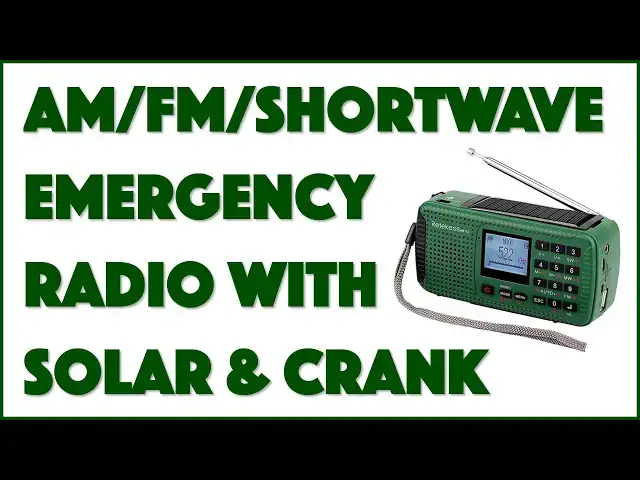
Emergency radios tend to have a lot of features and functions, but the Retekess HR-11S might win the prize with its AM/MW/SW/FM, bluetooth, and MicroSD audio playback options, MicroUSB, solar and hand crank power options and three function flashlight including loud siren. Tech expert Dave Taylor of https://www.AskDaveTaylor.com/ runs through all the features and functions of the HR11S Emergency Dynamo Radio and finds a lot to like. But do you want the unit with shortwave or the HR11W with NOAA weather radio?
Retekess HR11S with Shortwave: https://amzn.to/2ZWMkfl
Retekess HR11W with NOAA Weather: https://amzn.to/32SUp6U
Show More Show Less View Video Transcript
0:00
An emergency radio with AM, FM, shortwave, solar, and hand crank? Let's check this out
0:13
Dave Taylor here, and I'm checking out, while I'm charging, this device. Let me go ahead and
0:18
stop here. This is the Reticus HR-11S Dynamo radio. What's a dynamo? It's this little hand
0:26
crank on the back. So this is if you have no power and you really just need it for a couple
0:31
of minutes of maybe flashlight function or to be able to listen to emergency radio or something
0:38
There's also a solar panel on the top, but that's not very helpful in really cloudy weather or
0:43
obviously at night. So in fact, the main way that you're going to be charging this, the main way
0:48
most people will charge this, will be via micro USB on the side. And once it's charged, you can
0:54
actually plug a cable in and charge your phone or something. So it's just a battery as one of its
1:00
many functions. Now, primarily it's a radio and the radio is AM or medium wave, FM, and shortwave
1:07
And those frequencies are 522 to 1701 kilohertz for AM slash medium wave and 87 to 108 megahertz
1:17
for FM and 3 to 23 megahertz for shortwave. And shortwave, all of them actually have this
1:24
sort of convoluted way of being able to direct enter a frequency. For AM and FM, not a big deal
1:30
but for shortwave, you'll want to use that. And here's the reality is there's not much going on
1:35
in the shortwave frequency anymore, particularly in North America. If you're in like, you know
1:40
subcontinental Africa or in India or something, maybe there's, you know, transmissions out there
1:46
But I tried this at night because shortwave is better at night than during the day. And even
1:51
with the antenna fully extended and me standing outside, I couldn't get anything at all
1:56
just like one very faint channel. So really hard to demo that or anything. And I'm not sure that
2:02
shortwave is something that's going to be around in five or 10 years, but be that as it may
2:06
they actually have another version of this that uses the National Oceanic and Atmospheric
2:12
Administration, the NOAA weather signal. And that one, I kind of wish I had gotten instead of this
2:16
but be that as it may, I'll come back to that in a minute. Let's just keep talking about it
2:21
Has an 850 milliamp hour battery. Like I said, you can charge via USB, via solar, via hand crank
2:29
and then you can charge devices via the USB plug on the side. In fact, let's look at that side
2:33
because it gives you the ability to turn on and off that USB plug, which is really handy. So you
2:39
don't have to worry about it trickle charge leak where you're like, I'm cranking like crazy and
2:44
I'm not getting anywhere because you're getting just barely a tiny amount into your phone or
2:49
something. Not great. It also has micro SD and that micro SD is interesting. We'll come back to
2:54
that in a second. Micro USB for charging and audio out, which is also really helpful. But that micro
3:01
SD card or TF card, depending on what region of the world you're in, actually lets you load MP3
3:08
content or you can record your radio onto it. So if for whatever reason you want to be able to
3:14
record something that's going on, you can do that right onto your card. And then the audio
3:19
out is really important too, because this is a really cool device, but it's got a really tiny
3:23
speaker. So if I turn it on and actually it already is on. So this is a local FM jazz station
3:33
and it's certainly listenable, but it is as you would expect from a small speaker. There's no
3:38
mid-range and there's no bass. This is not an audiophile device, but plug in some headphones or
3:44
an external speaker that does have bass and you'll be surprised at how nice this sounds, because
3:50
what it really is doing is it's really a tuner. Much more of the speaker is like sort of a, well
3:54
we got to put one in. So we got a little tiny little speaker we put in here, but not necessarily
3:59
a key feature. Also supports Bluetooth. So you can pair this with your phone and use this as a speaker
4:06
with your phone being the source of the music or whatever, you know, podcast, audio book, whatever
4:12
it is you want. So that's cool too. And then the flashlight's kind of fun because it's on the side
4:17
there's a separate switch on the top here and it's off on emergency, which is the little red light
4:25
And then you ready for this? A really loud, annoying siren. We don't want to do that too
4:32
much because I don't need my neighbors calling the police. But all really useful if you're
4:36
backpacking in the middle of nowhere and something bad happens, that might be the thing that gets you
4:40
some help, which might be super critical. Now the LCD is a backlit LCD, so when I turn this on
4:48
it's actually pretty easy to read, actually remarkably easy to read, because a lot of these
4:54
let me go ahead and turn the volume down, a lot of these sort of devices don't use backlit LCDs
5:01
because they do take a tiny bit more power. And the problem is then you can't read the screen
5:05
and that's really annoying. So this does not have that problem, which is great. Has a clock and
5:11
calendar and alarm system. I'm not sure when you would use that, but it does have that feature and
5:15
capabilities. And like I said, it does have that MP3 record and play via the micro SD card. So
5:23
that's pretty much it in terms of features and functionality. I mean, if you look on the box
5:28
they got a whole long laundry list of all the different things it can do, which is nice
5:33
But really the primary goal for something like this is to have it be where you put it on the
5:39
back shelf or you put it in your glove compartment and you just forget about it. And then some long
5:44
time later, you get into an emergency situation and you pull it out and then you have some ability
5:50
to use that. So you can pick up AM and pick up emergency broadcasts. If you're really in the
5:55
middle of the outback or something, you can try shortwave. You can put the solar up so you can
6:00
just let it sit outside for a couple of hours in the sun and that'll give it some power if it's
6:04
completely dead. Or if you're really enthused, you can just crank the heck out of it. And honestly
6:11
the company says this is really all you want to do if you're using flashlight. If you want to use
6:17
this as a radio or something, you're going to go bonkers spending literally 15, 30, 45 minutes
6:23
cranking to get just a short amount of time on the radio. So not a great power partner there
6:30
but better than nothing. If you're really in a pickle and everything's completely dead and you
6:35
really want that flashlight and you turn it on and nothing happens, you can do a little hand cranking
6:40
and get at least a couple of minutes of flashlight out of it. So I really like having all these
6:44
options and having all these different features. It does have a couple of, um, not so easy to get
6:52
out. It has a lithium ion battery that comes with, like I said, 850 milliamps. And that's included
6:59
which is handy because you don't want to have to go and buy something like that. Um, how long it
7:04
holds the charge? Well, you know, probably six months to a year, but it's probably not a bad
7:09
idea as like every six months set a reminder to go and like check all your fire extinguishers
7:14
all your smoke alarms, make sure your batteries are charged, your emergency devices are ready to go
7:19
Everything's all good just in case. So really not much else to talk about with this other than
7:25
the size. So it's seven inches by three and a half inches, no, by four and a half inches. And they say
7:32
it's three and a half inches thick. I don't think it's that thick. Maybe that's with the crank
7:36
sticking out or something. I don't know exactly what that measurement is, but it is, as you can
7:41
see, versus my hand size, pretty darn small, little chunky, but small. It's 14 ounces. And here's the
7:47
thing is that Reticus makes this with shortwave, but they make exactly the same unit in red that
7:54
has the shortwave replaced with that National Oceanic and Atmospheric Administration, that
7:59
NOAA weather radio, kind of the one I wish I had gotten because I think that one has more
8:04
functionality and they're definitely still using the weather radio. And that's good for like
8:08
hurricane and tornado alerts and all that sort of stuff. This one's just not going to get that for
8:12
you, but be that as it may, if you are curious about shortwave, then this is actually a really
8:18
fun little device to play with. So there you have it. For this sort of device, it's actually well
8:24
made and has a nice feel to it and seems like it's going to hold up really well over years
8:30
Unfortunately, a lot of these emergency radios that I've tested out are pretty flimsy and they
8:35
feel like, you know, when you're really in the jam and you really need it, it's not gonna work for
8:40
you. But this one actually feels like it's really well made and even if it falls out of your boat
8:46
onto the dock or it falls out of your car while you're like trying to figure out what's going on
8:50
you're going to pick it up and it's going to be perfectly fine and continue working. So all of
8:55
that's really great. You know, the tuner, you know, it's okay. This is not much of an antenna, so if
9:03
you really, really wanted to get better reception, you could clip something else metal to this or
9:08
maybe a wire and create a bigger loop and that would give you better reception. Certainly with
9:13
shortwave, the people that actually are using shortwave for any purposes at all are using big
9:20
antennas because it makes a huge difference. This little antenna is not doing much for you, which is
9:24
why I didn't get any shortwave signal. So that's it. Positives, negatives, really good to have one
9:30
of these sort of devices just stuck in a cupboard somewhere just in case you never know when you
9:35
might lose power and be in an emergency situation. So let's talk about the price, but before we get
9:40
there, I'm going to ask if you can subscribe to my channel. Really appreciate when you do that. Great
9:45
Now this is the Reticus HR11S Dynamo Radio and it's $49.99 at amazon.com and it is definitely
9:55
on the one of the best of these devices I've ever checked out in terms of its build quality and its
10:01
ruggedness and its use and simplicity. Do I wish it had the weather radio? Yeah, I think I would
10:07
probably have gone for the 11W instead of the 11R or I mean the 11S and they are the same price
10:13
They're both $49.99 at amazon. In fact, I have links to both of them in the description of this video
10:18
So check that out and I'm going to get back to cranking my radio, which means I'll catch you in my next video
10:31
So
10:49
you
#Music & Audio
#Radio
#Consumer Electronics
#Radio Control & Modeling
#Home Appliances
#Communications Equipment
#Radio Equipment
#Sporting Goods
#Water Sports
#Media Streaming Devices