0:00
Most research and public interest in
0:01
human origins focuses on species that
0:03
are likely to be our ancestors. But the
0:06
story of our family tree is not a
0:08
straight line. They were the
0:09
evolutionary side branches. They walk
0:12
the same African plains as our
0:13
ancestors, breathe the same air, and
0:16
then without leaving descendants, they
0:18
vanished. Their importance lies in what
0:20
they remind us about evolution. That
0:22
success is never guaranteed.
0:25
Around 3 to 2 million years ago, a
0:27
dramatic global cooling event
0:29
transformed Africa, creating harsh,
0:32
open, and arid environments. Two major
0:35
homminin groups emerged from the
0:37
existing Oralopithesines to tackle this
0:39
new world, our own lineage, Homo, and
0:42
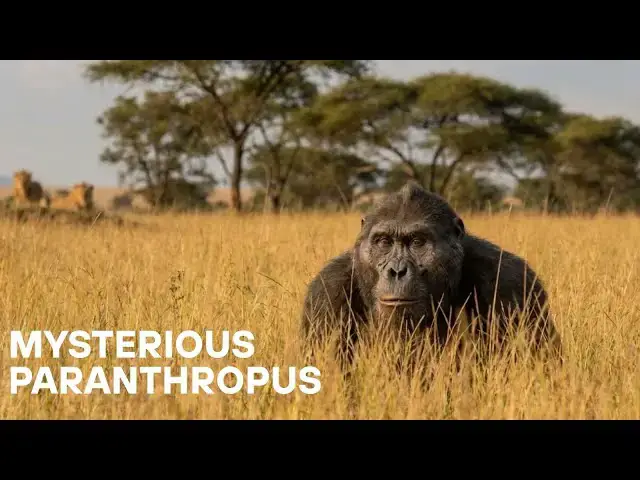
its robust rival Paranthropus.
0:45
Flourishing in Eastern South Africa
0:47
between 2.7 and 1.2 million years ago,
0:50
Paranthropus earned the name robust
0:54
Paranthropus is known for its highly
0:56
distinctive anatomy and specialized
0:57
chewing adaptations which set it apart
0:59
from other hominins of the time such the
1:01
more lightly built gracial orolopythecus
1:04
species from which they are thought to
1:06
have evolved. Paranthropus shared the
1:08
African landscape with early species of
1:10
our own lineage homo for over a million
1:13
years but ultimately failed to adapt to
1:15
changing environments and went extinct
1:18
representing a specialized evolutionary
1:21
Members of this genus including
1:23
paranthropus ethopicus, paranthropus
1:26
boiseay and paranthropus robustus showed
1:29
anatomical features clearly linked to
1:31
powerful processing of hard or fibrous
1:33
plant foods. These features can be seen
1:35
most strongly in the skull, jaws and
1:38
teeth. The face of paranthropus is broad
1:41
and disshaped with flaring zygomatic
1:43
arches, cheekbones that expanded
1:46
sideways to make room for enlarged
1:47
chewing muscles. A sagittal crest,
1:50
especially prominent in males, formed
1:52
along the top of the skull and served as
1:54
an attachment site for the massive
1:56
temporales muscles. Together, these
1:58
traits created one of the most powerful
2:00
chewing systems of any hominin. The
2:02
dentition of paranthropus reflects this
2:04
same trend toward heavy mastication. The
2:07
molers and preolars are extremely large
2:09
with very thick enamel while the front
2:12
teeth, the incizers and canines are
2:16
This reversed size pattern contrasts
2:18
sharply with other orolopithesines and
2:21
early homo. The dental arcade is deep
2:23
and robust and the mandible is wide and
2:26
reinforced to withstand repeated high
2:28
bite forces. These features suggest that
2:30
paranthropus consistently processed
2:32
tough or abrasive foods even if some of
2:35
these foods were seasonal or fallback
2:37
resources. Outside the skull, the
2:39
postranial skeleton of paranthropus is
2:41
less dramatically specialized. Available
2:44
fossil evidence indicates that these
2:45
homminins were bipedal with body
2:47
proportions generally similar to
2:50
Their estimated body size was moderate,
2:53
neither particularly large nor small
2:55
among early hominins. Males were
2:57
significantly larger than females,
2:59
indicating a degree of sexual
3:01
dimmorphism. Although they were capable
3:03
bipeds, their anatomy does not show the
3:05
same long-d distanceance walking or
3:07
running adaptations seen later in Homo.
3:09
Instead, their locomotive patterns
3:11
appear to have been efficient but not
3:13
highly specialized. Analysis of the
3:15
Paranthropus Boise fossils reveals that
3:18
they had hand proportions similar to
3:19
modern humans, suggesting they were
3:21
capable of making simple tools, which
3:24
challenges the old belief that only the
3:25
genus Homo possessed this ability.
3:28
However, their wrists lacked the
3:29
skeletal features necessary for a
3:31
delicate precision pinch like holding a
3:33
needle. instead favoring a powerful
3:36
gorilla-like grip designed for brute
3:39
strength. Since their feet and straight
3:41
finger bones confirm they were committed
3:43
ground dwellers rather than tree
3:45
climbers, this robust hand likely
3:47
evolved not for locomotion, but to
3:49
forcefully rip and process the tough
3:51
vegetation that dominated their diet.
3:54
This highlights the fundamental
3:56
evolutionary divergence between the two
3:58
groups. While Homo evolved flexible
4:00
wrists to create complex technology to
4:02
do their work, Paranthropus developed
4:05
specialized biological machinery,
4:07
massive jaws, and powerful hands to
4:09
physically process their food.
4:12
Paranthropus Ethiopicus is the earliest
4:14
known species of the Paranthropus group.
4:16
It lived around 2.7 to 2.3 million years
4:19
ago, mainly in East Africa, especially
4:22
in Ethiopia and Kenya and possibly
4:24
Tanzania. The most famous fossil is the
4:27
black skull discovered near Lake
4:28
Turkana. This species had a very strong
4:31
jaw and large teeth that helped it chew
4:33
tough plant foods. Scientists think
4:35
Paranthropus Ethiopicus may be the
4:37
ancestor of later Paranthropus species.
4:40
Paranthropus robustus lived at about the
4:42
same time as paranthropus boyce around 2
4:44
to 1.2 million years ago in southern
4:46
Africa mainly in South Africa at sites
4:49
like Cromry, Swatrans, and Dramolan.
4:52
Although it shared features like strong
4:53
jaws and large teeth, paranthropus
4:56
robustus was slightly less robust than
4:58
paranthropus boise, it represents a
5:00
separate branch of paranthropus
5:02
evolution that developed in the south.
5:04
Paranthropus boise lived later between
5:07
2.3 and 1.2 million years ago. It also
5:10
lived in East Africa and its fossils
5:12
have been found in Uluvi Gorge in
5:14
Tanzania, Kenya, Ethiopia, and Malawi.
5:18
It is sometimes called the nutcracker
5:20
man because it had extremely large mers
5:23
and a powerful jaw suggesting it ate
5:25
hard or fibrous foods. Paranthropus
5:27
boise is one of the best known hominins
5:30
due to many fossil discoveries and it
5:32
shows the most extreme chewing
5:33
adaptations among all paranthropus
5:36
species. Paranthropus boyce holds a
5:39
distinct filogenetic position as a
5:41
robust oustralopith that represents a
5:43
side branch of the human evolutionary
5:45
tree rather than a direct ancestor of
5:48
modern humans. Although paranthropus
5:50
boise lived at the same time as early
5:52
members of the genus homo. It followed
5:54
an independent evolutionary pathway that
5:57
diverged from the main line leading to
5:58
humans. Most evidence suggests that
6:01
Paranthropus bo evolved from
6:03
Paranthropus Ethiopicus in East Africa.
6:07
Fossils of Ethiopicus show earlier
6:09
expressions of traits that later became
6:11
more pronounced in Boris, including
6:13
large mers, thick enamel, flaring
6:15
cheekbones, and the sagittal crest for
6:17
strong chewing muscles. This supports a
6:20
continuity within the paranthropus
6:22
lineage, showing a gradual increase in
6:24
dietary specialization over time rather
6:26
than a connection to homo ancestry. The
6:29
relationship between paranthropus boyce
6:31
and early homo is best described as
6:33
parallel rather than ancestral
6:35
descendant. Both lived in similar
6:37
environments and possibly competed for
6:39
some resources but their evolutionary
6:41
strategies were different. Early
6:43
homoecies evolved tool use, greater
6:46
dietary flexibility and increasing brain
6:48
size. While paranthropus boise became
6:51
progressively more adapted to consuming
6:53
hard and fibrous plant foods. Thus the
6:55
two lineages represent contrasting
6:57
approaches to survival during the plea
6:59
scene. The extreme specialization of
7:02
paranthropus boise played a major role
7:04
in its fellow genetic placement and
7:06
eventual fate. Its robust jaws,
7:08
oversized mers, and thick enamel were
7:11
well suited to a C4 plant dominated
7:13
diet. But this narrow ecological niche
7:16
likely reduced its ability to respond to
7:18
climatic fluctuations and environmental
7:20
change. In contrast, the flexible
7:23
dietary and behavioral strategies of
7:25
homoecies enabled them to expand and
7:27
persist. As a result, paranthropus boise
7:30
represents an evolutionary branch that
7:32
thrived for more than a million years,
7:34
but ultimately came to an end, leaving
7:36
no descendants. Since the proposal by
7:38
Louisaki and colleagues that
7:40
paranthropus boise may have been the
7:42
victim of homohabilis at Oldi Gorge,
7:44
many researchers interpreted the fate of
7:46
paranthropus boise through a competitive
7:49
evolutionary lens. The traditional view
7:51
was that the emergence of toolass
7:53
assisted omnivorous foraging gave early
7:56
members of the genus Homo a significant
7:58
adaptive advantage. The ability to
8:00
exploit diverse resources, plant and
8:03
animal allegedly placed homo in superior
8:05
ecological positions across savannah
8:07
environments of Africa. While
8:09
paranthropus boyce with its highly
8:11
specialized dentagnathic toolkit,
8:14
massive jaws and teeth remained limited
8:16
to its specialized feeding niche. In
8:19
this view, the dietary flexibility of
8:20
homo caused the competitive exclusion of
8:23
paranthropus boise. However, new
8:25
archaeological evidence challenges this
8:27
narrative. Multiple discoveries now
8:29
suggest that toolmaking behaviors were
8:31
not restricted to the genus homo.
8:34
Paranthropus may have also been capable
8:36
of manufacturing and using stone tools.
8:38
Meanwhile, analyses of stable carbon
8:40
isotopes and dental microware patterns
8:43
across various African homminins and
8:45
primates show a much richer and more
8:47
dynamic dietary landscape. During the
8:49
plea scene, both hominins and
8:51
large-bodied baboons shifted toward
8:53
diets with more C4 vegetation, which
8:56
includes grasses and sedges during the
8:58
early plea scene, likely reflecting
9:00
shifting ecological pressures and
9:02
increasingly competitive habitats. Thus,
9:05
dietary behavior was far from static and
9:07
far from binary. Among early African
9:09
hominins, paranthropus boise stands out
9:12
for its unusual dietary consistency.
9:14
From about 2.3 million to 1.3 million
9:17
years ago, its enamel isotopic
9:19
signatures show that it fed
9:20
predominantly on C4 plants, and that it
9:23
was herbivorous, not a mixed feeder.
9:26
Surprisingly, this major shift toward a
9:27
grass-based diet was not accompanied by
9:29
changes in microware or skull and tooth
9:32
anatomy, which remained stable over a
9:34
long period. The fact that paranthropus
9:37
boise retained chewing apparatus capable
9:39
of processing tough fallback foods
9:41
suggests that its morphological
9:43
specialization was not necessarily for
9:45
its primary diet, but for seasonal or
9:48
episodic survival foods. Therefore,
9:50
Paranthropus Boyce's ecological niche
9:52
was remarkably durable. While other
9:55
homminins continued to experiment with
9:57
mixed feeding strategies, stone tool
9:59
reliance and opportunistic omnivore,
10:02
paranthropus boay evolved into a highly
10:04
successful specialist, occupying a
10:06
narrow but stable niche. Importantly, it
10:09
shared more dietary similarities with
10:11
the giant baboon therapythecus or waldi
10:14
than with members of the genus Homo. If
10:16
both stone tool technology and dietary
10:18
niche separation existed between homo
10:20
and paranthropus boyce, then competition
10:23
from homo becomes an unlikely
10:24
explanation for the latter's extinction.
10:27
A contrasting explanation proposes that
10:29
what drove paranthropus boyce to
10:31
extinction was not competition, but its
10:34
decreasing ecological flexibility in the
10:36
face of environmental upheaval. Between
10:38
1.3 million and 1 million years ago,
10:40
just around the time Paranthropus Boise
10:43
disappears, major evolutionary changes
10:45
occurred in Homo, including rapid
10:47
increases in brain size and a renewed
10:49
dispersal into Eurasia. These events
10:52
coincided with the midpene transition, a
10:55
period marked by dramatic climatic
10:57
oscillations involving extended glacial
11:00
cycles followed by rapid warm periods.
11:02
Environmental shifts during this time
11:04
have long been hypothesized to reshape
11:06
eastern African ecosystems and influence
11:08
homminin evolution. The extinction of
11:11
paranthropus boise a hermen specialized
11:13
in eating C4 grasses or related plants
11:16
presents a puzzle. It happened during
11:18
the midpene transition when East African
11:21
environments became increasingly
11:23
dominated by open grasslands with
11:25
reduced woody vegetation and high
11:27
populations of seafoor feeding fauna.
11:31
in C4 grasslands, the very environment
11:33
Bose was adapted for. This suggests that
11:36
the extinction was not simply due to the
11:38
long-term trend of grassland expansion.
11:40
To solve this paradox, scientists
11:43
investigated the environmental history
11:45
preserved in ancient soils in the
11:46
Turkana basin. They concluded that
11:49
Boise's demise was linked to a temporary
11:51
climate crisis rather than direct
11:52
competition with the contemporary
11:54
homminin Homo erectus. The critical
11:57
event was the C3 excursion, a short-term
12:00
environmental shift that occurred
12:02
between about 1.3 and 0.7 million years
12:06
During this period, the vegetation in
12:08
the northern East African rift system
12:10
temporarily flipped. There was an
12:12
increase in C3 vegetation, trees, and
12:15
shrubs, and a significant reduction in
12:19
This change was unusual because evidence
12:21
suggests it was not caused by simple
12:23
changes in rainfall or by the decline of
12:25
large grazing animals. Instead, models
12:28
and records point to a temporary rise in
12:30
atmospheric carbon dioxide and a warming
12:33
trend during the mid plytoine
12:35
transition. Higher CO two levels are
12:38
known to favor the growth of C3 plants
12:40
while weakening C4 grasses causing the
12:43
widespread grasslands to shrink
12:44
dramatically if only temporarily.
12:48
The shrinking of these C4 grasslands
12:50
during the C3 excursion created a
12:52
resource crisis for Boyet. Because this
12:55
hominin relied almost exclusively on C4
12:57
plant foods, the temporary loss of its
13:00
primary food source led to intense
13:01
competition among all non-ruminant C4
13:04
grazers. Pranthropus Bay's extreme
13:07
specialization became its fatal flaw. It
13:10
lacked the flexibility to adapt to
13:12
sudden change. In sharp contrast, Homo
13:15
Erectus was an omnivorous generalist
13:17
that utilized tools. This flexibility
13:20
meant Homo could eat a wide variety of
13:22
foods, including meat, marrow, and
13:24
different kinds of plants, and access
13:26
water and living spaces more creatively.
13:29
When the C4 grasslands declined, Homo
13:32
Erectus was able to switch diets and
13:34
even began consuming the limited C4
13:37
resources that Boyce desperately needed,
13:39
giving Homo the necessary adaptability
13:41
to survive the climate instability that
13:43
wiped out the highly specialized