Up next in 10


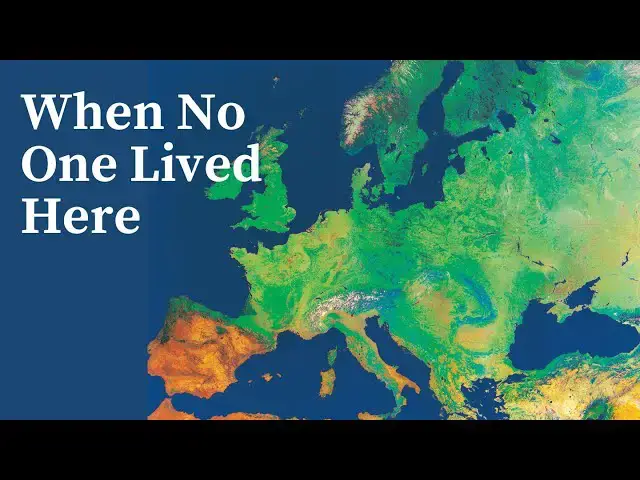
Think humans have always been the masters of their environment? Think again. New evidence has revealed a "Great Hiatus"—a 200,000-year period when Europe was a frozen, human-free wasteland.
The Discovery
For decades, archaeologists believed humans lived continuously in Europe since arriving 1.4 million years ago. However, deep-sea mud samples and ancient pollen have uncovered a "mega-freeze" 1.1 million years ago (Marine Isotope Stage 34) that triggered a total population collapse.
Why the First Wave Failed
The Climate Trap: Early pioneers arrived during a "Golden Age" of mild, predictable 41,000-year cycles. They never learned to use fire or sew warm clothing because they didn't need to.
The Ocean Current Collapse: A massive influx of freshwater stalled the Atlantic "conveyor belt," cutting off 95% of Europe's heat. Temperatures plummeted below 7°C (45°F) in usually subtropical areas like Spain.
A Caloric Catastrophe: As lush forests turned into semi-deserts, the "Villafranchian" animals humans scavenged went extinct. Without fire, humans couldn't eat enough to survive the brutal cold.
The 200,000-Year Silence
The fossil record goes silent between 1.1 million and 900,000 years ago. This "archaeological silence" proves that the first Europeans didn't just move—they were extirpated.
The Second Wave: A New Beginning
Around 900,000 years ago, a new group—Homo antecessor—re-entered Europe. They weren't related to the first group; they were a smarter, more resilient "Second Wave" capable of pushing as far north as Britain (Happisburgh).
Watch to discover how the Earth’s climate hit the "reset button" on human history and why we aren't the descendants of Europe’s first pioneers.
Show More Show Less View Video Transcript
0:00
In the past, archaeologists believe that
0:02
once our ancestors, early members of the
0:04
genus Homo, reached Europe about 1.4
0:06
million years ago, they were there to
0:08
stay. Once hominins crossed the
0:11
Mediterranean corridors, they
0:12
established a permanent foothold,
0:14
adapting to the relatively mild glacial
0:17
cycles of the early pleaene. Sites found
0:19
in places like Spain suggested that
0:21
these early humans were tough enough to
0:23
handle the changing weather and ice age
0:25
cycles. Scientists called this the
0:27
continuous occupation theory. The idea
0:30
that humans were resilient enough to
0:31
adapt to whatever the environment threw
0:33
at them. New data has completely
0:35
overturned that old idea.
0:38
By looking at deep sea mud samples and
0:40
ancient pollen, researchers discovered a
0:42
massive cooling event about 1.1 million
0:45
years ago known as marine isotope stage
0:48
34. This wasn't just a cold winter. It
0:51
was a climatic disaster so severe that
0:53
it turned Europe into a frozen
0:55
wasteland. Even the warmer areas like
0:58
Spain became too harsh for humans to
1:00
find food or stay warm. This event
1:02
caused a great hiatus, a long period
1:04
where Europe was completely empty of
1:06
humans. The first Europeans didn't just
1:08
move away, they likely died out
1:10
entirely. The humans who live in Europe
1:12
today and those we find in the fossil
1:14
record later on aren't the descendants
1:16
of that first group. The first wave
1:19
arrived 1.4 4 million years ago, but
1:22
went extinct during the big freeze. The
1:24
humans we find in the fossil record
1:26
later were not the descendants of the
1:28
first group. Instead, they were a new
1:30
wave of explorers, a totally different
1:33
group of humans like Homoantcessor
1:35
arrived about 900,000 years ago once the
1:38
Earth warmed up again. The evidence
1:41
shows that the first wave of human
1:42
settlers was extrapated or wiped out by
1:45
the North Atlantic climate. This
1:48
discovery changes how we look at human
1:50
history. It tells us that our ancestors
1:52
weren't invincible explorers who
1:54
conquered every environment. Instead,
1:56
their survival was often at the mercy of
1:58
the Earth's climate. The story of Europe
2:01
isn't one long steady climb. It's a
2:03
dramatic cycle of arrival, extinction,
2:06
and starting over from scratch. During
2:08
the early pleaene, approximately 1.2
2:11
million years ago, the Earth's climate
2:13
exhibited a predictable, gentle rhythm.
2:16
Every 41,000 years, the Earth's tilt,
2:19
called oblquity, would shift slightly,
2:22
causing a mild cooling period followed
2:24
by a warm one. Unlike the terrifying ice
2:26
ages post 1.2 million years ago, which
2:29
lasted 100,000 years and brought extreme
2:32
cold, these earlier cycles were
2:34
moderate. They were more like long, cool
2:36
autumns rather than permanent frozen
2:38
winters. Because the changes weren't too
2:40
drastic, the environment stayed stable
2:42
for a very long time. During these mild
2:45
ice ages, places like Spain and Italy
2:48
stayed lush. Instead of turning into
2:50
frozen tundras or deserts, these regions
2:52
remained covered in open woodlands and
2:54
evergreen forests. There was plenty of
2:57
rain and enough food to go around. For
2:59
early humans, this was an open door. It
3:02
allowed them to wander from the Middle
3:03
East into southern Europe with ease.
3:05
Crucially, because it stayed relatively
3:07
warm, these early humans didn't need
3:09
high-tech survival gear. They were able
3:11
to thrive without knowing how to control
3:13
fire or how to sew warm tailored
3:16
clothing. This stability gave our
3:18
ancestors a full sense of security. They
3:21
settled into Europe because the gentle
3:22
climate made life easy and predictable.
3:25
However, because they never had to
3:27
develop complex tools or fire to survive
3:29
the mild winters, they were completely
3:31
unprepared for the merciless climate
3:33
shift that was lurking just around the
3:34
corner, the one that would eventually
3:36
lead to their extinction. To understand
3:39
who these first Europeans were, we have
3:41
to look at the fingerprints they left
3:43
behind in Spain. These fossils and tools
3:46
tell a story of a group of pioneers who
3:47
were successful for hundreds of
3:49
thousands of years before they suddenly
3:51
vanished. The most important clues come
3:53
from a site in northern Spain called a
3:55
Tapurka. Deep inside a cave called
3:58
Similante,
3:59
scientists found a jawbone and a partial
4:01
face nicknamed pink. This individual
4:04
lived between 1.4 and 1.2 2 million
4:07
years ago, making them one of the oldest
4:09
Europeans ever found.
4:11
When scientists analyzed the face, they
4:13
noticed something critical. This
4:15
ancestor looked very primitive,
4:17
resembling the older Homo erectus from
4:19
Africa more than the humans who lived in
4:22
Europe later on. This morphological
4:25
discontinuity suggests that these first
4:27
settlers weren't the ancestors of later
4:29
Europeans. Instead, they were a separate
4:32
group that was eventually replaced.
4:34
Further south at sites like Barancaon,
4:37
we find evidence of how these people
4:38
lived dayto-day. About 1.4 million years
4:42
ago, they lived along the shores of a
4:44
massive salty lake. Archaeologists found
4:47
mode one stone tools here. Simple sharp
4:50
stone flakes used for butchering meat.
4:52
By looking at the fossilized teeth of
4:54
ancient vos, small rodents found in the
4:57
same soil, scientists can confirm
4:59
exactly when these humans were there.
5:02
They were clearly a population that knew
5:04
how to survive in a landscape filled
5:05
with giant animals. These early humans
5:08
didn't live alone. They were part of a
5:10
specific ecosystem called the Villa
5:12
Frankian Guild. It was a world of
5:14
giants, including hometherium, simited
5:17
cats, and pachikrauta, giant hyenas.
5:21
Humans likely survived here by finding a
5:23
very specific niche, scavenging. After a
5:26
giant cat killed a large animal and ate
5:27
its fill, humans would use their stone
5:29
tools to crack open the remaining bones
5:31
to get to the calorie rich marrow that
5:33
other animals couldn't reach. However,
5:35
this specialized lifestyle was a
5:37
double-edged sword. These humans were
5:39
heavily dependent on this specific group
5:41
of animals and the stable, mild climate
5:44
they lived in. When the climate shifted
5:46
and the Vilrankian guild of animals
5:49
collapsed, the humans who relied on them
5:51
were left with no way to survive. The
5:53
very system that allowed them to thrive
5:55
in Europe ultimately led to their
5:57
extinction.
5:59
Around 1.1 million years ago, the golden
6:01
age of mild European weather came to a
6:03
violent end. Scientists have identified
6:06
a specific moment in history, a mega
6:08
freeze that acted like a biological
6:10
reset button for the entire continent.
6:13
The evidence for this disaster comes
6:15
from a famous underwater research site
6:16
off the coast of Portugal. This location
6:19
is like a time capsule. The mud on the
6:22
ocean floor contains tiny fossils and
6:24
ancient pollen that tell us exactly what
6:26
was happening on land and in the sea at
6:28
the same time. The data shows that
6:30
roughly 1.154 million years ago, the
6:33
ocean temperature suddenly plummeted. In
6:36
areas that were usually warm and
6:38
subtropical, the water temperature
6:39
dropped below 7° C. This wasn't just a
6:43
short cold snap. It was a brutal
6:45
sustained freeze that lasted for
6:47
thousands of years, far exceeding any
6:50
ice age. which these early humans had
6:51
ever experienced.
6:53
The reason this freeze was so deadly is
6:55
that the Earth's natural heating system
6:57
broke down. Usually, a massive ocean
6:59
current called the Atlantic meridian
7:01
overturning circulation acts like a
7:03
giant conveyor belt carrying warm water
7:06
from the tropics up to Europe. This is
7:08
what keeps Europe much warmer than other
7:10
places at the same latitude. During this
7:12
event, melting ice sheets dumped a
7:14
massive amount of fresh water into the
7:16
North Atlantic. Because fresh water is
7:18
lighter than salt water, it sat on the
7:20
surface like a lid, stopping the
7:22
conveyor belt from moving. This stalled
7:25
the Earth's heat pump, cutting off up to
7:26
95% of the heat sent to Europe. Without
7:29
that warmth, the Iberian Peninsula lost
7:32
its protection and was hit by freezing
7:34
air directly from the North Pole.
7:36
Scientists used this climate data to
7:38
simulate what life was like on the
7:39
ground for the first Europeans. The
7:41
results were grim. The amount of land
7:44
where a human could actually survive
7:45
dropped to almost zero. The biggest
7:47
killer was likely the winter
7:49
temperature. Because these early
7:50
pioneers didn't have fire, warm
7:52
clothing, or insulated shelters, they
7:54
had a hard limit on how much cold their
7:56
bodies could take. The Great Hiatus
7:59
pushed temperatures well below freezing,
8:01
creating a wall of cold that these
8:02
humans simply could not cross. They were
8:05
trapped in a landscape that had become
8:07
biologically uninhabitable, leading to
8:09
their total extinction across the
8:10
continent. When the big freeze hit 1.1
8:13
million years ago, it destroyed the one
8:15
place early humans thought was safe, the
8:18
refugeium of Spain. Normally, a
8:21
refugeium is a warm pocket where life
8:23
can hide out during an ice age. But this
8:25
event was so powerful it turned the lush
8:27
Spanish peninsula into a barren, frozen
8:30
desert. By looking at ancient pollen,
8:33
scientists can see the exact moment the
8:35
food supply vanished. Before the freeze,
8:37
Spain was covered in oak trees, olive
8:40
groves, and nut-bearing plants, a buffet
8:43
of high energy food for early humans.
8:45
But as the climate shifted, the forests
8:47
literally died off. The pollen records
8:50
show a violent change where trees
8:52
disappeared and were replaced by
8:53
Artameisia, sagebrush, and hardy weeds.
8:56
This wasn't a rich grassland. It was a
8:58
semi- desert step. For humans who relied
9:01
on gathering nuts, fruits, and tubers to
9:03
survive, this was a caloric catastrophe.
9:06
The grocery store of the ancient world
9:08
had completely closed its doors. The
9:10
most devastating part of this story is
9:12
what these early humans didn't have.
9:14
Fire. While we often think of cavemen
9:17
with torches, there is no evidence that
9:19
these first Europeans knew how to build
9:21
or use fire. In sites like Seimodel
9:24
Elephante, archaeologists have found
9:26
zero ash, zero burnt bones, and no
9:29
charcoal. Without fire, these people had
9:32
no way to create their own heat. To keep
9:34
their bodies warm in the sub-zero
9:36
temperatures, they would have needed to
9:37
eat 20% to 30% more calories just to
9:40
keep their hearts beating. They were
9:43
caught in a deadly trap. Their bodies
9:45
needed more food than ever to fight the
9:47
cold. But the frozen landscape was
9:50
providing less food than ever before.
9:52
This burn more, eat less dynamic was a
9:55
death sentence. The climate forced their
9:58
metabolisms to work overtime while
10:00
simultaneously killing off the plants
10:02
and animals they needed for fuel.
10:04
Because they lacked the technology to
10:05
sew warm clothes or build fires, they
10:07
hit a biological wall. This energetic
10:10
deficit is why researchers believe the
10:12
first wave of Europeans didn't just move
10:14
away. They suffered a total population
10:16
collapse and went extinct. The
10:19
hypothesis that early humans vanished
10:20
from Europe during the Great Hiatus is
10:23
based on a significant gap in the
10:24
physical evidence. Not just climate
10:26
theories. After a period of successful
10:29
expansion around 1.2 million years ago,
10:33
there is a 200,000year stretch where no
10:36
human tools or remains have been found.
10:38
This archaeological silence suggests
10:42
that the first attempt to settle Europe
10:44
was a failed colonization resulting in
10:46
the total disappearance of the
10:48
population from the continent. This gap
10:50
is clearly visible in the geological
10:52
layers of Europe's most important fossil
10:54
sites.
10:55
In the Sierra Deatapa, researchers found
10:58
a sharp break between the older level
11:00
about 1.2 million years old and the much
11:02
younger level less than 850,000 years
11:05
ago. There are no intermediate layers
11:07
showing human presence between these two
11:09
points, indicating that the region was
11:11
completely abandoned for several
11:13
hundred,000 years. A similar pattern
11:16
exists in the Or region of southern
11:18
Spain. After early occupation sites like
11:21
Bangkok Leon, there is a long interval
11:23
where the sediment layers are completely
11:25
empty of human activity. Stone tools and
11:28
other signs of life only reappear much
11:30
later in the middle plea scene. Because
11:32
this gap appears in multiple regions
11:34
simultaneously, it suggests a widespread
11:37
abandonment of the Iberian Peninsula
11:39
rather than just a small group moving to
11:41
a different valley. While some sites
11:43
were once thought to bridge this gap,
11:45
modern dating techniques have proven
11:47
otherwise. Most of these sites have been
11:50
redated to either before or after this
11:52
200,000year window. The lack of any
11:55
verified settlements during the peak of
11:57
the marine isotope stage 34 cooling
11:59
event suggests that these early humans
12:01
simply could not survive the era's
12:03
extreme cold and environmental shifts.
12:06
This evidence supports the idea that
12:08
Europe was effectively depopulated until
12:10
a new wave of humans arrived later. The
12:12
200,000-year gap in human history
12:15
coincided with a massive reshuffleling
12:17
of Europe's animal life, known as the
12:19
Galleran turnover. During this time, the
12:22
environment changed so drastically that
12:24
the ecosystem early humans eventually
12:26
returned to was fundamentally different
12:27
from the one their ancestors had fled.
12:30
The extreme cold and shifting climate
12:32
around 1.1 million years ago wiped out
12:34
many oldworld species. The giant hyena,
12:38
which had previously dominated the
12:40
scavenging niche, went extinct.
12:42
Similarly, the southern mammoth, which
12:44
was suited for warmer woodlands, was
12:46
replaced by the step mammoth. This new
12:48
mammoth had specialized teeth designed
12:50
to grind the tough, abrasive grasses of
12:53
the cold, open plains that now covered
12:55
much of Europe. By 900,000 years ago, a
12:58
new group of animals known as the
12:59
gallerian guild took over. This included
13:02
the arrival of the spotted hyena, which
13:04
was smaller, more social, and more
13:06
versatile than the giant hyenas of the
13:08
past. At the same time, primitive wild
13:12
dogs were replaced by more modern
13:14
wolf-like species. This created a much
13:16
more competitive environment for any
13:18
predators or scavengers living on the
13:20
landscape. When the second wave of
13:22
humans finally re-entered Europe, they
13:25
were not walking back into familiar
13:26
forests. They were entering a harsh
13:28
stepdinated world ruled by a new set of
13:31
faster, smarter competitors and
13:32
different types of prey. Survival in
13:35
this new era required better tools and
13:37
more complex social strategies than
13:39
those used by the first pioneers.
13:42
Around 900,000 years ago, the silence in
13:45
Europe finally ended with the arrival of
13:47
a new group of humans. This second wave
13:50
was far more capable than the pioneers
13:52
who came before them. They didn't just
13:54
stay in the warm Mediterranean. They
13:56
possessed the physical traits and
13:57
survival skills needed to push deeper
13:59
into the continent even as the climate
14:01
remained challenging. The most famous
14:04
evidence of this comeback is found at
14:05
Grandalina in Spain, specifically in a
14:07
layer called TD6.
14:09
These humans named Homoccessor looked
14:12
different from the earlier first wave
14:13
inhabitants. They had facial features
14:15
that were surprisingly similar to modern
14:17
humans. In fact, advanced study of their
14:19
tooth proteins has revealed that they
14:21
are a sister group to the ancestors of
14:23
modern humans, Neanderthalss, and
14:25
Denisven.
14:26
This confirms that the people who
14:28
recolonized Europe were a new branch of
14:30
the human family tree, not just
14:31
survivors of the old one. The most
14:33
shocking proof of their resilience was
14:35
discovered far to the north at
14:37
Hapisburg, England. Here, researchers
14:39
found ancient footprints pressed into
14:41
the mud of a river estie. This site is
14:44
located at a high latitude where winters
14:46
would have been bitterly cold. Finding
14:48
humans this far north during the early
14:50
plea scene was a gamecher for
14:51
archaeology. It showed that this new
14:53
wave of people had developed the
14:55
environmental plasticity, the ability to
14:58
adapt to survive boreal conditions that
15:00
would have killed off earlier groups.
15:02
Determining the exact age of the Hapburg
15:05
site involves looking at the fossils of
15:07
extinct animals found alongside the
15:08
footprints such as the step mammoth.
15:11
While scientists debate the exact date,
15:13
they agree it falls within the early
15:15
plea scene. Whether they arrived 850,000
15:18
or 950,000 years ago, the message is the
15:22
same. These humans were pioneers who
15:24
could handle the cold, marking a
15:26
permanent shift in how our ancestors
15:28
lived in Europe. When we piece all this
15:30
evidence together, a new story of human
15:32
history emerges. Instead of one long
15:35
steady journey of humans living in
15:37
Europe, the data points to two
15:39
completely separate events. a failed
15:41
invasion followed by a successful
15:43
conquest. The first wave acted like an
15:46
invasive species moving into a new
15:48
territory. They took advantage of an
15:50
open door when the climate was warm and
15:52
forests were lush. These early humans
15:54
relied on the warmth of the
15:56
Mediterranean and scavenged leftovers
15:58
from giant hyenas and saber-tooth cats.
16:01
However, when a massive collapse in
16:03
ocean currents suddenly plunged Europe
16:04
into a subpolar deep freeze, their world
16:07
disappeared.
16:08
Without the ability to make fire or
16:10
handle the extreme cold, this first
16:12
group of pioneers was wiped out. The
16:15
second wave was a fresh start. This
16:17
group, known as homo anticcessor, was
16:20
better equipped for the challenge.
16:22
Whether they had evolved better biology,
16:24
like a faster metabolism to stay warm,
16:26
or developed better habits, like wearing
16:28
skins or sleeping in groups, they
16:31
succeeded where their predecessors
16:32
failed. They didn't just survive in the
16:35
sunny corners of Spain. They were tough
16:37
enough to push all the way to the chilly
16:39
forests of ancient Britain. The Great
16:42
Hiatus was a 200,000year silence that
16:45
serves as a powerful reminder of how
16:47
vulnerable early humans were to rapid
16:49
climate change. The first Europeans,
16:52
those who left behind the fossils in
16:53
Simadel Elephante, likely met their end
16:56
during a brutal frozen era. When humans
16:59
finally returned to the continent, they
17:01
weren't the descendants of the first
17:03
group. They were a new lineage that
17:05
would eventually lead to Neanderthalss
17:06
and eventually us.
#Earth Sciences
#Paleontology