Up next in 10


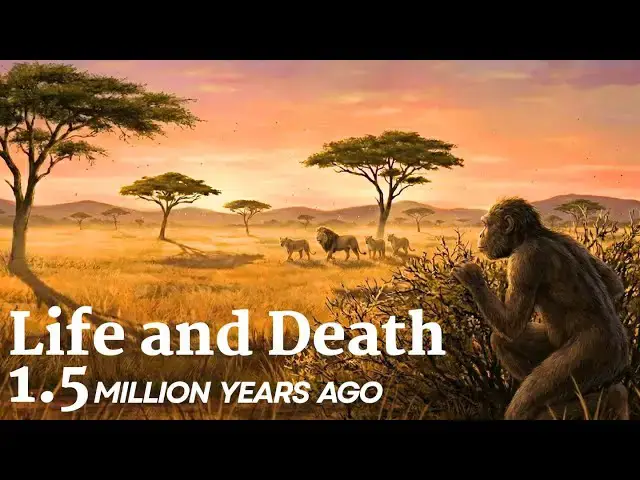
Life and Death 1.5 Million Years Ago
In 1984, the history of human evolution underwent a significant shift with the discovery of the "Turkana Boy" in northern Kenya. Dating back 1.5 million years, he is the most complete skeleton of an early human (Homo erectus) ever discovered, offering a near-perfect blueprint of the first ancestor to walk and hunt like us.
The Discovery
It began with a single fragment. Famed fossil hunter Kamoya Kimeu spotted a piece of skull no bigger than a matchbook in a dry riverbed. A five-year excavation revealed nearly the entire skeleton of a young boy, preserved in the volcanic ash and mud of the Turkana Basin.
The Runner’s Body
Turkana Boy was a biological masterpiece.
Height: At only 8 or 9 years old, he stood 5'3". Had he survived to adulthood, he would have been nearly six feet tall.
Adaptation: Unlike earlier tree-climbing ancestors, he had long legs and narrow hips. He was a "persistence hunter," built to run down prey in the African heat, likely using sweat to cool down while animals collapsed from exhaustion.
Diet and Technology
His anatomy proves he was a meat-eater. His "barrel-shaped" chest indicates a smaller gut, which meant he relied on high-energy food like meat to fuel his growing brain. He lived during a prehistoric tech revolution, using the Acheulean handaxe—a teardrop-shaped stone tool used for butchering and digging.
The Mind and Growth
Brain: His brain was 880 cc—twice the size of a chimpanzee’s. He was likely right-handed and possessed the biological hardware (Broca’s Area) for a "proto-language."
Growth Rate: He grew furiously fast. While his skeleton resembled a modern 14-year-old, his teeth revealed he was only a child of 8.
Show More Show Less View Video Transcript
0:01
The story of human evolution is like a
0:03
puzzle with most of the pieces missing.
0:05
We often have to guess what our
0:07
ancestors looked like based on a single
0:08
tooth or a broken skull. But in 1984,
0:12
everything changed with the discovery of
0:13
the Turkana boy. Found in the dusty
0:16
deserts of northern Kenya, this is the
0:18
most complete skeleton of an early human
0:20
ever found. Living 1.5 million years
0:23
ago, this boy provides us with a perfect
0:25
biological blueprint of Homo erectus.
0:28
The first of our ancestors to truly walk
0:30
like us, hunt like us, and eventually
0:33
leave Africa to explore the world.
0:35
Before we found him, we could only guess
0:37
what our early ancestors looked like.
0:39
But the Turkana boy revealed a startling
0:42
truth. Nearly every part of his body was
0:44
modern. He had long legs for running, a
0:47
frame built to stay cool in the
0:48
scorching sun, and a brain far larger
0:51
than anything that came before him. Yet,
0:54
he was still a bridge between two
0:56
worlds, growing up faster than we do
0:58
today, and carrying the rugged facial
1:00
features of a more ancient time. Step
1:03
back in time to discover the life and
1:05
tragic end of the Nario boy, the young
1:07
ancestor whose bones reveal the gripping
1:09
story of a child fighting to survive in
1:12
a dangerous prehistoric world.
1:15
In 1984, in a sunscorched region of
1:17
Kenya known as the Cradle of Humanity, a
1:20
legendary team of fossil hunters called
1:22
the Homminid Gang made a discovery that
1:24
would change history. While walking
1:27
along a dry riverbed, expert scout
1:29
Camoya Kimu spotted a tiny fragment of a
1:32
skull no bigger than a matchbook hidden
1:34
among thousands of dark stones. To
1:36
anyone else, it looked like a common
1:38
pebble, but Kimu instantly recognized it
1:40
as the brow of an ancient human
1:42
ancestor.
1:44
This single find sparked a massive
1:47
5-year rescue mission. The team
1:49
painstakingly sifted through tons of
1:51
dirt and sand, eventually uncovering
1:53
nearly the entire skeleton of a young
1:55
boy buried 1.5 million years ago. Aside
1:58
from his hands and feet, almost every
2:00
bone was there. The skull, teeth, ribs,
2:04
and limbs, giving us the most complete
2:06
look at an early human youth ever found.
2:09
To understand when this boy lived,
2:11
scientists looked at the earth like
2:12
pages in a history book. He was found in
2:15
the Tana Basin, a massive valley in East
2:17
Africa formed by the shifting of the
2:19
Earth's crust. Over millions of years,
2:21
this basin filled with layers of mud
2:23
from ancient rivers and lakes, trapping
2:25
fossils inside. Because the area was
2:28
once home to active volcanoes, the
2:30
ground is also layered with toughs,
2:32
thick blankets of volcanic ash.
2:34
Scientists used a technique called Argon
2:37
Argon dating to test the crystals in
2:39
this ash, creating a precise timeline of
2:41
the eruptions. Since the Narioone boy
2:44
was found sandwiched between two of
2:46
these volcanic layers, we have a
2:48
timestamp for his life. He lived almost
2:50
exactly 1.5 to 1.6 million years ago.
2:54
This was a major turning point for our
2:56
planet. As the world became cooler and
2:58
drier, lush forests began to vanish,
3:01
replaced by wide open grasslands. To
3:04
survive in this new vast landscape, his
3:07
species had to adapt, growing taller and
3:10
stronger to become the great travelers
3:12
of the prehistoric world. To understand
3:14
how this skeleton stayed so perfect for
3:17
over a million years, we have to look at
3:19
the crime scene of his death. The boy
3:22
died in a marshy, swampy area near an
3:24
ancient river. The soft fine mud acted
3:27
like a protective shield, burying him
3:29
quickly before hyenas could scatter his
3:31
bones or herds could trample them. While
3:35
a few small pieces, like his hands and
3:38
feet, might have been nibbled away by
3:40
ancient crabs or washed away by a gentle
3:42
current, the rest of him stayed
3:44
together. Over thousands of years,
3:47
minerals from the water turned his bones
3:49
into stone, staining them a dark, earthy
3:51
color. Scientists have long debated his
3:54
identity. The name Homo erectus was
3:57
first given to fossils found in Asia.
3:59
Known for their thick skulls and heavy
4:01
shelf-like brow ridges. When the
4:03
Naruktomy boy was found in Africa, he
4:05
looked similar, but his skull was
4:06
thinner and smoother. Because of this,
4:08
many researchers call the African group
4:10
Homo Aasta or the workman. In this view,
4:14
the boy's group are our direct
4:15
ancestors, while the Asian branch was a
4:17
sidetrack in evolution that eventually
4:19
died out. The most shocking thing about
4:22
this skeleton wasn't his brain, but his
4:24
body. Before this discovery, scientists
4:27
thought humans grew big brains first and
4:29
tall bodies later. The Nario boy proved
4:33
the opposite. He had a modern human body
4:36
plan. Long legs, short arms, and a
4:39
barrel-shaped chest. He was also
4:41
surprisingly tall. At only a young age,
4:44
he already stood 5' 3 in. For
4:47
comparison, the famous Lucy fossil was
4:49
only about 3 1/2 ft tall. If he had
4:52
lived to be an adult, scientists
4:53
estimate he would have reached a
4:54
towering 5' 11 in. This tall, lean frame
4:58
wasn't just for looks. It was an
5:00
evolutionary superpower, allowing him to
5:02
travel long distances and stay cool
5:04
under the blistering African sun. The
5:07
Narikomi boy's body was a biological
5:09
masterpiece designed for a new way of
5:11
life. His limb proportions were almost
5:13
exactly like ours. Earlier ancestors had
5:16
long apike arms for climbing trees, but
5:19
this boy had long legs and shorter arms.
5:22
This was a clear sign that his species
5:24
had completely left the trees behind to
5:26
conquer the open ground. These long legs
5:29
acted like high efficiency engines. They
5:31
allowed him to walk vast distances with
5:33
very little effort and more importantly
5:36
gave him the ability to run for miles.
5:39
Scientists believe he was a persistent
5:41
hunter, an athlete capable of chasing
5:43
prey under the midday sun until the
5:45
animal simply collapsed from heat
5:47
exhaustion. His tall, thin frame
5:49
followed two major rules of nature. In
5:52
hot climates, bodies grow long and lean
5:54
to stay cool. By having a narrow body
5:57
and long limbs, he maximized his skin
5:59
surface area, allowing heat to escape
6:02
more easily.
6:04
This suggests a major evolutionary
6:05
change. He likely had hairless skin and
6:08
the ability to sweat. While most animals
6:11
have to rest in the shade during the
6:12
hottest part of the day to avoid
6:14
overheating, the narottom boy could stay
6:17
active, using his sweating superpower to
6:19
hunt and travel when his competitors
6:21
were stuck in the shade. His chest also
6:24
tells a story about what he ate. Earlier
6:26
ancestors had funnel-shaped rib cages
6:28
that flared out at the bottom to hold a
6:31
massive digestive system needed for
6:33
eating tough, lowquality plants. But the
6:36
Nario Cottom boy had a barrel-shaped
6:38
chest like ours, meaning he had a much
6:40
smaller gut. This is a huge clue.
6:43
Because a large brain and a large gut
6:45
both require a lot of energy, he
6:46
couldn't have both. To grow a bigger
6:49
brain, his body shrank his digestive
6:51
system. This was only possible because
6:53
he switched to a highquality,
6:55
nutrient-dense diet, meat and fat. His
6:58
very torso is proof that he was a
7:00
hunter, using his brain and his body to
7:03
fuel the next step in human history.
7:06
While the boy's body was built for
7:07
running, his skull tells the story of a
7:09
cognitive awakening. By measuring the
7:12
inside of his skull, scientists found
7:14
that his brain was about 880 cm. If he
7:18
had lived to be an adult, it likely
7:19
would have grown to around 900 cm. To
7:22
put that in perspective, his brain was
7:24
twice as large as a chimpanzees or the
7:26
earlier Lucy species. He was smarter and
7:29
more capable than anything that came
7:31
before him. Though his brain was still
7:33
only about 2/3 the size of modern
7:35
humans. This suggests he was a master of
7:37
complex tasks like planning a hunt or
7:40
mapping out a territory, even if he
7:42
didn't quite think or dream exactly like
7:44
we do today. By looking at the imprints
7:47
the brain left on the inside of the
7:49
skull, scientists discovered two
7:51
fascinating clues about how he processed
7:53
the world. His brain showed a specific
7:56
twist or asymmetry that we see in modern
7:59
humans. This pattern is strongly linked
8:01
to being right-handed, suggesting that
8:03
by 1.5 million years ago, our ancestors
8:06
were already developing specialized
8:08
handedness for using tools. The boy's
8:11
brain had a noticeable bulge in the area
8:12
we use for speaking, known as broker's
8:14
area. While he may not have had a
8:16
complex language with grammar and poems,
8:18
the biological hardware for
8:20
communication was already being
8:21
installed. He likely communicated with a
8:24
range of meaningful sounds and gestures
8:26
that were far more advanced than any
8:28
ape. The boy's face was a bridge between
8:30
the ancient past and the modern world.
8:33
He had a prominent projecting nose, a
8:35
crucial air conditioner for his body.
8:38
This nose helped moisten the dry, dusty
8:40
air of the savannah before it reached
8:42
his lungs, preventing him from
8:44
dehydrating during long tres. His teeth
8:46
were also smaller than those of his
8:48
ancestors. A clear sign that he was no
8:50
longer chewing on tough fibrous plants,
8:52
but was eating softer, energy richch
8:55
foods like cooked tubers or meat. One of
8:58
the most shocking discoveries about the
8:59
nariotomy boy is how fast he grew. To
9:03
determine his age, scientists looked at
9:04
two different clocks in his body, and
9:07
they didn't match. If you compared his
9:09
skeleton to a modern teenager, he looked
9:12
like he was 13 or 14 years old because
9:14
he was so tall and physically developed.
9:17
Scientists used high-owered microscopes
9:19
to count the daily growth lines in his
9:21
tooth enamel, much like counting the
9:23
rings of a tree. This microscopic
9:26
calendar revealed the truth. He was only
9:28
8 or 9 years old. This creates a strange
9:31
picture. An 8-year-old child who stood
9:34
over 5t tall and looked like a modern
9:36
high schooler.
9:38
This tells us that Homo erectus grew up
9:40
much faster than we do. Modern humans
9:43
have a very long, slow childhood to give
9:45
our massive brains time to learn and
9:47
grow. Chimpanzees, on the other hand,
9:49
grew up very quickly. The narottomy boy
9:52
was right in the middle. He was starting
9:54
to develop a longer childhood than an
9:56
ape, but he still had to reach physical
9:58
maturity quickly to survive in a world
10:00
full of predators.
10:02
He was a distinct kind of human
10:03
navigating a life cycle that no longer
10:05
exists today. Whether the nariotomy boy
10:08
could speak is one of the biggest
10:09
mysteries in science. For years,
10:12
scientists pointed to a strange clue in
10:14
his spine. His spinal canal, the tunnel
10:17
where the spinal cord lives, was much
10:19
narrower than ours. In modern humans,
10:22
this canal is wide because it's packed
10:23
with nerves that control our breathing
10:25
muscles. This fine-tuned control is what
10:28
allows us to exhale slowly and precisely
10:30
to form long sentences. Because the
10:33
boy's canal was so small, researchers
10:35
originally thought he couldn't control
10:36
his breath well enough to speak, meaning
10:38
he might have only made short, simple
10:40
sounds like a chimpanzee. However, this
10:43
theory was recently turned upside down.
10:46
Scientists found older fossils from the
10:48
same species in Demon, Georgia, and
10:50
those ancestors had wide human-like
10:52
spinal canals. This suggests that the
10:55
Nario boy's narrow spine wasn't a normal
10:58
trait for his species. It was likely a
11:00
medical condition. He may have suffered
11:02
from a birth defect called spinal
11:04
stenosis that restricted his growth. If
11:07
his spine was an exception and not the
11:08
rule, it means his species did have the
11:11
physical wiring for speech. While he
11:13
might not have recited poetry, the
11:15
consensus today is that he likely used a
11:17
proto language. His brain was large, his
11:20
hands were skilled, and his species was
11:23
social. He probably communicated using a
11:25
complex system of meaningful sounds and
11:28
symbols. A bridge between the simple
11:30
calls of apes and the rich languages we
11:32
speak today. To understand the boy's
11:34
life, we have to look at the world he
11:36
walked through. 1.5 million years ago,
11:39
East Africa was a mosaic of different
11:41
landscapes. There were thick forests
11:43
along the rivers, but most of the land
11:45
was turning into a massive sundrenched
11:47
sea of grass. This was a world of
11:50
giants. The boy lived alongside massive
11:53
elephants, specialized wild pigs, and
11:56
ancestors of the modern zebra. But he
11:58
wasn't alone at the top of the food
12:00
chain. He shared this land with
12:02
terrifying predators, saber-tooth cats
12:04
hiding in the trees, and giant
12:06
crocodiles lurking in the river deltas.
12:08
He wasn't always the hunter. Often, he
12:11
was the one being hunted. How did a
12:13
young boy survive in such a perilous
12:15
place? The answer is written in his
12:18
teeth. Scientists studied the chemical
12:20
signals in his enamel and found that he
12:23
ate a huge amount of meat. Because
12:25
humans can't eat grass, this meat signal
12:28
proves he was eating the animals that
12:29
grazed on those vast grasslands. He was
12:32
also living through a high-tech
12:33
revolution. For a million years, his
12:36
ancestors used simple sharp stone flakes
12:38
called older tools. But around the boy's
12:41
time, a new invention appeared. The
12:43
Aulan hand axe. These were
12:46
teardrop-shaped stone tools carefully
12:48
flaked on both sides to create a
12:50
prehistoric Swiss army knife. With these
12:52
tools, his people could butcher
12:54
carcasses, sharpen wooden spears, and
12:56
dig for energy richch tubers in the
12:58
ground.
12:59
Unlike earlier tools that were made
13:01
quickly, a handax required a mental
13:03
template. The maker had to look at a raw
13:06
stone and visualize a symmetrical
13:08
teardrop shape hidden inside. This
13:10
proves that the boy's species had a
13:12
massive leap in brain power, including
13:14
better memory and the ability to plan
13:16
several steps ahead. While he didn't
13:18
have a tool in his hand when he died,
13:20
his people were the master engineers of
13:22
the ancient world. One of the biggest
13:24
questions is, did he use fire? While we
13:28
haven't found a campfire at his specific
13:29
site, many scientists believe he did.
13:32
This is known as the cooking hypothesis.
13:35
Because the boy had such small teeth and
13:37
a small gut, it's unlikely he was
13:39
spending all day chewing tough raw
13:40
plants like a gorilla. Cooking food
13:43
makes it much easier to digest and
13:45
provides a massive energy boost for the
13:47
brain. Whether they were using fire or
13:49
just pounding meat with stones to soften
13:51
it. The Nari Kati boy's body shows that
13:54
his species was already pre-processing
13:56
their meals to fuel their growing minds.
13:59
The life of Nario Kotomy boy ended
14:01
prematurely and likely painfully. The
14:03
skeleton provides specific pathological
14:05
clues that allow us to reconstruct his
14:08
final days with forensic detail. The
14:10
most widely accepted cause of death is
14:12
linked to a dental pathology. Detailed
14:15
examination of the jaw revealed that the
14:17
boy retained a milk tooth, likely a mer
14:19
that was impacted or had an infection at
14:21
the root. In the pre-antibiotic era, a
14:24
dental abscess was a life-threatening
14:25
condition. The infection likely spread
14:28
from the jaw into the bloodstream,
14:29
leading to septasemia, blood poisoning.
14:32
If the boy also suffered from the spinal
14:34
stenosis suggested by his vertebrae, his
14:37
ability to move would have been
14:38
compromised. The systemic infection
14:40
would have caused high fever, delirium,
14:42
and extreme weakness. The boy died in a
14:45
shallow water environment, likely a
14:47
deltic swamp or the marshy edge of the
14:50
paleo lake. The fact that he lived to
14:52
age 8 or nine with a potential spinal
14:54
disability, suggests he may have
14:56
received social care, food sharing, and
14:58
protection from his group. However, his
15:01
death appears solitary. He may have been
15:03
left behind when he could no longer keep
15:05
up with the foraging party. Or perhaps
15:07
he sought the cooling water and soft mud
15:09
of the swamp to alleviate the fever and
15:11
pain of septasemia.
15:12
He collapsed into the mud face down. The
15:15
lack of extensive scavenging suggests he
15:17
was submerged quickly or hidden by
15:19
vegetation. The slowmoving water and
15:22
silt eventually covered him, beginning
15:24
the process of mineralization that would
15:26
preserve him for 1.6 million years. The
15:29
Naria Katone boy is more than a
15:31
collection of mineralized bones. He is a
15:34
singular point of connection between the
15:35
deep past and the human present.
15:38
KN&M-WT15,000
15:40
stands as the holotype of the human body
15:42
plan. The moment in evolutionary history
15:45
when our ancestors ceased to be climbing
15:46
apes and became striding, running, heat
15:50
dissipating wanderers of the open
15:52
savannah. His skeleton confirms that the
15:54
physiological adaptations for life on
15:56
the ground, long legs, narrow hips, and
15:59
efficient cooling, preceded the full
16:01
expansion of the brain. He reveals a
16:04
species that was growing physically
16:05
larger and faster than modern humans,
16:08
yet was already extending the period of
16:10
childhood dependency that defines our
16:12
unique life history.
16:15
[Music]