Up next in 10


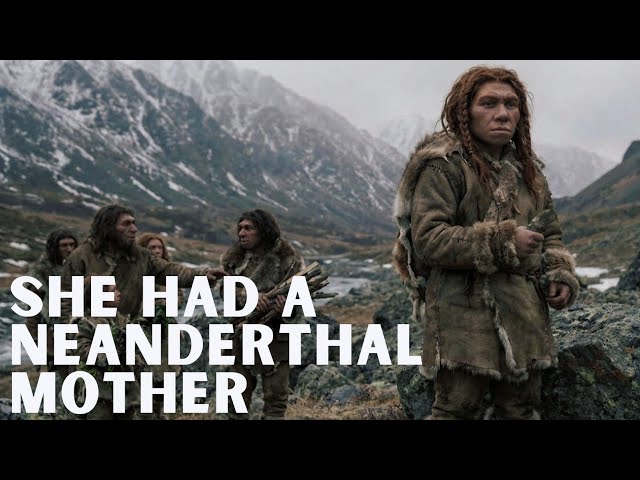
The story of human evolution has been rewritten by the discovery of a single bone fragment in Siberia’s Denisova Cave, a site that serves as a chaotic time capsule of the Ice Age. Buried within the shifting sediments of the cave's East Chamber, scientists identified "Denisova 11," or Denny, not through visual inspection but via advanced mass spectrometry that screened thousands of unrecognizable bone chips. While the sediment she was found in dates back further, genetic dating and optical luminescence place Denny’s life approximately 90,000 years ago, during a period known as Marine Isotope Stage 5. This tiny fossil, an adolescent female of at least 13 years, offers the first direct evidence of a first-generation child born to parents of two different human species.
Genomic analysis revealed that Denny was the daughter of a Neanderthal mother and a Denisovan father, carrying a perfect 50/50 split of their DNA. Her lineage unveils a complex map of prehistoric migration; her mother was genetically distinct from the local Altai Neanderthals, relating instead to populations found thousands of kilometers away in Croatia, suggesting a massive eastward migration across the "Steppe Highway." Her father, while a local Denisovan, also carried traces of ancient Neanderthal ancestry from hundreds of generations prior. This evidence confirms that the meeting of these groups was not an anomaly but part of a recurring pattern of interaction in the region.
Denny lived in a "mosaic" landscape of the Altai Mountains, where lush forests met cold, dry steppes teeming with megafauna. Isotopic analysis of her bone collagen indicates that her people were "hyper-carnivores," occupying a spot on the food chain higher than hyenas or wolves, with a diet focused on woolly rhinoceros and bison. Despite this reliance on meat, dental plaque analysis shows they also consumed starches and medicinal plants like yarrow and chamomile. However, this environment was perilous; the cave was a contested space often occupied by cave hyenas, forcing humans to compete with these formidable predators for shelter.
The physical condition of Denny's bone fragment tells the grim story of her preservation. The bone shows signs of acid erosion and polished edges, characteristics consistent with having passed through the digestive tract of a large carnivore, most likely a cave hyena. This suggests that Denny either died on the steppe and was scavenged, or was killed by hyenas who transported her remains back to the cave. This "taphonomic" evidence explains why her fossil was found among hyena droppings and debris, unwittingly preserved for millennia in a layer of sediment that served as a nursery for the predators.
Ultimately, Denny’s existence challenges the idea that human groups lived in isolation, supporting instead a "braided stream" model of evolution where lineages diverged and merged repeatedly. Her discovery implies that social barriers between Neanderthals and Denisovans were permeable and that they viewed each other as potential mates. Yet, despite this frequent mixing, the two populations remained genetically distinct, likely due to their small, isolated numbers and biological factors like Haldane’s Rule, which may have reduced fertility in male hybrids. Denny stands as a singular proof of this tangled history, a child of two worlds who bridges the gap between our ancient cousins.
Show More Show Less View Video Transcript
0:02
The story of human evolution has changed
0:04
dramatically in the 21st century, moving
0:06
away from a simple family tree where
0:08
species lived in isolation to a complex
0:11
tangled web where different human groups
0:13
met and mingled. At the heart of this
0:16
new understanding is the Alai Mountains
0:18
region of southern Siberia, a
0:20
prehistoric crossroads that served as
0:22
the eastern edge of the world for
0:23
Neanderthalss and the northwestern home
0:26
for the mysterious Denisvens. Hidden
0:28
within this rugged landscape is Denisva
0:30
cave which has become a unique time
0:33
capsule of the ice age. It preserves not
0:35
just stone tools and animal bones but
0:38
also the microscopic genetic history of
0:40
these ancient humans offering a singular
0:42
archive of our past. The most
0:44
groundbreaking discovery from this cave
0:46
is a bone fragment known as Denisva 11
0:49
or simply Denny which represents a
0:52
pivotal moment in our understanding of
0:53
human history. Found in the caves east
0:56
chamber and identified through advanced
0:58
protein screening, Denny provided the
1:00
first direct biological evidence of a
1:02
first generation child with a
1:04
Neanderthal mother and a Dennisovven
1:06
father. Her existence challenges the old
1:09
assumption that different human groups
1:10
rarely mated, suggesting instead that
1:13
these interactions were a genuine part
1:15
of life in the late plea scene. Denny
1:18
acts as a unique lens through which we
1:20
can view the social and family dynamics
1:21
of a world long gone. This video
1:23
reconstructs the life, death, and
1:26
environment of Denny using a synthesis
1:28
of high techch DNA analysis, chemical
1:31
dating, and fossil studies. It examines
1:34
the specific climate conditions of the
1:36
time, a period known as marine isotope
1:38
stage 5, that allowed these two distinct
1:40
groups to meet in the same place. Beyond
1:42
her immediate life, Denny's genome helps
1:45
map how Neanderthalss migrated across
1:46
Eurasia and reveals the harsh realities
1:49
of her environment, including the role
1:51
of cave hyenas in scattering the fossil
1:53
remains that scientists study today.
1:56
Dennisova Cave is located high above the
1:58
Ani River in the Alai Mountains, a site
2:00
that serves as a massive three- room
2:02
archive of ancient history, consisting
2:04
of a main, south, and east chamber. The
2:07
floors of these chambers are packed with
2:09
sediment that has accumulated over
2:11
300,000 years, preserving a deep record
2:15
of human ancestors and changing
2:16
climates. However, reading this history
2:19
isn't simple because the ground inside
2:21
the cave hasn't stayed still. Cycles of
2:24
freezing and thoring have churned the
2:26
soil and biological activity has mixed
2:28
the layers, making the site a complex
2:30
geological puzzle to solve rather than a
2:32
neat stack of pages. The specific bone
2:35
fragment known as Denny was discovered
2:37
in layer 12 of the east chamber, a deep
2:39
section of sandy clay distinct from the
2:42
layer above it. While the higher layer
2:44
11 contains advanced stone tools and
2:46
jewelry from a later period, 50,000 to
2:48
30,000 years ago, layer 12 represents a
2:52
much older era of the middle
2:53
paleolithic.
2:54
Distinguishing between these layers is
2:56
critical because it helps scientists
2:58
understand the sequence of events. But
3:00
the shifting nature of the cave soil
3:03
means that a small bone can sometimes
3:04
slip into older dirt, complicating the
3:07
task of pinpointing exactly when Denny
3:09
lived. To figure out Denny's true age,
3:12
scientists had to look beyond standard
3:14
radiocarbon dating, which is only
3:16
effective for items younger than 50,000
3:18
years. They combined two advanced
3:21
techniques. optical stimulated
3:23
luminescence which determines when sand
3:25
grains in the dirt were last exposed to
3:27
sunlight and a molecular clock analysis
3:29
of Denny's DNA. The soil in layer 12 was
3:33
dated to between 130,000 and 150,000
3:36
years ago, but the genetic analysis
3:38
revealed that Denny herself lived much
3:40
later, approximately 90,000 years ago.
3:44
This confirms that her bone likely
3:46
shifted within the sediment over time,
3:48
but the genetic date securely places her
3:50
life during a transition from a warm
3:52
climate to a colder era. This
3:54
combination of dating methods has
3:56
allowed researchers to build a
3:57
reconstructed timeline of who lived in
3:59
the cave and when. The data reveals a
4:02
pattern of pulseed occupation where
4:04
different groups moved in and out over
4:06
millennia. Early Denisovvens occupied
4:08
the site as far back as 200,000 years
4:10
ago, followed by different waves of
4:12
Neanderthalss and later Denisovvens.
4:15
Denny's existence 90,000 years ago
4:18
proves that these groups didn't just
4:19
pass each other in the night.
4:21
Specifically, late Neanderthal migrants
4:23
and indigenous Denisvens overlapped and
4:25
interacted during the middle
4:26
Paleolithic, long before modern humans
4:29
arrived on the scene. Excavating
4:32
Dennisova Cave is less like digging for
4:34
treasure and more like sifting through a
4:36
massive prehistoric puzzle that has been
4:39
shattered into pieces. The cave floor
4:41
has yielded hundreds of thousands of
4:44
bone fragments, but most are so broken
4:46
and crushed that they are impossible to
4:48
identify by sight alone. This
4:51
destruction was caused largely by the
4:53
powerful jaws of cave hyenas, which
4:55
crunch through the bones and by ancient
4:57
humans processing animals for food. For
5:00
decades, finding a human bone in this
5:03
mess was nearly impossible unless it
5:05
happened to be a recognizable tooth or
5:06
skull piece. The breakthrough came with
5:09
mass spectrometry, which act like a
5:11
molecular barcode scanner. It ignores
5:14
the shape of the bone and instead
5:15
analyzes the collagen proteins hidden
5:17
inside, looking for specific chemical
5:20
markers that distinguish a bear from a
5:21
hyena and a hyena from a human. To test
5:25
this technology, researchers analyzed
5:27
over 2,000 tiny, unrecognizable bone
5:30
chips from the cave's east chamber. They
5:32
drilled minute amounts of powder from
5:34
these scraps and ran them through the
5:36
mass spectrometer.
5:38
Among thousands of animal bones, one
5:40
single fragment was identified as
5:42
belonging to homminin family. This bone
5:45
was incredibly small, just under an inch
5:48
long and roughly a third of an inch
5:49
wide, likely a splinter from an arm or
5:52
leg bone. Without advanced technology,
5:55
this nondescript sliver would have
5:57
remained just another piece [music] of
5:58
debris. Instead, once identified as
6:01
human, it was sent to Germany for
6:03
genetic sequencing, where the stunning
6:06
truth was revealed. This tiny fragment
6:08
belonged to Denny, the daughter of two
6:11
different human species. The genomic
6:14
analysis of the bone fragment known as
6:15
Dennisova 11 or simply Denny stands as
6:19
arguably the most monumental discovery
6:21
in the study of human evolution to date.
6:23
Despite the small size of the specimen,
6:26
scientists were able to sequence her DNA
6:28
to an exceptionally high quality,
6:30
providing a crystal clear window into
6:32
her ancestry. This robust data set
6:35
allowed researchers to look back in time
6:37
with unprecedented precision, revealing
6:39
not just who Denny was, but exactly who
6:41
her parents were, fundamentally changing
6:44
our understanding of how ancient human
6:46
groups interacted.
6:48
The most stunning revelation from this
6:49
analysis was the discovery that Denny
6:51
was a first generation hybrid, the
6:53
direct daughter of two different
6:55
species. In a typical population or even
6:58
in groups where interbreeding happened
6:59
many generations prior, DNA from
7:02
different ancestors is shuffled together
7:04
like a deck of cards through a process
7:05
called recombination.
7:08
However, Denny's genome showed a perfect
7:10
unshuffled split. Across her entire
7:13
genetic map, she carried one complete
7:16
set of chromosomes from a Neanderthal
7:18
mother and one complete set from a
7:20
Denisovven father. This 50/50 genetic
7:23
inheritance confirmed unequivocally that
7:26
interbreeding between these distinct
7:27
human groups was not just a theoretical
7:29
possibility, but a reality that produced
7:32
immediate offspring.
7:34
Beyond her immediate parentage, Denny's
7:36
maternal DNA told a surprising story of
7:39
migration and replacement. While her
7:41
father was a local Dennis Soven, her
7:43
mother was not related to the Ali
7:45
Neanderthalss, who had lived in that
7:47
same Siberian region thousands of years
7:49
earlier. Instead, her mother's DNA was a
7:52
close match to late Neanderthalss, found
7:54
over 3,000 km away in Croatia's Vindiger
7:57
Cave. This indicates that a massive
8:00
demographic shift occurred where earlier
8:02
local Neanderthal populations were
8:03
replaced by a new wave of migrants from
8:05
Western Eurasia.
8:07
Denny's mother was a descendant of this
8:09
eastward expansion, having traversed
8:11
vast stretches of mountains and step to
8:13
reach the Alai Mountains, where she
8:15
eventually met Denny's father.
8:18
The nuclear DNA inherited from the
8:20
father identified him as a Denisven. His
8:23
genome clustered with other Denisven
8:25
individuals found in the cave such as
8:27
Denisover 3 and Dennisova 4. However,
8:30
the paternal genome was not pure
8:32
Denisven. Deep sequencing revealed that
8:35
the father himself carried traces of
8:36
Neanderthal ancestry. This ancient
8:39
introgression event was estimated to
8:41
have occurred approximately 300 to 600
8:44
generations before the father's
8:46
lifetime. This finding is critical as it
8:48
demonstrates that the mating between
8:50
Denny's parents was not a singular
8:52
anomalous event. Rather, it indicates a
8:55
recurring pattern of interaction between
8:57
these groups over tens of thousands of
8:59
years. The father's lineage had already
9:01
absorbed Neanderthal genes long before
9:03
he mated with a Neanderthal migrant.
9:06
While the fragmentaryary nature of Denny
9:08
precludes traditional osteological
9:10
analysis of the cranium or pelvis,
9:12
genomic data allowed for sex
9:14
determination. The coverage of the X
9:16
chromosome was roughly equal to that of
9:18
the autotosomes, a ratio of 1:1,
9:20
indicating the presence of two X
9:22
chromosomes. Thus, Dennisova 11 was
9:25
female. Based on the cortical thickness
9:28
of the bone fragment, physical
9:30
anthropologists estimated the
9:32
developmental age of the individual to
9:33
be at least 13 years old at the time of
9:35
death. This indicates that Denny
9:38
survived infancy and childhood,
9:40
suggesting that Fon hybrids were viable
9:42
and capable of reaching adolescence
9:44
without succumbing to severe hybrid
9:45
disenesis.
9:47
To reconstruct Denny's life, we must
9:49
visualize the specific world she
9:51
inhabited around 90,000 years ago. This
9:54
period, known to scientists as marine
9:56
isotope stage 5, was a time of
9:58
significant climatic transition in the
10:00
Alai Mountains. The warm, lush,
10:03
coniferous forests that had once
10:04
carpeted the region during the peak of
10:06
the last interglacial were retreating.
10:08
In their place, a mosaic landscape
10:11
emerged. The high plains and valley
10:13
floors were turning into cold, dry steps
10:16
covered in grasses and sage brush, while
10:18
pockets of pine and birch forest clung
10:20
to the protected valleys near the river.
10:22
This offered Denny's [music] family a
10:24
strategic advantage, providing wood for
10:26
fuel and shelter in the valleys while
10:28
keeping them close to the open hunting
10:29
grounds of the step. This unique mix of
10:32
forest and grassland supported a
10:34
biological phenomenon known as the
10:35
mammoth step. A massively productive
10:38
ecosystem [music] with no modern
10:39
equivalent. The open plains were teeming
10:42
with game that served as the primary
10:44
food source for Denny's kin. Vast herds
10:46
of step bison and wild horses grazed on
10:48
the nutrient-rich grasses while the
10:51
formidable woolly rhinoceros roamed the
10:53
valley floors, offering a high-risk,
10:55
highreward target for cooperative
10:57
hunters. Meanwhile, the rocky cliffs
10:59
surrounding the cave were home to agile
11:01
Siberian ibecks, requiring hunters to
11:04
master the rugged vertical terrain of
11:05
the mountains. However, this abundance
11:08
of life meant that Dennisova Cave was a
11:10
highly contested space. Humans were far
11:13
from the only predators on the
11:14
landscape. They shared their world with
11:17
terrifying competition. Cave lions and
11:19
grey wolves patrolled the area and
11:21
massive cave bears frequently claimed
11:23
the cave for hibernation. Most
11:26
significantly, the cave hyena, a larger
11:28
cousin of the modern African hyena,
11:31
competed directly with humans for the
11:33
shelter. These hyenas are likely the
11:35
reason we have Denny's bone fragment
11:37
today, as the primary taffanomic agents
11:39
of the cave. They scavenged and crushed
11:42
the bones of the cave's inhabitants,
11:44
leaving behind the fragmented fossil
11:46
record we study now. To understand how
11:49
Denny and her family survived in the
11:51
harsh Alai landscape, scientists rely on
11:54
a technique that essentially reads the
11:55
chemical signature of their meals
11:57
directly from their bones. Isotopic
12:00
analyses of bone collagen helped
12:01
researchers determine where these
12:03
ancient humans stood on the food chain.
12:05
The rule of thumb is simple. Nitrogen
12:07
isotopes concentrate as they move up the
12:09
food chain. An herbivore has higher
12:12
levels than the grass it eats, and a
12:13
carnivore has higher levels than the
12:15
herbivore. The results for the
12:17
Alaihominins are striking. They were not
12:19
just meateers. They were hyper
12:21
carnivores. Their nitrogen levels are
12:23
consistently higher than even the
12:25
region's top predators like cave hyenas
12:28
and wolves. This suggests that Denny's
12:30
kin didn't just compete with these
12:32
animals. They out hunted them, focusing
12:34
their diet on massive herbivores like
12:36
the woolly rhinoceros and mammoth.
12:39
Because these mega herbivores already
12:41
had high baseline nitrogen levels from
12:43
eating specific step vegetation, the
12:46
humans who ate them ended up with a
12:48
chemical signature that places them at
12:50
the absolute peak of the ecosystem.
12:53
There is however a fascinating mystery
12:55
hidden in this chemical data. Some of
12:57
the nitrogen values are so high that
12:59
they rival creatures who eat aquatic
13:01
foods, leading to a debate about whether
13:03
denisven fished in the nearby Anoui
13:05
River. Freshwater food chains are longer
13:08
than those on land, which boost nitrogen
13:10
signals significantly. While the
13:12
chemistry hints at a diet of fish, the
13:15
physical evidence is missing. Layer 12
13:18
contains no fish hooks, harpoons, or
13:20
piles of fishbones. It is possible they
13:22
practiced opportunistic fishing,
13:24
catching what they could by hand, or
13:26
simple means without the specialized
13:28
technology that would appear [music]
13:29
thousands of years later. Finally, while
13:32
the bone chemistry emphasizes meat, a
13:34
closer look at their teeth reveals a
13:36
more balanced reality, bone collagen
13:38
largely records protein intake, masking
13:41
the consumption of plants. To find the
13:43
greens in their diet, scientists
13:45
analyzed ancient dental plaque,
13:47
calculus, and found microossils of
13:49
starches from tubers and wild grains.
13:51
Even more intriguingly, they found
13:53
traces of bitter plants like yrow and
13:55
chamomile, which have little nutritional
13:57
value, but are known for their medicinal
13:59
[music] properties. This proves that
14:01
while Denny's family were apex
14:02
predators, they also possessed a
14:04
sophisticated knowledge of the local
14:06
flora, using plants for survival and
14:08
perhaps even self-medication.
14:10
The story of Denny's death is written
14:12
directly on the surface of her bone
14:14
fragment, though it takes a microscope
14:16
to read it. The science of taffonomy,
14:19
the study of what happens to a body
14:21
between death and discovery, reveals
14:24
that her bone didn't just decay
14:25
naturally, it was processed by a
14:27
predator. High-tech scans show that the
14:30
bone is pitted and eroded by strong
14:32
gastric acids and has polished rounded
14:34
edges. These are the telltale signs of
14:37
digestion. The fragment's tiny size,
14:40
less than 3 cm long, suggests it passed
14:43
through the digestive tract of a large
14:45
carnivore, eventually ending up on the
14:47
cave floor as regurgitated waste or
14:49
droppings. The most likely culprit for
14:51
this destruction is the cave hyena. The
14:54
same soil layer that held Denny's bone
14:56
was packed with hyena fossils, including
14:58
baby teeth, which indicates the animals
15:01
used the cave as a nursery for their
15:02
cubs. Like modern spotted hyenas, these
15:06
ancient predators would drag carcass
15:08
parts over long distances back to their
15:09
dens. The cave wasn't a permanent human
15:12
home, it was a contested space that
15:14
alternated between a shelter for humans
15:16
and a den for hyenas, suggesting that
15:19
Denny's family and the hyenas occupied
15:20
the cave at different times, never as
15:22
roommates. A critical question for
15:24
scientists was whether this journey
15:26
through a hyena's stomach ruined the
15:28
chemical evidence used to determine
15:30
Denny's diet. Fortunately, experimental
15:33
studies show that the dietary signature
15:35
stable isotopes locked inside bone
15:38
collagen is tough enough to survive acid
15:40
digestion. This means the data showing
15:42
Denny was a highle meat eater is
15:44
accurate [music] and not a chemical
15:45
error caused by the hyena's stomach
15:47
acid. This evidence paints a grim
15:49
picture of Denny's final moments. She
15:52
almost certainly did not die peacefully
15:54
inside the cave. Instead, two scenarios
15:57
are likely. She was either attacked and
15:59
killed by hyenas out on the open step or
16:01
she died of natural causes like disease
16:04
or exposure, and her body was later
16:06
scavenged. In either case, the hyenas
16:08
brought her remains back to the East
16:10
Chamber, unwittingly preserving the tiny
16:12
fragment that would 90,000 years later
16:15
rewrite human history. The discovery of
16:18
Denny forces us to completely rewrite
16:20
our understanding of how ancient human
16:22
groups interacted. Before finding her,
16:25
scientists believe that mating between
16:26
Neanderthalss and Denisvens was an
16:28
incredibly rare accident. Mostly because
16:31
modern humans carry only small traces of
16:33
their DNA. However, finding a first
16:36
generation hybrid child among the very
16:38
few ancient genomes we have sequenced
16:40
suggests [music] the exact opposite. It
16:43
is a statistical reality check. Finding
16:45
a needle in a haystack so quickly
16:47
implies the haystack is actually full of
16:49
needles. Denny's existence proves that
16:52
when these groups met in the landscape,
16:54
they didn't just ignore each other or
16:55
fight. They viewed one another as
16:58
potential mates, treating social
17:00
boundaries as much more flexible than we
17:02
previously imagined. Denny's genetics
17:04
also light up a massive prehistoric
17:06
migration map. Her mother wasn't related
17:09
to the Neanderthalss, who had lived in
17:10
the Alai Mountains for thousands [music]
17:12
of years. Surprisingly, she was
17:14
genetically closer to Neanderthalss
17:16
found thousands of kilome away in
17:18
Croatia. This implies a massive trek
17:20
across the step highway, where
17:22
Neanderthalss traveled over 3,000 km
17:25
from Eastern Europe, likely following
17:27
river valleys through the Caucusus and
17:29
Ural Mountains during warmer periods.
17:31
The Alai Mountains served as a
17:33
refugeium, a sheltered sanctuary during
17:35
the harsh ice ages. As glaciers
17:38
advanced, different human populations
17:40
were forced into these protected
17:42
valleys, pushing them closer together
17:44
and making encounters and romances
17:46
inevitable. This leads to a fascinating
17:49
paradox. If they mated frequently, why
17:53
didn't the two species just merge into
17:55
one? The answer lies in the fragility of
17:57
their existence. These populations were
18:00
incredibly small and scattered, drifting
18:02
apart genetically simply because there
18:04
were so few of them. Furthermore,
18:06
biology may have drawn a line in the
18:08
sand. While female hybrids like Denny
18:11
were healthy and viable, genetic
18:12
evidence suggests that male hybrids
18:14
might have had reduced fertility, a
18:17
phenomenon known as Haldane's rule. This
18:19
biological quirk combined with the
18:21
isolation of their small tribes allowed
18:23
Neanderthalss and Dennisovvens to swap
18:25
genes yet remain distinct people for
18:28
hundreds of thousands of years.
18:30
The discovery of Denny forces a radical
18:33
rethinking of the social geography of
18:34
the ice age, challenging the old belief
18:36
that Neanderthalss and Denisvens rarely
18:38
interacted. Before her discovery,
18:41
scientists assumed interbreeding was an
18:43
exceptional event, occurring perhaps
18:45
once every 10,000 years. However,
18:47
finding a first generation hybrid child
18:50
among the handful of ancient genomes
18:52
sequenced so far suggests the opposite
18:53
is true. If looking for a needle in a
18:56
haystack yields a needle immediately,
18:58
the haystack is likely full of them.
19:00
This implies that when these distinct
19:02
human groups overlapped in the Alai
19:04
Mountains, social barriers were
19:05
permeable and they viewed one another as
19:08
potential mates. This frequent mixing
19:10
supports the biological concept of a
19:12
singian, [music] describing a complex of
19:14
distinct species that nonetheless
19:16
interbreed whenever they meet. Denny's
19:19
genetics also illuminate a massive
19:20
prehistoric migration map, revealing
19:23
that the ancient world was far more
19:24
interconnected than previously thought.
19:27
Her mother was not related to the local
19:29
alte Neanderthalss who had lived in the
19:31
region for millennia. Instead, she was
19:34
genetically closer to Neanderthalss
19:36
found thousands of kilometers away in
19:38
Croatia. This connection suggests a step
19:41
highway where Neanderthalss migrated
19:43
over 3,000 km from Eastern Europe,
19:46
likely following river valleys through
19:47
the Caucuses and Eural Mountains during
19:49
warmer climatic periods. As glacial
19:52
cycles advanced and the world cooled,
19:54
the Alai Mountains served as a high
19:56
latitude refuge, forcing these diverse
19:58
populations into the same sheltered
20:00
valleys and making encounters and
20:03
romance inevitable.
20:05
Despite this frequent mating, a
20:07
fascinating paradox remains.
20:09
Neanderthalss and denosovvens stayed
20:11
genetically distinct for hundreds of
20:13
thousands of years rather than merging
20:15
into a single population.
20:17
This was likely due to the extreme
20:19
fragility of their existence. Their
20:21
populations were so small and scattered
20:23
that they drifted apart genetically
20:25
simply through isolation.
20:28
Furthermore, biology likely played a
20:30
role in keeping the lineages separate.
20:32
While female hybrids like Denny were
20:34
healthy and viable, genetic evidence
20:36
hints at Haldane's rule, suggesting that
20:39
male hybrids may have had reduced
20:40
fertility, this biological check,
20:42
combined with the vast distances between
20:44
tiny tribes, allowed these groups to
20:46
swap genes while remaining distinct
20:48
peoples. Denny's life, reconstructed
20:51
from a single bone fragment, ultimately
20:54
tells a story of profound complexity and
20:56
connection. Born roughly 90,000 years
20:59
ago, she was a true daughter of two
21:01
worlds, an adolescent with a Neanderthal
21:04
mother from the west and a denisan
21:05
father rooted in the east. Her existence
21:08
is the strongest proof yet that human
21:10
evolution was not a branching tree of
21:12
isolated lineages, but rather a braided
21:15
stream where different human groups
21:17
converged and diverged repeatedly. Her
21:20
life ended violently, likely processed
21:22
by cave hyenas that left their acidched
21:24
mark on her bone. But her legacy
21:26
survives as a monument to the reticulate
21:29
interconnected nature of our past. The
21:31
timeline of Dennisova cave now clarified
21:33
by Denny's discovery reveals a pattern
21:36
of pulseed occupation where different
21:38
groups claimed the shelter at different
21:40
times long before Denny. The cave was
21:42
home to the earliest Denisven around
21:45
122,000 to 194,000 years ago and a
21:49
distinct older group of Alte
21:50
Neanderthalss around 120,000 years ago
21:54
who were unrelated to Denny's mother.
21:57
Denny herself represents a later phase
21:59
around 90,000 years ago. A specific
22:02
moment when late arriving Neanderthal
22:04
migrants met the indigenous Denisven.
22:07
This deep history spanning from the
22:09
ancient Denisova 2 fossil to the famous
22:11
pinky bone Dennisova 3 found in later
22:14
layers confirms that the cave was a busy
22:17
shifting crossroads of humanity for
22:18
hundreds of thousands of years.
22:23
[music]