Up next in 10


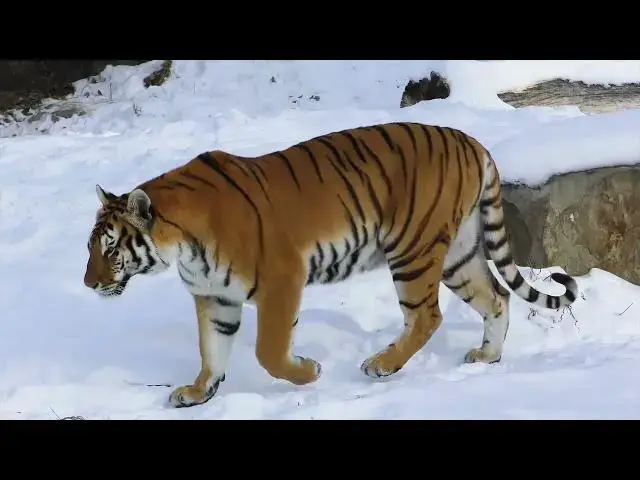
Discover how tigers communicate through body language. Learn about their eye movements, ear positions, tail signals, and overall posture. This video explores how tigers use non-verbal cues in various situations, from territorial disputes to mating rituals, and compares their communication style with other big cats.
Show More Show Less View Video Transcript
0:00
tiger body
0:01
language the silent language of big
0:04
cats tigers The Majestic big cats of the
0:08
Jungle are known for their powerful
0:11
Roars and striking
0:13
appearance but did you know that much of
0:16
their communication happens silently
0:18
through intricate body
0:20
language this fascinating aspect of
0:24
tiger Behavior plays a crucial role in
0:27
their social interactions and survival
0:30
body language is the primary form of
0:32
communication for
0:34
tigers as solitary animals they rely
0:37
heavily on visual cues to convey
0:39
messages to other Tigers they
0:42
encounter this nonverbal communication
0:46
helps them avoid unnecessary conflicts
0:49
and navigate complex social
0:52
situation Tigers use various body parts
0:55
to express
0:57
themselves their eyes ears tail and
1:01
overall posture all contribute to their
1:04
silent
1:05
conversations each movement and position
1:08
carries a specific meaning allowing
1:10
Tigers to communicate a wide range of
1:12
emotions and
1:14
intentions let's explore some key body
1:17
language signals Tigers
1:19
use when a tiger is feeling threatened
1:22
or aggressive it might flatten its ears
1:25
against its head bear its teeth and
1:27
maintain direct eye contact
1:30
this posture clearly communicates that
1:33
the tiger is ready to defend itself or
1:36
attack if
1:38
necessary on the other hand a relaxed
1:41
tiger will have its ears pointing
1:43
forward a loose tail and may even close
1:47
its eyes
1:48
briefly this body language indicates
1:51
that the tiger feels safe and
1:54
unthreatened in its current
1:56
environment the tail is particularly EXP
1:59
expressive in Tiger
2:01
communication a tail held high with a
2:04
tip pring can signal curiosity or
2:08
friendly
2:09
interest however if the tail is low and
2:13
swishing rapidly from side to side it's
2:16
a warning sign that the tiger is
2:18
agitated or preparing to
2:20
pounce Tigers use their body language in
2:24
various
2:26
contexts during mating season male
2:29
tigers approach females with a specific
2:32
gate holding their head high and making
2:35
chuffing
2:36
sounds females respond with their own
2:38
body language indicating whether they're
2:41
receptive or not in territorial disputes
2:45
Tigers rely heavily on body language to
2:48
establish dominance without resorting to
2:51
physical
2:52
fights they may engage in parallel
2:54
walking where two tigers walk side by
2:57
side assessing each other's sign size
3:00
and strength a tiger that backs down
3:03
first lowering its head and avoiding eye
3:06
contact acknowledges the other's
3:09
dominance compared to other big cats
3:12
tigers have some unique aspects to their
3:14
body
3:15
language while Lions use Maine shaking
3:19
as a sign of strength Tigers rely more
3:22
on subtle ear and tail
3:25
movements cheaters have distinctive
3:28
facial expressions but Tigers
3:30
communicate more through their overall
3:33
body posture tiger body language is a
3:37
complex and nuanced form of
3:40
communication it allows these solitary
3:43
predators to navigate their social World
3:45
establish territories find mates and
3:48
avoid
3:50
conflicts understanding these silent
3:52
signals not only gives us insight into
3:55
tiger Behavior but also highlights the
3:58
sophisticated communication methods that
4:00
exist in the animal
4:02
kingdom the next time you observe a
4:04
tiger pay close attention to its body
4:07
language you might just decode some of
4:10
its secret messages
#Reptiles & Amphibians
#Wildlife
#Wildlife