Up next in 10


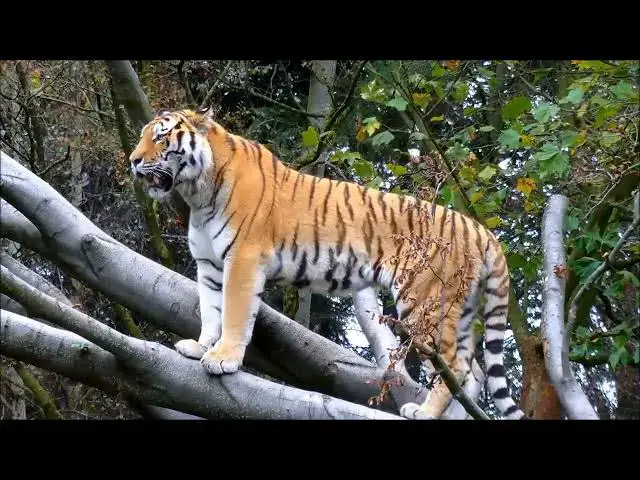
Discover how tigers use their acute senses and learned behaviors to evaluate potential dangers from afar. This video explores the sophisticated techniques tigers employ to stay safe in their habitats, including their exceptional vision, hearing, and sense of smell. Learn about the importance of this skill for tiger survival and conservation.
Show More Show Less View Video Transcript
0:00
Tiger's threat assessment a vital
0:02
survival skill Tigers the largest of all
0:06
wild cats are not just powerful
0:09
Predators but also masters of
0:12
survival one of their most crucial
0:15
skills is the ability to assess
0:17
potential threats from a distance a
0:20
capability that has evolved over
0:22
Millennia to ensure their safety in
0:24
diverse
0:26
habitats at the heart of a tiger's
0:28
threat assessment is its incredibly
0:30
acute
0:31
senses their eyesight is about six times
0:35
better than that of humans allowing them
0:37
to spot movement and potential dangers
0:40
from great distances even in low light
0:43
conditions this visual acurity is
0:47
complemented by their exceptional
0:49
hearing which can pick up sounds at
0:51
frequencies both above and below the
0:54
range of human hearing and it's not just
0:57
about seeing and hearing
1:00
Tigers also rely heavily on their sense
1:02
of smell to gather information about
1:05
their
1:06
environment their nasal passages are
1:08
aligned with a highly developed ol
1:10
Factory epithelium giving them the
1:13
ability to detect sense from miles
1:16
away this Keen sense of smell helps them
1:19
identify other
1:21
animals including potential threats long
1:25
before they come into visual
1:27
range when a tiger detects a possible
1:29
threat it employs a series of behaviors
1:32
to gather more
1:34
information it may freeze in place using
1:37
its striped coat as camouflage while it
1:40
observes the
1:42
situation a tiger might also climb to a
1:45
higher Vantage Point using elevated
1:47
terrain to better survey its
1:50
surroundings these actions allow the
1:53
tiger to assess the nature and severity
1:56
of the threat without exposing itself to
1:58
unnecessary risks
2:01
experience plays a crucial role in a
2:04
tiger's threat assessment
2:07
abilities young Tigers learn from their
2:09
mothers observing how she reacts to
2:12
different stimuli in their
2:14
environment as they grow and encounter
2:17
various situations they develop a mental
2:19
catalog of potential threats and
2:22
appropriate
2:23
responses this learned behavior combines
2:27
with their instincts to create a
2:29
sophistic ated threat assessment
2:31
system tigers are also known to use
2:35
vocalizations as part of their threat
2:37
assessment
2:38
strategy they may produce lowf frequency
2:41
sounds inaudible to human ears to
2:44
communicate with other tigers or to
2:46
gauge the response of potential
2:48
threats these vocalizations can travel
2:51
long distances through Forest
2:53
environments providing valuable
2:55
information without the need for visual
2:57
contact the ability toess accurately
3:00
assess threats from a distance is vital
3:03
for Tiger
3:04
survival it allows them to avoid
3:07
unnecessary confrontations conserve
3:10
energy and make informed decisions about
3:12
when to stand their ground or
3:15
Retreat this skill is particularly
3:18
important in areas where tigers coexist
3:21
with humans helping them navigate the
3:24
complex landscape of human dominated
3:28
environments in conclusion
3:31
the Tiger's ability to assess potential
3:33
threats from a distance is a testament
3:36
to its remarkable adaptations and
3:40
intelligence this skill honed over
3:43
Generations combines acute senses
3:46
learned behaviors and instinctive
3:50
responses it's a crucial aspect of tiger
3:53
ecology that not only ensures their
3:55
survival but also highlights the
3:58
sophisticated nature of the these
4:00
magnificent
4:01
creatures understanding these behaviors
4:04
is essential for conservation efforts as
4:07
it helps us better protect tigers and
4:10
the habitats they need to thrive
#Wildlife
#Wildlife
#Biological Sciences
#Ecology & Environment