Up next in 10


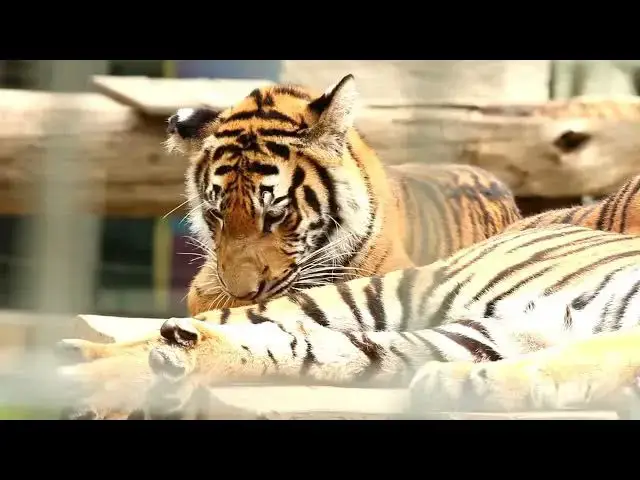
Discover how tigers express affection through rubbing, grooming, play, and vocalizations. Learn about their social bonds and compare their behavior to other big cats. This video explores the softer side of these majestic predators, offering insights into their complex social dynamics and emotional capacities.
Show More Show Less View Video Transcript
0:00
tiger
0:01
affection surprising ways big cats show
0:05
love tigers moan for their Fierce
0:09
reputation also have a softer
0:12
side these Majestic big cats display
0:16
affection in ways that might surprise
0:19
you tiger affection is a crucial aspect
0:23
of their social behavior playing a vital
0:26
role in maintaining bonds within their
0:28
small family group
0:31
groups understanding how Tigers Express
0:33
fondness for one another provides
0:35
valuable insights into their complex
0:38
social
0:39
dynamics one of the most common ways
0:41
Tigers show affection is through rubbing
0:44
and
0:45
nuzzling when Tigers meet they often
0:48
greet each other by rubbing their faces
0:50
and bodies against one another this
0:54
Behavior serves multiple
0:56
purposes it helps them exchange sense
0:59
which is is an important form of
1:01
communication in the tiger World it also
1:04
reinforces social bonds and can be a
1:07
sign of friendship or familial
1:09
connection gluing is another significant
1:12
display of tiger
1:14
affection Tigers will lick and clean
1:17
each other focusing on areas that are
1:19
hard to reach such as the face and
1:23
ears this mutual grooming not only helps
1:27
keep their fur clean but also streng
1:29
strengthens their social
1:32
ties it's a behavior often seen between
1:35
mothers and cubs as well as between
1:37
bonded adult
1:39
Tigers playful behavior is also a form
1:42
of affection among Tigers especially in
1:46
younger
1:47
individuals Cubs engage in mock fights
1:50
and chasing games which not only helps
1:53
them develop important hunting and
1:55
defensive skills but also Fosters social
1:58
bonds
2:00
even adult Tigers May engage in playful
2:03
activities with familiar individuals
2:06
though this becomes less common as they
2:09
mature vocalizations play a crucial role
2:13
in Tiger communication and can be a form
2:15
of expressing
2:17
affection Tigers produce a variety of
2:20
sounds including chaffs which are soft
2:24
lowf frequency sounds often used in
2:26
Friendly
2:27
greetings when Tigers ch at each other
2:31
it's typically a sign of recognition and
2:34
affection in more intimate moments
2:36
Tigers May engage in head
2:39
buting this involves gently bumping
2:42
their heads against each other or
2:44
against a trusted human caregiver in
2:48
captivity this behavior is a sign of
2:51
trust and affection as it puts the Tiger
2:55
in a vulnerable position by exposing its
2:57
head and neck it's important to note
3:01
that while tigers are generally solitary
3:03
animals in the wild they do form strong
3:06
bonds within their family
3:08
units mother tigers are particularly
3:11
affectionate towards their cubs
3:13
providing protection nourishment and
3:16
social interaction crucial for their
3:19
development compared to other big cats
3:22
tigers are relatively similar in their
3:24
displays of
3:26
affection Lions being more social may
3:30
show more frequent and varied
3:32
affectionate behaviors within their
3:34
pride leopards and jaguars being more
3:38
solitary like tigers have similar
3:40
patterns of affection primarily reserved
3:43
for mating Pairs and mother cup
3:46
relationships understanding how Tigers
3:48
show affection provides valuable
3:50
insights into their social needs and
3:53
emotional
3:54
capacities this knowledge is crucial for
3:57
conservation efforts and for ensuring
3:59
ing the well-being of tigers in
4:02
captivity by recognizing and respecting
4:05
these affectionate behaviors we can
4:07
better appreciate the complex social
4:09
lives of these magnificent creatures and
4:12
work towards their protection and
4:14
preservation in the wild
#Pets & Animals
#Pets & Animals
#Pets
#Cats
#Dogs
#Reptiles & Amphibians
#Wildlife