Up next in 10


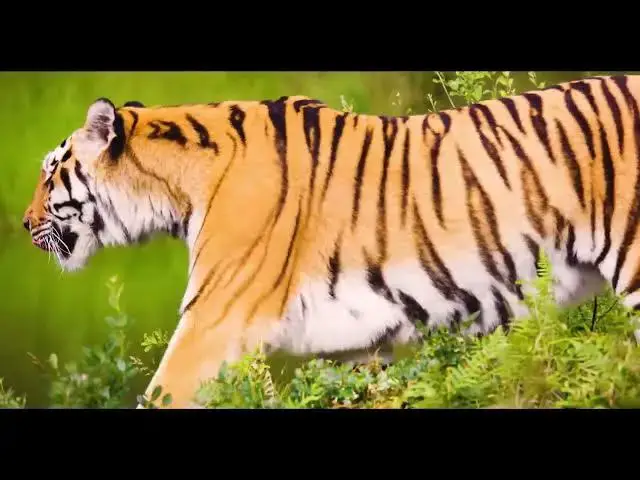
Explore how tigers adjust their hunting strategies when faced with shifts in food availability. Learn about their flexible diet, modified techniques, and the impact of human activities on their prey. Discover examples of tiger adaptation in various habitats and the importance of conservation efforts.
Show More Show Less View Video Transcript
0:00
tiger hunting habits adapting to
0:02
changing prey Tigers the largest of all
0:07
big cats are renowned for their strength
0:10
stealth and hunting
0:13
prowess what happens when their
0:15
traditional prey become
0:17
scarce how do these apex predators
0:20
respond to changing food
0:23
sources tigers are adaptable carnivores
0:26
capable of hunting a wide variety of
0:28
prey in their natural habitats they
0:32
primarily Target large ulat such as deer
0:36
wild boar and even smaller species of
0:40
bears however as human activities
0:43
increasingly encroach on tiger
0:44
territories their traditional food
0:47
sources are often
0:49
disrupted when faced with changes in
0:51
prey availability Tigers demonstrate
0:54
remarkable
0:56
flexibility they may shift their hunting
0:58
patterns targeting different species or
1:01
even smaller prey than they would
1:03
typically
1:04
pursue for instance in areas where large
1:08
ulates have become scarce tigers have
1:12
been observed hunting smaller animals
1:14
like monkeys porcupines and even
1:18
fish this adaptability extends to their
1:21
hunting techniques as well tigers are
1:25
known to modify their stalking and
1:27
Ambush strategies based on the type of
1:29
prey
1:30
available when hunting smaller more
1:33
agile animals they may rely more on
1:36
stealth and quick bursts of speed rather
1:39
than the prolonged chases used for
1:41
larger prey human activities have
1:44
significantly impacted tiger habitats
1:47
and food
1:48
sources deforestation Agriculture and
1:52
urban expansion have fragmented tiger
1:55
territories reducing the abundance of
1:57
their natural prey in some regions this
2:01
has led to increased human tiger
2:03
conflict as Tigers May turn to livestock
2:07
as an alternative food source when wild
2:10
prey is
2:11
scarce one notable example of tiger
2:14
adaptation comes from the sundaran a
2:17
mangrove forest spanning parts of India
2:20
and
2:21
Bangladesh here tigers have adapted to a
2:24
semi-aquatic lifestyle swimming between
2:27
islands and hunting fish and crabs in
2:30
addition to their usual terrestrial
2:32
prey this unique Behavior showcases the
2:36
Tiger's ability to thrive in challenging
2:40
environments when their traditional food
2:42
sources are
2:43
limited in some areas conservation
2:47
efforts have focused on restoring tiger
2:49
habitats and reintroducing prey
2:53
species these initiatives have shown
2:56
promising results with tiger populations
2:59
responding positively to the increased
3:01
availability of their preferred
3:04
prey this underscores the importance of
3:07
maintaining healthy ecosystems that can
3:10
support both Tigers and their food
3:13
sources the ability of tigers to adapt
3:16
to changing food sources is crucial for
3:19
their survival in an everchanging
3:22
World however it's important to note
3:25
that while tigers can adapt to some
3:27
degree they still require large intact
3:30
habitats with abundant prey to
3:33
thrive conservation efforts must focus
3:37
on protecting these habitats and
3:39
maintaining healthy prey populations to
3:42
ensure the long-term survival of these
3:44
magnificent
3:46
Predators understanding how Tigers
3:48
respond to changing food sources not
3:51
only provides valuable insights into
3:53
their ecology but also highlights the
3:56
complex relationships between Predators
3:59
prey
4:00
and their
4:01
environment as we continue to study and
4:04
protect these incredible animals we gain
4:07
a deeper appreciation for the delicate
4:10
balance of Nature and the resilience of
4:12
species in the face of environmental
4:15
challenges
#Outdoors
#Pets & Animals
#Wildlife
#Biological Sciences
#Ecology & Environment
#Tourist Destinations
#Zoos, Aquariums & Preserves
#Hunting & Shooting