Up next in 10


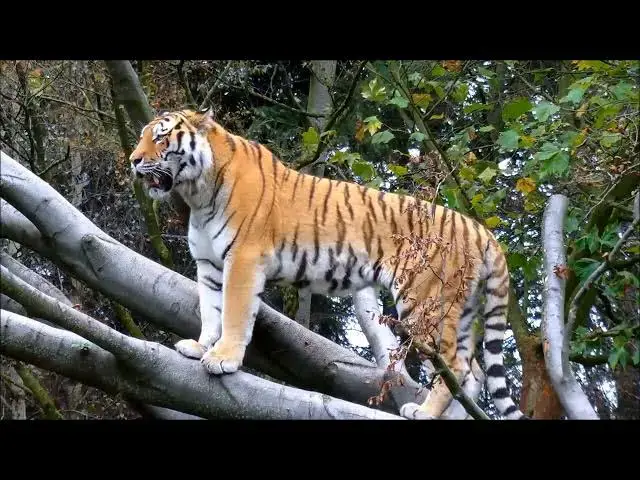
Discover if tigers have a preferred paw, similar to human handedness. Learn about research methods, findings, and how this relates to other big cats. Explore the implications of paw preference for animal cognition and welfare.
Show More Show Less View Video Transcript
0:00
tiger paw preference are big cats
0:03
lefties or
0:04
righties have you ever wondered if
0:07
Tigers those Majestic big cats have a
0:10
preferred
0:12
paw just like humans can be right-handed
0:15
or left-handed animals can show similar
0:19
preferences today we're exploring the
0:22
fascinating question are tigers left or
0:26
right
0:27
ped handedness or the pre refence for
0:30
using one side of the body over the
0:32
other is a well-known trait in
0:35
humans however this phenomenon isn't
0:38
unique to our
0:40
species scientists have observed
0:44
lateralization the scientific term for
0:46
this preference in various animals from
0:49
primates to
0:51
birds but what about
0:54
tigers studying poor preference in
0:57
Tigers presents unique
1:00
challenges unlike domesticated cats that
1:03
we can easily observe in our homes
1:06
tigers are large potentially dangerous
1:09
wild
1:10
animals researchers have developed
1:12
creative methods to investigate this
1:14
question
1:15
safely they often use enrichment
1:18
activities or puzzle feeders that
1:20
encourage Tigers to use their pores then
1:23
observe which po the Tigers prefer for
1:26
these
1:27
tasks so what have these studies
1:31
revealed interestingly tigers do show
1:34
individual poor preferences but there
1:37
isn't a strong
1:39
population wide bias towards either the
1:42
left or right
1:43
po some tigers consistently favor their
1:47
right Poe others their left and some
1:50
show no strong preference at all this
1:54
variability is similar to what we see in
1:57
other animal species in including
2:00
domestic
2:01
cats comparing Tigers to other big cats
2:05
we find similar
2:07
patterns lions for example also show
2:11
individual poor preferences without a
2:13
clear
2:14
population wide
2:16
bias this suggests that poor preference
2:20
might be a common trait among felines
2:23
regardless of their size or
2:25
habitat the study of handedness in
2:27
tigers and other animals is more than
2:30
just a
2:31
curiosity it provides valuable insights
2:34
into brain lateralization and the
2:37
evolution of cognitive
2:40
functions understanding these
2:42
preferences can help improve Animal
2:44
Welfare in captivity by designing better
2:47
enrichment activities that cater to
2:50
individual animals natural
2:53
tendencies in conclusion Tigers like
2:56
many other animals can indeed show a
2:59
preference for using losing one pore
3:01
over the
3:02
other however there's no Universal rule
3:05
about whether tigers are left or right c
3:08
as a
3:09
species each tiger is unique with its
3:13
own individual
3:15
preference this fascinating area of
3:18
research continues to shed light on the
3:22
complex cognitive abilities of these
3:24
magnificent creatures reminding us of
3:27
the intricate and diverse nature of
3:30
animal behavior
#Pets & Animals
#Pets
#Cats
#Dogs
#Reptiles & Amphibians
#Wildlife
#Other