Up next in 10


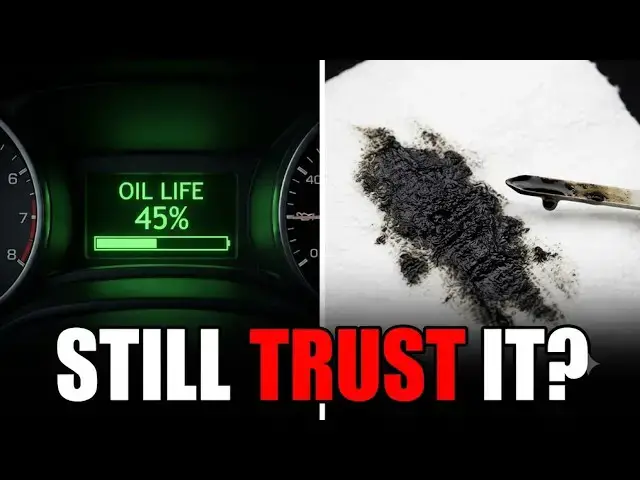
Have you ever wondered why your engine oil already looks worn out even though your owner's manual says you still have thousands of miles left before your next oil change?
In this video, we break down why the standard oil change interval doesn't always match real-world driving conditions. You'll learn how modern engines, severe-service driving, fuel dilution, short trips, and oil life monitoring systems can affect your engine oil long before many drivers expect.
This isn't about changing your oil every 3,000 miles—or blindly trusting the longest interval listed in your owner's manual. It's about understanding how your driving habits affect oil degradation and how to make smarter maintenance decisions that can help protect your engine over the long term.
Whether you drive a Toyota, Honda, Ford, Chevrolet, GMC, Nissan, Hyundai, Kia, BMW, Volkswagen, Subaru, Mazda, Jeep, RAM, or any modern gasoline vehicle, understanding how engine oil actually ages can save you from expensive repairs and unnecessary maintenance.
⏱ Chapters
00:00 – Two identical cars, two very different engines
01:35 – Why oil change intervals exist
03:20 – The hidden assumptions behind your owner's manual
05:48 – Modern GDI engines and fuel dilution explained
08:15 – What "Severe Service" really means
10:42 – Why many drivers unknowingly fall into that category
12:18 – How oil life monitors actually work
14:10 – Practical maintenance advice that actually matters
15:30 – The biggest takeaway every car owner should know
If you found this video helpful, consider subscribing for evidence-based automotive videos, practical maintenance advice, and honest explanations that help you make better decisions about your vehicle.
👍 Like the video if it taught you something new.
💬 Share your oil change routine or experience in the comments.
#CarMaintenance #EngineOil #OilChange #CarCare #MechanicTips
Show More Show Less View Video Transcript
0:00
Your owner's manual says change the oil
0:02
every 7,500
0:05
mi or every 10,000, maybe every 15,000
0:08
if you drive a BMW. You followed that
0:10
number. You trusted it. You assumed it
0:12
was set purely by engineers who wanted
0:15
your engine to last as long as possible.
0:17
The reality is more complicated than
0:19
that. The interval in your owner's
0:21
manual is shaped by a combination of
0:23
engineering testing, oil chemistry,
0:25
emissions targets, fuel economy
0:28
regulations, warranty period
0:30
assumptions, and business factors, not
0:32
all of which point in the same direction
0:34
when it comes to your engine's condition
0:36
at 150,000 mi. And once you understand
0:40
what actually goes into that number, you
0:42
will read it very differently. According
0:44
to the United States Department of
0:45
Energy, 73% of all light-duty vehicles
0:49
produced for the 2023 model year came
0:52
with gasoline direct injection,
0:54
including vehicles that combine GDI with
0:56
port fuel injection. That figure covers
0:59
production, not necessarily all vehicles
1:01
currently on the road, but it reflects
1:03
how widespread GDI has become across
1:07
modern gasoline vehicles in the United
1:09
States. That engine technology,
1:11
particularly in turbocharged
1:13
applications, has specific
1:15
characteristics that make oil condition
1:17
more important and in some operating
1:19
conditions more challenging to maintain
1:21
than older engine designs. Not
1:23
universally, but for a meaningful number
1:25
of drivers under specific conditions,
1:28
the standard interval may not tell the
1:30
whole story. By the end of this, you
1:32
will know what those conditions are, how
1:33
to check whether they apply to your
1:35
vehicle, and what your owner's manual
1:37
already says about them in a section
1:39
that almost nobody reads. What goes into
1:42
the number? In your manual, manufacturer
1:44
oil change intervals are not arbitrary.
1:47
They are based on real engineering, oil
1:49
chemistry testing, engine dynamometer
1:51
testing, real-world durability
1:53
evaluations, and the oil specification
1:56
the vehicle is designed to use. Modern
1:58
full synthetic oils are genuinely more
2:01
capable than oils from 20 years ago. The
2:04
chemistry has improved and extended
2:06
intervals reflect that improvement in
2:08
part, but intervals are also shaped by
2:10
factors that are not purely about engine
2:13
longevity. Environmental regulations and
2:15
broader sustainability goals also create
2:18
pressure to reduce waste. Longer
2:20
intervals mean fewer used oil changes
2:23
and filters over a vehicle's life. A
2:25
consideration that aligns with both
2:27
regulatory messaging and reduced
2:28
maintenance program costs. Fuel economy
2:31
standards create pressure to specify
2:33
lower viscosity oils and calibrate
2:36
engines to run on them at specific
2:38
intervals. That combination can affect
2:40
how quickly the oil's protective
2:42
properties change under operating
2:44
conditions. And for manufacturers that
2:46
offer complimentary maintenance
2:47
programs, the interval has a financial
2:50
dimension worth understanding. BMW's
2:52
ultimate care program covers the first 3
2:55
years or 36,000 mi of scheduled
2:59
maintenance including oil changes.
3:01
Consumer Reports documented that BMW's
3:04
original program was based on 15,000 mi
3:07
oil change intervals before they
3:09
shortened it to 10,000 mi in 2014. When
3:12
a manufacturer covers oil changes under
3:15
an included program, a longer interval
3:17
means fewer covered services, which
3:19
reduces the cost of that program to the
3:22
manufacturer. That is a fact. Whether
3:24
that financial consideration influenced
3:26
the interval is an inference, not a
3:28
proven direct cause. The available
3:30
evidence does not establish that BMW set
3:33
the 15,000 mi interval specifically to
3:37
reduce maintenance program costs. But
3:39
the relationship between longer
3:41
intervals and fewer covered services
3:43
exists and is worth understanding. The
3:45
result of all these factors combined is
3:48
an interval optimized for a set of
3:50
assumptions about how cars are driven
3:52
under normal conditions, and that is
3:54
where the conversation gets specific.
3:56
Normal versus severe, the section of
3:59
your manual you have probably never
4:01
read. Almost every owner's manual
4:03
contains two maintenance schedules, the
4:05
one on the sticker in your windshield
4:07
and a second one usually buried toward
4:09
the back of the maintenance section
4:11
labeled something like severe service or
4:14
special operating conditions. The severe
4:16
service schedule specifies shorter
4:18
intervals, and the definition of what
4:20
qualifies as severe service is broader
4:23
than most drivers expect. According to
4:25
standard manufacturer definitions
4:27
verified across multiple major brands,
4:30
severe service typically includes trips
4:33
of less than 5 mi in normal
4:35
temperatures, trips of less than 10 mi
4:37
in freezing temperatures, extended
4:39
periods of stop-and-go traffic, towing
4:42
or hauling near the vehicle's rated
4:43
capacity, and driving in dusty or
4:46
off-road conditions. Read that list
4:48
again. That description fits a
4:50
significant portion of daily driving in
4:52
any urban or suburban environment. If
4:55
you make regular short trips, spend time
4:57
in traffic, or drive in cold weather,
4:59
your vehicle's manufacturer has already
5:01
specified that you should use a shorter
5:03
interval. It is already in your manual.
5:05
It just was never the number put on the
5:06
sticker in your windshield. That gap
5:08
between the standard interval and the
5:10
severe service interval is not a
5:13
manufacturer secret. It is in the
5:15
document that came with your car. Most
5:17
owners have simply never been told to
5:19
look for it. Now, here is where the
5:21
engine technology matters specifically
5:24
because the type of engine in your
5:26
vehicle determines how much that gap
5:28
between normal and severe service
5:31
actually matters for oil condition. The
5:33
GDI engine and oil condition. According
5:35
to the US Department of Energy, 73% of
5:38
all light-duty vehicles produced for the
5:40
2023 model year came with gasoline
5:43
direct injection. GDI has become
5:46
widespread across modern gasoline
5:48
vehicles, and this is the engine type
5:50
most likely to be under your hood in any
5:53
car or truck purchased in the last
5:55
several years. In a traditional port
5:57
fuel injection engine, fuel is sprayed
5:59
upstream of the intake valve, and that
6:01
fuel contact helps remove some of the
6:03
deposits that naturally accumulate there
6:06
over time. In a GDI engine, fuel is
6:08
injected directly into the combustion
6:10
chamber, bypassing the intake valve
6:13
entirely. Without that fuel contact,
6:15
carbon deposits can accumulate on intake
6:18
valve surfaces over time. The rate and
6:20
severity of that build-up depends on the
6:22
specific engine design, the oil
6:24
specification used, how the PCV system
6:27
routes crankcase vapors, and how the
6:29
vehicle is driven. GDI also operates at
6:32
significantly higher fuel injection
6:34
pressures than port injection. Those
6:36
pressures, combined with the high
6:38
temperatures produced by turbocharging,
6:40
common in GDI engines, can create
6:43
conditions where oil experiences more
6:45
thermal stress, and in some engines and
6:48
operating patterns, a degree of fuel
6:50
dilution in the crankcase. Fuel can
6:52
enter the oil during cold starts and
6:55
short trips when the engine does not
6:57
fully warm up, and when oil temperatures
6:59
stay low, that fuel evaporates more
7:02
slowly. None of this means GDI engines
7:05
are unreliable or that following the
7:07
manufacturer's interval will
7:09
automatically damage your engine. The
7:11
risk depends on the specific engine, the
7:13
oil specification it requires, how it is
7:16
calibrated, the climate you drive in,
7:18
and your driving patterns. What it does
7:20
mean is that for certain engines and
7:22
certain conditions, oil condition can
7:24
change more quickly than the standard
7:26
interval assumes. What documented oil
7:29
testing has shown, in 2023, GMB North
7:32
America published an analysis of used
7:35
oil sampled from a turbocharged GDI
7:38
vehicle at 6,580
7:41
miles, still within the manufacturer's
7:43
recommended 7,500 mi interval for that
7:47
vehicle. Their analysis found the oil in
7:49
poor condition at that mileage. To be
7:51
precise, the manufacturer's own interval
7:54
said the oil should have had
7:55
approximately 920 mi of useful life
7:59
remaining. The laboratory analysis
8:00
suggested otherwise. This is one
8:02
specific test on one specific vehicle.
8:05
It is not universal proof about all GDI
8:08
engines or all intervals. But it is a
8:10
documented example of a gap between what
8:12
a standard interval assumes and what a
8:14
specific oil analysis found. Blackstone
8:17
Laboratories, an independent oil
8:19
analysis service in the United States,
8:21
analyzed used oil from a specific
8:23
Hyundai Tucson GDI engine that had shown
8:26
oil consumption concerns. Based on that
8:29
particular sample's contamination
8:30
levels, Blackstone recommended an oil
8:33
change interval of approximately 1,200
8:36
mi for that specific vehicle in its
8:38
current condition. That recommendation
8:40
was for that vehicle with those test
8:42
results at that point in time, not a
8:45
universal recommendation for all Hyundai
8:47
engines or all GDI applications. What it
8:50
illustrates is that driving patterns,
8:52
engine design, and individual vehicle
8:55
condition can push oil degradation
8:57
significantly faster than a standard
8:59
interval accounts for. The Hyundai and
9:01
Kia context stated accurately, beginning
9:04
around 2016, class action litigation was
9:07
filed against Hyundai and Kia related to
9:10
engine failures in vehicles equipped
9:11
with GDI Theta two engines produced
9:14
between approximately 2011 and 2014. The
9:19
lawsuits alleged specific engine
9:21
defects, including issues related to
9:23
manufacturing that starved engine
9:25
components of adequate lubrication. In
9:27
2020, Kia reached a settlement that
9:30
included extended warranty coverage and
9:32
reimbursements for repairs on affected
9:34
vehicles. It is important to be clear.
9:36
This litigation involved alleged
9:38
manufacturing defects in specific
9:41
engines. It is not evidence that
9:43
extended oil change intervals caused
9:46
those failures, and it should not be
9:47
presented as such. What the litigation
9:49
does show is that GDI engines in certain
9:52
configurations experienced documented
9:55
lubrication-related failures, and that
9:57
oil condition played a role in how those
9:59
failures developed. The lesson is about
10:02
the importance of oil maintenance in
10:03
these engines, not a direct indictment
10:06
specific interval. What oil actually
10:08
does and how it changes. Oil performs
10:11
several functions simultaneously. It
10:13
lubricates moving metal surfaces and
10:16
prevents direct contact. It carries heat
10:18
away from components the coolant cannot
10:20
reach directly. It suspends combustion
10:22
byproducts and wear particles and
10:24
carries them to the filter. And in
10:26
modern engines, it serves as the
10:28
hydraulic fluid for variable valve
10:31
timing systems that control when your
10:33
intake and exhaust valves open and
10:35
close. As oil ages, several things can
10:38
happen depending on the engine and
10:40
operating conditions. The detergent and
10:42
dispersant additives gradually deplete,
10:45
viscosity can change under sustained
10:47
heat, oxidation can alter the oil's
10:49
chemistry, and fuel dilution from cold
10:52
start cycles can reduce the oil's
10:54
protective properties if it accumulates
10:57
faster than it evaporates. The rate at
10:59
which these changes occur depends on the
11:02
engine type, the oil specification, the
11:05
operating temperatures, the length and
11:07
frequency of trips, and whether the
11:09
engine reaches full operating
11:11
temperature regularly. Oil that has
11:13
undergone these changes does not
11:15
necessarily stop lubricating immediately
11:18
or catastrophically. Degradation is
11:20
gradual, but the margin between adequate
11:22
protection and inadequate protection
11:25
narrows as the oil ages, and the rate at
11:27
which that margin narrows is not the
11:29
same in every engine under every
11:32
operating condition. The oil life
11:34
monitor, what it is and is not. Most
11:36
modern vehicles display an oil life
11:38
percentage, a number that counts down
11:40
towards zero as you drive. Most drivers
11:42
assume this is measuring the oil
11:44
directly. It is not measuring oil the
11:46
way a laboratory would. The oil life
11:48
percentage is generally not a direct
11:50
laboratory measurement of the oil's
11:52
chemical condition. Most systems
11:54
estimate oil condition using algorithms
11:57
based on factors such as engine
11:59
temperature, RPM, trip patterns, and
12:02
mileage, rather than directly testing
12:04
what is chemically happening inside the
12:06
oil itself. These systems are generally
12:08
well designed and better than a fixed
12:10
mileage interval at accounting for how a
12:13
vehicle is actually driven, but they
12:14
have limitations. They generally cannot
12:17
directly measure fuel dilution in the
12:19
oil, which is one of the factors that
12:21
can affect oil condition in GDI engines
12:24
driven on frequent short trips. They
12:26
estimate based on inputs the algorithm
12:29
can access, not on a direct chemical
12:31
analysis of the oil itself. This does
12:33
not mean the monitor is unreliable. It
12:36
means it is an estimate, and like any
12:38
estimate, it operates within
12:40
assumptions. If your driving pattern
12:42
falls outside those assumptions,
12:44
particularly if you make very frequent
12:46
short trips in cold weather, the
12:48
estimate may not fully reflect the oil's
12:51
actual condition. When this does not
12:53
apply, the honest limits. If you drive a
12:55
non-turbocharged engine primarily on
12:58
highway miles, reach full operating
13:01
temperature regularly, and use the
13:03
correct oil specification for your
13:05
vehicle, the manufacturer's standard
13:07
interval is likely adequate for your
13:09
conditions. Modern full synthetic oils
13:12
are genuinely capable of lasting the
13:15
intervals manufacturers specify under
13:18
normal operating conditions. Changing
13:20
oil significantly more frequently than
13:22
your engine requires does not improve
13:25
engine protection proportionally, and it
13:27
produces unnecessary waste. The point of
13:29
this video is not that every driver
13:31
needs to change their oil more often
13:33
than the manual says. The point is that
13:36
the interval in your manual was
13:37
developed under assumptions about what
13:39
normal driving looks like. And if your
13:42
driving does not match those
13:43
assumptions, your manual already
13:45
accounts for that in the severe service
13:47
schedule. The question is whether you
13:49
have ever been told to look for it. Here
13:51
is what to take from this. The interval
13:53
in your owner's manual is based on a
13:55
combination of engineering testing, oil
13:58
specifications, environmental
14:00
considerations, fuel economy
14:02
requirements, warranty period
14:03
assumptions, and in some cases, the cost
14:06
structure of included maintenance
14:08
programs. It is not a number set purely
14:11
to maximize your engine's lifespan at
14:13
200,000 mi. It is a number set to work
14:16
adequately for a defined set of assumed
14:18
operating conditions. GDI technology now
14:21
appears in 73% of light-duty vehicles
14:25
produced for the 2023 model year,
14:27
according to the Department of Energy.
14:29
That engine technology, particularly in
14:31
turbocharged applications and in certain
14:34
operating conditions, can create an
14:36
environment where oil condition changes
14:39
more quickly than a standard interval
14:41
assumes. The extent of that risk depends
14:43
on the specific engine, the oil
14:45
specification, and how the vehicle is
14:48
driven. Your owner's manual contains a
14:49
severe service schedule. It defines what
14:52
qualifies as severe. Read it. Compare it
14:54
to how you actually drive. If your
14:56
driving qualifies, the shorter interval
14:59
is already there. Your manufacturer
15:01
specified it. It just was not the number
15:03
on the sticker. And if you want to know
15:04
with certainty what condition your oil
15:06
is actually in, independent oil analysis
15:09
services exist that can test a sample
15:12
directly. That is the most accurate
15:14
information available, more accurate
15:16
than any algorithm, and more specific
15:19
than any general guidance, including
15:21
this one. If this is the first time
15:23
anyone explained what actually goes into
15:25
the number in your manual, that is worth
15:27
a like because every driver who
15:29
understands this makes a more informed
15:32
decision for their specific engine
15:34
before a problem develops. Subscribe to
15:37
Every week, one automotive system
15:39
explained honestly with the sources to
15:41
back it up and the caveats included.
15:43
Drop a comment with this. What engine do
15:45
you have? What interval are you
15:47
currently following? And does your
15:49
driving qualify as severe service by
15:52
your manufacturer's definition? Those
15:53
real-world answers are how we identify
15:56
where the gap between the manual and
15:58
actual driving conditions is the
16:00
biggest.
Autos & Vehicles