0:00
Have you ever walked out of a mechanic's
0:02
shop and thought, "Wait, did I actually
0:04
need all of that?" You go in for a
0:06
simple oil change. You sit in the
0:07
waiting room and then they come back
0:09
with a list. Air filter replacement,
0:11
coolant flush, power steering service,
0:14
fuel system cleaning. Suddenly, your
0:16
bill is sitting at over $1,000. And the
0:19
worst part, you sign it because you
0:21
don't know what's actually necessary.
0:23
And the automotive industry knows that.
0:25
In this video, we are breaking down the
0:28
six most oversold car services in the
0:31
industry, what mechanics tell you, what
0:33
the truth actually is, and exactly how
0:36
much money you can save just by knowing
0:39
when to say no. Stay until number five,
0:42
because that one will completely change
0:44
how you think about fuel. This channel
0:46
exists for one reason, to make sure you
0:49
never get taken advantage of when it
0:51
comes to your car. You don't need to be
0:53
a mechanic. You just need the right
0:55
information. And to be fair, not every
0:58
mechanic is dishonest. Many are skilled
1:00
professionals doing an honest job. But
1:03
the business model of most repair shops
1:05
depends on upselling additional
1:07
services. So even at a good shop, you
1:10
need to know when to say yes and when to
1:13
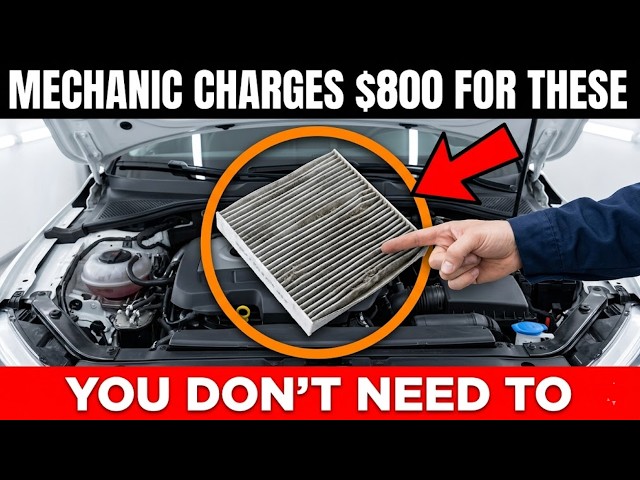
say no. Let's get into it. Part one, air
1:15
filter. The air filter is the number one
1:18
most common upsell at any repair shop.
1:21
And the reason it works so well is
1:23
because it looks terrible. Here is the
1:25
standard pitch. The mechanic pops the
1:27
hood, pulls out your air filter, holds
1:29
it up in the light, and says, "This is
1:31
really dirty. You need to replace this
1:34
today." And because it looks dark and
1:36
dusty and genuinely unpleasant, most
1:39
people say yes without asking a single
1:41
question. But here is the thing that
1:43
changes everything. Air filters are
1:45
specifically designed to collect dirt.
1:48
That is their entire purpose. A filter
1:50
that looks dirty is a filter that is
1:52
doing its job correctly. Dirty does not
1:55
mean done. The right question is never
1:57
how the filter looks. The right question
1:59
is how many miles has it done since the
2:02
last replacement. Air filters in most
2:04
vehicles last between 15,000 and 30,000
2:07
mi. If you drive in dusty or rural
2:10
conditions, the lower end applies.
2:12
Normal city or highway driving, you're
2:14
often looking at 25,000 to 30,000 mi of
2:18
life easily. The part itself costs
2:20
between $10 and $25 depending on your
2:23
vehicle. Shops charge $40 to $80. The
2:26
so-called labor involved, it's a plastic
2:29
box that clips open under the hood. The
2:31
actual replacement takes under a minute.
2:34
Your action is simple. Open your owner's
2:36
manual and check the manufacturer's
2:38
recommended replacement interval. That's
2:40
the real answer, not what the mechanic
2:42
tells you at the counter. Potential
2:44
savings, $30 to $70 per unnecessary
2:47
replacement. Part two, coolant flush.
2:50
Coolant, also called antifreeze, is the
2:52
fluid that regulates your engine
2:54
temperature. It stops your engine from
2:56
overheating in summer and freezing in
2:58
winter. It does degrade over time, and a
3:01
coolant flush, when genuinely needed, is
3:03
a completely legitimate service. The
3:06
problem is the timing. Most modern
3:08
vehicles only require a coolant flush
3:10
every 5 years or 100,000 mi. Some
3:14
manufacturers go even longer than that.
3:16
Yet, many shops recommend this service
3:18
at two or 3 years, regardless of the
3:21
actual condition of the fluid. The
3:23
visual pitch is straightforward. The
3:25
mechanic shows you coolant that looks
3:27
slightly brownish or darker than new,
3:29
runs a test strip, and presents the
3:31
result as urgent. What they often don't
3:34
explain is some color change and minor
3:36
variation in a test reading is
3:38
completely normal, and does not indicate
3:41
a real problem. Here is the simple
3:43
solution. Coolant test strips are
3:45
available for $5 to $8 online. They
3:48
measure pH levels and freeze protection
3:50
directly. If the reading falls within
3:52
the safe range, there is nothing wrong
3:54
with your coolant. Regardless of what a
3:56
visual inspection suggests, a coolant
3:59
flush, when the time is genuinely right,
4:01
costs $80 to $150 at a shop and is money
4:05
well spent. The issue is being pushed
4:07
into it 2 years too early. Know your
4:10
timeline, test it yourself, and make the
4:12
decision based on facts. Potential
4:14
savings, $80 to $150 per premature
4:18
flush. Part three, power steering flush.
4:21
Power steering fluid keeps your steering
4:23
system smooth and responsive. Over time,
4:26
like all fluids, it will naturally
4:28
darken in color, and that visual change
4:30
is precisely what mechanics point to
4:32
when recommending a flush. The standard
4:35
line sounds reasonable. Your power
4:37
steering fluid is dark. it has degraded.
4:39
You need a flush or the pump could fail.
4:42
The cost is $60 to $125.
4:45
And it sounds like the kind of thing you
4:47
don't want to risk skipping. But here's
4:49
the critical detail that most people
4:51
never check. Open your owner's manual
4:53
and look at the scheduled maintenance
4:54
program, the list of services your
4:57
manufacturer recommends at specific
4:59
intervals. For the majority of vehicles
5:01
on the road, power steering flush is
5:03
simply not listed anywhere. It's not in
5:06
the schedule because the manufacturer
5:08
does not consider it a required routine
5:11
service. If it's not in your maintenance
5:13
schedule, you do not need it. There is
5:15
one situation where a power steering
5:17
flush makes genuine sense. Actual
5:20
symptoms. A whining noise when turning
5:22
the wheel, stiffness or resistance in
5:24
your steering at low speeds, difficulty
5:27
turning. These are real symptoms that
5:29
warrant a proper look. A visual check of
5:31
fluid color during a routine oil change
5:34
is not a reason. The action is simple.
5:36
Open your glove box, find your owner's
5:38
manual, check the maintenance schedule.
5:40
2 minutes of reading can save you over
5:43
$100 on the spot. Potential savings, $60
5:48
per unnecessary flush. Part four, brake
5:51
fluid flush. This one is different from
5:53
the others, and it's important to be
5:55
honest about that. A brake fluid flush
5:57
is a real and legitimate maintenance
5:59
service. Your brakes are the most
6:01
important safety system on your vehicle.
6:03
And this is not something to dismiss
6:05
entirely. Here's the science behind it.
6:07
Brake fluid is hyroscopic, meaning it
6:10
naturally absorbs moisture from the air
6:12
over time. That moisture gradually
6:15
lowers the fluid's boiling point. In
6:17
extreme braking situations, emergency
6:19
stops, or long downhill driving, low
6:22
boiling point brake fluid can cause
6:24
brake fade, where your brakes
6:26
temporarily lose their full
6:27
effectiveness. That's a genuine safety
6:30
concern and one worth taking seriously.
6:32
The problem is how mechanics present the
6:35
test results. All used brake fluid
6:37
contains some moisture. Even fluid that
6:39
is perfectly safe and has plenty of life
6:42
remaining. A basic moisture percentage
6:44
test will always return a reading and
6:46
that reading gets presented as a safety
6:49
emergency even when the fluid is well
6:51
within an acceptable range. The correct
6:54
measurement for brake fluid health is
6:56
boiling point, not moisture percentage
6:58
alone. A brake fluid boiling point
7:00
tester costs around $15 online. If the
7:04
dry boiling point reads above 140° C,
7:08
your fluid is in a safe range and does
7:10
not require immediate replacement. Most
7:12
manufacturers recommend a brake fluid
7:15
flush every 2 years or 45,000 mi. Check
7:18
your own manual for the exact figure. If
7:21
you're at or past that interval, do it.
7:23
Don't skip it. But if you had it done 18
7:26
months ago and a mechanic is calling it
7:28
critical, ask specifically for the
7:30
boiling point reading. That number tells
7:32
the real story. Potential savings, $70
7:35
to $120 per premature flush. Part five,
7:39
fuel system cleaning. And here it is,
7:42
the one that will genuinely change how
7:44
you think about car maintenance. The
7:46
pitch goes like this. Your fuel
7:48
injectors are dirty. carbon deposits are
7:51
building up in your intake system, your
7:53
engine's performance is suffering. A
7:55
full fuel system clean will restore
7:57
performance, protect your engine
7:59
long-term, and improve your fuel
8:01
economy. The service costs 150 to $200.
8:05
Sounds reasonable enough, right? Here's
8:07
the fact that makes this service almost
8:10
entirely unnecessary for the average
8:12
driver. Modern petrol, the fuel pumped
8:15
at any standard service station, is
8:17
already containing detergent additives.
8:20
In most countries, this is not optional,
8:22
and it's not a premium feature. Fuel
8:25
sold at the pump is legally required to
8:27
meet a minimum detergent standard,
8:29
specifically to protect fuel injectors
8:32
and combustion systems from carbon
8:34
buildup. Every single time you fill your
8:36
tank, those detergent additives are
8:39
already doing the cleaning job that a
8:41
mechanic is charging you $150 to $200 to
8:45
do manually. For the most drivers using
8:47
standard pump fuel from reputable
8:49
stations, significant carbon buildup on
8:52
injectors is simply not occurring at a
8:54
rate that would ever justify routine
8:57
cleaning. Is there ever a legitimate
8:59
reason for a fuel system clean? Yes, but
9:01
it requires a specific diagnosis. a
9:04
confirmed misfire fault code, a rough
9:07
idle that has been traced directly to
9:09
injector performance, a specific fault
9:12
identified through a proper diagnostic
9:14
scan. These are real problems that a
9:17
professional service may genuinely help
9:19
with. But if a mechanic recommends fuel
9:21
system cleaning during a routine service
9:24
with no check engine light, no fault
9:26
codes, and no specific symptom, ask them
9:29
one direct question. What diagnostic
9:32
code are you seeing that tells you this
9:34
is needed. If they cannot produce a
9:36
specific code or fault reading, decline
9:39
the service every single time. This is
9:42
the most oversold service in the
9:44
automotive industry. It's presented with
9:46
enough technical language to sound
9:48
credible. But for the average car driven
9:50
on standard pump fuel, it's rarely if
9:53
ever necessary as a routine service.
9:55
Potential savings, $150 to $250 per
10:00
unnecessary service. Part six, cabin air
10:03
filter. And the last one, and in some
10:05
ways the most straightforward example of
10:08
everything this video is about, the
10:10
cabin air filter cleans the air that
10:12
comes through your vents into the
10:14
passenger cabin. It catches dust,
10:16
pollen, and debris before it reaches you
10:19
and your passengers. It does need
10:21
replacing periodically, typically 15,000
10:24
to 25,000 miles or roughly once a year
10:28
for most drivers. That part is real.
10:30
Shops charge $45 to $80 for this
10:33
service. That includes the part and the
10:36
labor. And the labor charge is what
10:38
makes this one so remarkable because the
10:40
replacement process in most vehicles
10:43
takes under five minutes and requires
10:46
absolutely zero tools. In the majority
10:49
of modern vehicles, the cabin filter
10:51
sits directly behind the glove box. You
10:54
open the glove box, press the sides
10:56
inward to lower it past its stops, and
10:59
the filter housing is right there in
11:01
front of you. Uncip it, slide out the
11:03
old filter, slide in the new one, and
11:05
close it back up. The entire process is
11:08
under 5 minutes from start to finish.
11:10
The filter itself costs $10 to $20
11:13
online or at any auto parts store.
11:16
Search your car's make, model, and year
11:19
along with the words cabin air filter.
11:21
You will find the exact part for your
11:24
vehicle instantly, along with
11:26
step-by-step video guides specific to
11:28
your car that walk you through the
11:30
process. Every time you pay a shop for
11:33
this service, you are paying $30 to $60
11:36
in labor for 5 minutes of work that
11:39
requires no mechanical skill whatsoever.
11:42
This is the one item on this list that
11:44
almost every car owner can take off
11:47
their shop bill starting today.
11:48
Potential savings $35 to $65 every
11:52
single time. Let's bring all six
11:55
together. Air filter. The only thing
11:57
that matters is mileage, not how it
11:59
looks. Potential savings $30 to $70.
12:02
Coolant flush. Follow the manufacturer's
12:05
5-year or 100,000mi guideline and test
12:09
it yourself with a $5 strip before
12:12
agreeing to anything. Potential savings,
12:14
$80 to $150. Power steering flush, if it
12:18
is not listed in your maintenance
12:19
schedule, you simply do not need it.
12:22
Potential savings, $60 to $125.
12:25
Brake fluid flush, a real and important
12:28
service, but only when the boiling point
12:31
actually calls for it. Test it properly
12:33
before agreeing. Potential savings $70
12:36
to $120. Fuel system cleaning. Always
12:39
ask for the diagnostic code first. If
12:42
there is no code, there is no reason.
12:44
Potential savings $150 to $250. Cabin
12:49
air filter. Buy the part for $15 and
12:52
replace it yourself in 5 minutes.
12:54
potential savings $35 to $65 every time
12:58
across all six. Avoiding even half of
13:02
these at the wrong time puts between
13:04
$400 and $800 back in your pocket. Not
13:08
by skipping real maintenance, just by
13:10
knowing when a service is actually due
13:13
and when it is not. That's the
13:15
difference between a car owner who gets
13:17
taken advantage of and one who doesn't.
13:19
And now you know which one you are. If
13:22
this video helped you, hit the like
13:24
button. It helps this channel reach more
13:26
people who are overpaying right now
13:28
without knowing it. Subscribe to Your
13:30
Motor Care for straightforward car
13:32
content every week. No fluff, just the
13:35
information you actually need to protect
13:37
yourself and your vehicle. And drop a
13:40
comment below. Which one of these has a
13:42
mechanic tried to push on you? We read
13:44
every comment, and your questions shape
13:47
what we cover next. Thanks for watching,
13:49
and we'll see you in the next one.