live_tv
Livestream Starting Soon
00
Hours
:
00
Minutes
:
00
Seconds
Up next in 10


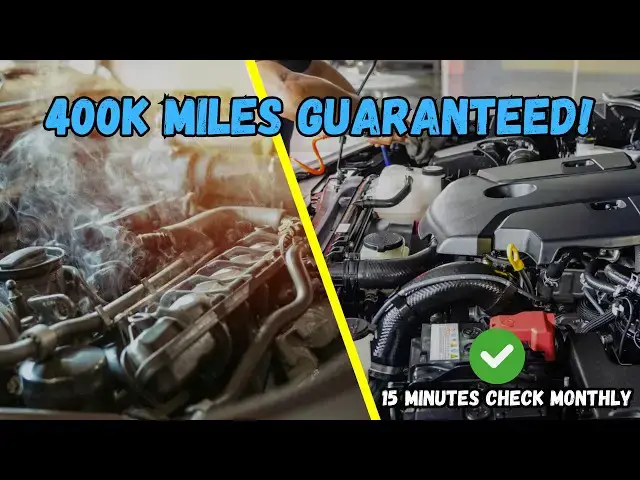
🔧 THE 30-DAY ENGINE SURVIVAL SYSTEM - Complete Guide 🔧
Transform your car's lifespan with these 8 monthly rituals that prevent 90% of engine failures. This isn't just maintenance - it's engine insurance that costs almost nothing but saves thousands.
🔍 KEY TOPICS COVERED:
Engine oil condition analysis techniques
Cooling system intelligence gathering
Air filter and MAF sensor maintenance
Battery terminal and ground connection cleaning
Spark plug wire and coil inspection
Fuel injector cleaning protocols
OBD2 diagnostic scanning strategies
Italian tune-up performance therapy
Engine mount and belt system checks
🛠️ Recommended Tools:
✅Throttle Body Cleaner WD-40 (https://amzn.to/4n317gu)
✅Car OBD2 Scanner (https://amzn.to/4o2bhz1)
✅Torque Wrench (https://amzn.to/3IG5e2T)
✅Digital Multimeter (https://amzn.to/3GR24ce)
Show More Show Less View Video Transcript
0:00
What if I told you that most engines are
0:02
murdered, not broken? That's right. 85%
0:06
of engine failures happen because owners
0:08
ignore eight simple monthly checks that
0:10
take less time than scrolling through
0:12
social media. I'm talking about engines
0:14
that could easily hit 400,000 m, dying
0:18
tragic deaths at 120,000 because nobody
0:21
taught their owners these survival
0:23
secrets. I've been wrenching for over
0:25
two decades, and I've watched thousands
0:27
of perfectly good engines get sentenced
0:30
to the scrapyard when 15 minutes of
0:32
monthly attention could have saved them.
0:34
Today, I'm sharing the exact system
0:36
that's kept my personal 2008 Toyota
0:39
purring at 380,000 mi without a single
0:43
major repair. Hit that subscribe button
0:45
because you're about to discover why
0:47
your engine's worst enemy isn't wear and
0:49
tear, it's neglect. and I'm going to
0:52
show you exactly how to fight back your
0:55
engine's lifeline, the oil detective
0:58
work. Let's start with the most critical
1:00
5 minutes of your engine's monthly
1:02
survival. You think you're just checking
1:04
oil, but you're actually performing CSI
1:07
level forensics that can predict your
1:09
engine's future. Most people pull that
1:11
dipstick, glance at the level, and call
1:13
it good. That's like checking your
1:15
pulse, but ignoring whether you're
1:16
breathing. Here's what separates engine
1:18
survivors from engine killers. You need
1:21
to read that oil like a medical chart.
1:23
Fresh oil flows like liquid gold and has
1:26
that beautiful amber shimmer, but your
1:28
dipstick is telling a much deeper story
1:30
if you know how to listen. Smell your
1:33
oil. I'm dead serious about this.
1:35
Quality oil has almost no scent. Catch a
1:38
metallic smell? That's microscopic metal
1:40
particles from internal wear grinding
1:42
away at your engine's life. Sweet odor?
1:45
Coolant is leaking into your oil, which
1:47
means head gasket problems are brewing.
1:49
burnt smell. Your oil has been cooking
1:52
itself to death and your engine is
1:54
running on liquid sandpaper. I once
1:56
diagnosed a customer's head gasket just
1:58
by smelling his dipstick. Saved him from
2:00
a catastrophic meltdown that would have
2:02
cost him six grand. The early
2:04
intervention repair, 180 bucks. That's
2:07
the power of paying attention to what
2:09
your engine is telling you. The
2:10
technique matters as much as the
2:12
observation. Always check when the
2:14
engine's been off for at least 10
2:16
minutes. Wipe that stick completely
2:18
clean. Slide it all the way down, then
2:20
pull for your reading. That level needs
2:22
to sit comfortably between minimum and
2:24
maximum. Running even half a quart low
2:27
doubles your engine's wear rate because
2:29
parts start kissing metal instead of
2:31
floating on that protective oil film.
2:34
The temperature guardian protocol. Your
2:36
engine operates in a thermal war zone
2:38
that would melt most metals. We're
2:40
talking about combustion events hitting
2:42
2,000° F happening 20 times per second
2:46
in each cylinder. Your cooling system
2:48
isn't just keeping things comfortable.
2:50
It's preventing a nuclear meltdown under
2:53
your hood. With the engine stone cold,
2:55
locate your coolant expansion tank. This
2:58
isn't just about checking levels. You're
3:00
gathering intelligence about your
3:02
engine's internal health. That fluid
3:04
should sit between the minimum and
3:05
maximum marks. But here's where you
3:07
become a cooling system detective. The
3:10
color tells everything. Factory coolant
3:13
comes in specific shades. Bright green,
3:16
orange, or pink, depending on your
3:17
vehicle. If it looks like chocolate
3:19
milk, you've got oil contamination from
3:21
a blown head gasket. Rusty brown water
3:24
means your system is eating itself from
3:26
the inside out. Oily film floating on
3:28
top, your engine is mixing fluids that
3:31
should never meet. I had a customer
3:33
ignore brown coolant for 6 months
3:35
because it still seemed to work fine.
3:37
When she finally rolled into my bay, her
3:39
engine had cooked itself so badly, the
3:41
cylinder heads warped like potato chips.
3:44
Total loss. A $15 coolant flush could
3:47
have prevented a $7,000 engine
3:49
replacement. Take your flashlight and
3:51
peek at those radiator fins from the
3:53
front of your car. If they're packed
3:55
with bugs, leaves, and road debris, your
3:57
cooling efficiency drops by 30% or more.
4:00
A quick garden hose rids keeps those
4:02
heat exchangers working at maximum
4:04
capacity. The breathing system analysis.
4:07
Think of your engine as an Olympic
4:08
sprinter who needs perfect breathing to
4:10
perform. Every combustion cycle requires
4:13
precise air to fuel ratios. And when you
4:15
choke off that air supply, you're
4:17
literally suffocating your engine while
4:19
forcing it to work three times harder to
4:21
produce the same power. Pop open that
4:23
airbox and pull out your air filter.
4:26
Hold it up to bright light. If you can't
4:28
see daylight streaming through clearly,
4:30
your engine can't breathe through it
4:31
either. A dirty air filter doesn't just
4:34
reduce power by 15%. It forces your fuel
4:37
system to run rich, washing gasoline
4:40
down cylinder walls and contaminating
4:42
your oil. But here's the advanced move
4:44
that separates pros from amateurs. While
4:47
that airbox is open, inspect your mass
4:49
air flow sensor. It's usually a small
4:52
electronic component sitting right in
4:54
the intake path with delicate wire
4:55
elements. If it's dusty or oily, it
4:58
can't accurately measure air flow, so
5:00
your engine's computer starts guessing
5:02
about fuel delivery. Clean it with
5:04
mathsp specific cleaner. And never touch
5:06
those wires with your fingers. Don't
5:08
forget your throttle body, your engine's
5:10
main breathing valve. Over time, carbon
5:12
builds up around that throttle plate,
5:14
causing rough idle and poor fuel
5:16
economy. A little throttle body cleaner
5:18
and a clean rag removes the buildup
5:20
that's choking your engine's
5:21
performance. The electrical lifeline
5:23
inspection. Modern engines are basically
5:26
rolling computers with explosions
5:28
happening inside. Every sensor, every
5:31
fuel injector, every ignition coil
5:33
depends on clean electrical connections.
5:36
Dirty connections create resistance, and
5:39
resistance is voltage cancer that makes
5:41
your entire engine management system
5:43
work overtime while delivering
5:45
inconsistent performance. Your battery
5:47
terminals are the foundation of your
5:49
electrical empire. White crusty buildup,
5:52
green corrosion, or loose clamps create
5:55
resistance that steal 40% of your
5:57
available voltage. That means weak
5:59
spark, sluggish fuel pumps, and confused
6:01
sensors sending garbage data to your
6:03
engine's brain. Here's the professional
6:06
technique. Disconnect negative first,
6:08
then positive. Clean everything with a
6:11
wire brush and baking soda solution
6:12
until metal shines. Then reconnect
6:15
positive first, negative last. Tight
6:17
connections prevent the voltage drops
6:19
that cause mysterious misfires, sensor
6:21
failures, and charging system drama. I
6:24
don't stop at the battery. Those ground
6:25
straps connecting your engine to the
6:27
chassis complete the electrical circuit
6:29
for everything. I once spent 3 hours
6:32
diagnosing a customer's random stalling
6:34
issue that turned out to be a loose
6:36
ground strap causing the computer to
6:38
randomly reset. 30 seconds of tightening
6:40
fixed what looked like a $1,200 computer
6:43
replacement. Clean those grounds,
6:44
tighten them properly, and coat with
6:46
dialectric grease. Your engine's
6:48
computer will reward you with flawless
6:50
operation for years to come. The
6:52
ignition system power check. Every
6:55
combustion event requires an electrical
6:57
explosion powerful enough to ignite
6:59
compressed fuel and air mixture. Weak
7:01
spark doesn't just mean poor
7:03
performance. It means unburned fuel
7:05
washing down cylinder walls, destroying
7:07
piston rings, and turning your oil into
7:09
contaminated sludge. If you've got
7:11
traditional spark plug wires, run your
7:13
hands along them, checking for cracks,
7:15
brittleleness, or spots where they're
7:16
rubbing hot engine parts. Here's a
7:18
diagnostic trick most people never
7:20
learn. On a dark evening, mist your plug
7:23
wires with a spray bottle while the
7:25
engine runs. Any tiny sparks dancing
7:28
around the wires means you're losing
7:30
precious ignition energy to ground
7:32
instead of firing your cylinders
7:34
properly. For coil unplug systems, pull
7:36
those rubber boots and inspect for
7:38
carbon tracking. Those little black
7:40
lightning patterns showing electricity
7:42
is arcing where it shouldn't. Dry,
7:44
cracked boots let moisture infiltrate
7:46
your coils, creating misfires that
7:48
damage catalytic converters and waste
7:50
fuel. I had a customer complaining about
7:52
terrible gas mileage and rough running.
7:55
His plug wires were so deteriorated they
7:57
were creating a lightning show against
7:59
the valve cover. New wires transformed
8:02
that stuttering engine into a smooth
8:04
powerhouse that gained 4 mp gallon
8:06
overnight. The fuel system detox
8:08
protocol. Your fuel injection system
8:11
operates at pressures exceeding 60 lbs
8:13
per square inch, delivering precisely
8:16
measured fuel droplets thousands of
8:18
times per minute. When injectors get
8:20
clogged with deposits and varnish, that
8:22
surgical precision turns into sloppy
8:24
fuel delivery that wastes gas, kills
8:26
power, and accelerates internal engine
8:29
wear. Once monthly, add highquality fuel
8:31
system cleaner to your tank before
8:33
filling up. This isn't about grabbing
8:35
the cheapest bottle. Invest in proven
8:37
cleaners that actually dissolve carbon
8:39
deposits and varnish buildup. Think of
8:41
it as artery cleaning for your fuel
8:43
system. Stick with top tier gasoline
8:46
whenever possible. These fuels contain
8:48
higher concentrations of detergent
8:50
additives that help keep your system
8:52
clean between treatments. It's
8:53
preventative medicine that costs the
8:55
same as regular gas, but provides
8:57
built-in protection. Here's what most
8:59
people miss. Dirty injectors don't just
9:02
reduce power, they create uneven fuel
9:05
distribution between cylinders. That
9:07
imbalance stresses engine mounts,
9:09
creates vibrations, and can destroy your
9:11
catalytic converter with unburned fuel.
9:14
I pulled injectors from a neglected
9:16
engine that were so clogged they barely
9:18
spray it at all. The engine sounded like
9:20
it had a dead cylinder because
9:22
essentially it did. One professional
9:24
cleaning session later, it was purring
9:26
like new. Clean fuel delivery isn't
9:29
optional. It's survival. The diagnostic
9:32
intelligence scan. Your car's computer
9:35
monitors dozens of sensors and
9:36
performance parameters continuously,
9:39
storing fault codes long before problems
9:41
become obvious. Waiting for the check
9:43
engine light is like waiting for chest
9:45
pains before checking your heart health.
9:47
You're already in trouble. A basic OBD2
9:50
scanner costs less than $30 and can save
9:53
you thousands in prevented repairs. Plug
9:56
it under your dashboard. Turn the key to
9:58
on without starting and read your
10:00
engine's memory bank. Here's what
10:02
separates amateur diagnostics from
10:04
professional level intelligence. Don't
10:06
just look for active trouble codes.
10:08
Check pending codes, freeze frame data,
10:10
and readiness monitors. These reveal
10:13
problems developing before they trigger
10:15
warning lights. Pay attention to fuel
10:17
trims, oxygen sensor readings, and
10:19
misfire counters. Fuel trims
10:21
consistently above positive 10% or below
10:24
negative 10% indicate air delivery or
10:26
fuel injection problems brew. Rising
10:28
misfire counts mean ignition or
10:30
compression issues are building toward
10:32
failure. Which of these monthly rituals
10:34
surprised you most? Drop a comment and
10:37
share your highest mileage vehicle
10:39
story. If this system helps you catch a
10:41
problem early, I want to hear about it
10:43
because preventative success stories
10:45
inspire other drivers to take control of
10:47
their automotive destiny. Subscribe for
10:49
more engine survival strategies and
10:51
automotive intelligence that keeps your
10:53
wheels turning and your wallet happy.
10:55
Remember, your engine is the heart of
10:57
your transportation freedom. Take care
10:59
of it monthly and it'll take care of you
11:02
for hundreds of thousands of miles.
11:04
Drive smart, maintain smarter, and never
11:07
let preventable problems steal your
11:09
automotive independence.
#Autos & Vehicles
#Vehicle Parts & Services
#Vehicle Repair & Maintenance