Up next in 10


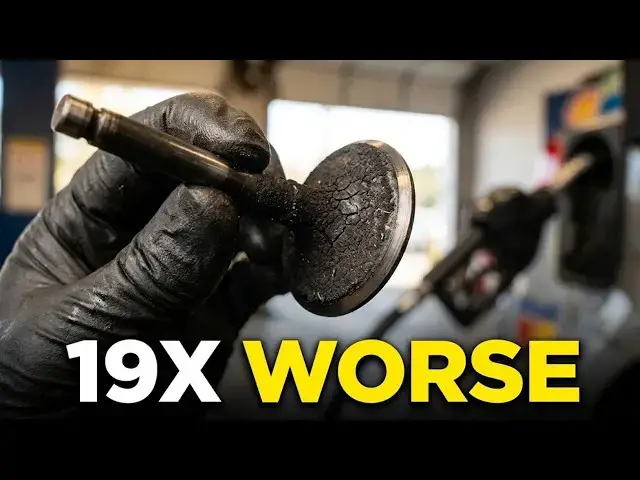
There's an actual public list that tells you which gas stations are certified to a stricter fuel standard than the government requires — and most drivers have never opened it. In this video I pulled the current TOP TIER gasoline license list directly from the source, checked it against the chains you actually drive past every day, and verified every number instead of repeating what older videos assume. You'll see which familiar names — including a couple of warehouse clubs, a convenience-store pair that turns out to be the same company, and two diesel-first truck stop chains — aren't currently on the certified list, why that matters more if your car uses direct injection, and what the real risk (and it's not what you'd expect) is at highway-exit fuel stops. I also break down the 2026 TOP TIER+ update most ranking videos still haven't caught up with, including which three national brands were first to certify under it and what changes for modern engines. Plus: the AAA lab study that found a 19-times difference in engine deposits between certified and uncertified fuel, what New York City's gas station inspection data actually shows (and what it doesn't), and the one thing brand certification can't tell you about an individual station's tank.
Timestamps:
0:00 The AAA engine test nobody talks about
1:00 What TOP TIER actually is and how it works
2:45 Grocery store gas and warehouse clubs
4:00 The convenience-store ownership trap
5:30 When diesel is the business, not gasoline
7:00 Unbranded stations and NYC's real inspection numbers
8:45 The 2026 TOP TIER+ update explained
10:15 Which certified brands are actually worth using
11:45 The 4-second check you can actually use
#GasStation #TopTierGas #CarMaintenance #EngineCare #FuelQuality #CarTips #DirectInjection #YourMotorCare
Show More Show Less View Video Transcript
0:00
You've probably watched a video ranking
0:01
oil filters worst to best. Cheap brand
0:04
bad, expensive brand, good roll credits.
0:07
Here's the problem. Almost none of those
0:09
videos mention the thing that actually
0:11
happened to the oil filter industry over
0:13
the last year. A company that quietly
0:15
built a huge share of the filters on
0:17
American shelves under a dozen different
0:19
names filed for bankruptcy, shut a major
0:22
plant down, and got bought out twice. If
0:24
you bought an oil filter with a familiar
0:26
name on it any time in the last 12
0:28
months, there's a real chance the
0:30
factory that built it doesn't exist
0:31
anymore or it's now owned by someone
0:33
else entirely. That's the story nobody's
0:36
telling. And once you understand it,
0:37
you'll understand something more useful
0:39
than any worst to best list. How to tell
0:42
whether the name on the can actually
0:44
means anything. One factory, six
0:46
different labels. Start with a simple
0:48
question. Who actually builds the filter
0:50
inside the box? For a huge slice of the
0:52
market, the honest answer is one
0:54
company, Champion Laboratories, based in
0:56
Albian, Illinois. Over the years,
0:58
mechanics and forum owners who've cut
1:00
filters open have documented Champion
1:02
Labs building the black canister version
1:04
of Walmart's Superte Filters, Royal
1:07
Purple's entire filter line, KN&N's oil
1:10
filters, older Mobile One filters, and
1:12
STP filters, alongside dozens of private
1:15
label store brands most drivers never
1:17
notice. Walmart's Superte line is a good
1:20
example of how tangled this gets. It
1:22
isn't built by one manufacturer at all.
1:24
The black shell filters come from
1:25
Champion Labs, while the blue shell
1:27
filters come from Wix. Same yellow
1:29
label, same price, two different
1:31
production lines. There's no way to tell
1:33
which one you're getting until you're
1:34
holding the can. None of this makes
1:36
Champion built filters bad. Champion
1:38
Labs was for decades one of the largest
1:40
oil filter manufacturers in the world.
1:42
and it built genuine OEM parts for
1:45
companies like GM, Ford, Volkswagen, and
1:48
Porsche. The point isn't quality. It's
1:50
that brand and manufacturer are two
1:53
different things. And the sticker on the
1:54
shelf usually tells you the first one,
1:56
not the second. The same parent company
1:58
owned the cheapest and the priciest
2:00
name. Here's where it gets stranger. In
2:02
2020, a company called First Brands
2:05
Group, the parent of Fram, bought
2:07
Champion Laboratories outright. So for
2:09
several years, the same corporate owner
2:11
controlled Fram's Extra Guard line, the
2:14
budget option people love to rank dead
2:16
last and Royal Purple, the $18 filter
2:18
people treat as the premium choice. Two
2:20
names, two price points, one owner
2:23
sitting above both of them. That's not a
2:24
conspiracy. It's just how consolidated
2:26
this industry had become. And it's
2:28
exactly the kind of thing a worst to
2:30
best list built purely around brand
2:32
names misses completely. The bankruptcy
2:35
nobody covered. Then in September 2025,
2:38
First Brands Group filed for Chapter 11
2:40
bankruptcy, weighed down by roughly $6
2:43
billion in debt. For a while, Champion
2:46
Laboratories was expected to survive the
2:48
restructuring. A court filing in January
2:50
2026 even said the Albian plant would
2:53
stay open through an asset auction. That
2:55
changed fast. On February 23rd, 2026,
2:58
employees at the Champion Labs plant
3:00
received a letter saying the facility
3:02
was closing permanently, effective
3:04
immediately, after a deal with a buyer
3:06
fell through at the last minute. Local
3:08
reporting put the job losses at over a
3:10
thousand people at that one site alone.
3:12
Across First Brand's broader operations,
3:15
roughly 17 manufacturing plants closed,
3:18
and more than 4,000 jobs were lost.
3:20
Framm's own website went dark for a
3:22
stretch. Major retailers pulled back on
3:24
stocking certain Fram products and
3:26
Walmart reportedly got word that supply
3:28
would be severely limited. Even
3:30
automakers felt it. Ford and GM, which
3:32
had relied on First Brands for original
3:34
equipment filtration parts, had to
3:36
scramble for alternate supply. On top of
3:38
the business collapse, First Brand's CEO
3:41
and his brother are now facing federal
3:43
criminal charges in New York, accused of
3:45
diverting company funds, allegations
3:47
that are part of an ongoing court case
3:49
and haven't been resolved. If you were
3:51
shopping for a Fram, a black can
3:53
supertech, a Royal Purple, or a KN&N
3:55
filter sometime between late 2025 and
3:58
early 2026, this is why you might have
4:01
hit empty shelves, a sudden price jump,
4:03
or a filter that looked slightly
4:05
different from the one you bought last
4:06
year. It wasn't your imagination. It was
4:08
a real supply chain breaking in real
4:11
time. Who's actually building your
4:13
filter? Now, the story didn't end with
4:15
the shutdown. In the months that
4:16
followed, Premium Guard Inc., an
4:18
aftermarket filter company you may
4:20
already recognize from its own budget PG
4:22
branded filters stepped in and bought
4:25
the pieces. Premium Guard acquired
4:26
Champion Laboratory's remaining assets
4:28
in the spring of 2026 and picked up the
4:31
FRAM brand itself in June 2026. By
4:34
August, drivers on repair forums were
4:36
reporting that Fram was back on shelves
4:38
and supply was returning to something
4:40
close to normal. Though, there's an
4:42
important catch worth knowing. Warranty
4:44
coverage on Fram filters bought before
4:45
the bankruptcy is reportedly void. While
4:48
filters built since the acquisition are
4:50
still covered, there's a genuine irony
4:52
here. Premium Guard's own PG branded
4:54
filters get a mixed reputation online.
4:56
Independent tearown threads have shown
4:58
solid, consistent builds in some
5:00
batches, while other owners have
5:01
reported fitment or ceiling complaints
5:03
in specific applications. Whatever you
5:05
think of that brand on its own, it's now
5:07
one of the companies actually keeping
5:09
Fram, Champ, and Luber finer filters on
5:12
the shelf. The name you trust and the
5:14
name you were skeptical of may currently
5:15
be coming out of the same operation.
5:17
What an independent lab actually found.
5:19
Set the corporate drama aside for a
5:21
second because there's a more useful
5:23
question underneath all of it. Does any
5:24
of this actually predict how well a
5:27
filter protects your engine? The real
5:28
test here is called ISO4548-12.
5:32
An international standard that pushes
5:34
contaminated oil through a filter while
5:36
counting particles on both sides, giving
5:38
you a genuine efficiency percentage
5:40
rather than a marketing claim.
5:41
Manufacturers publish their own
5:43
ISO4548-12
5:45
numbers and they're a legitimate
5:47
starting point. Fram's extra guard line
5:49
is rated at 95% efficiency at 20
5:52
microns. AC Delo's gold ultra guard line
5:55
at 98% at 25 to 30 microns and Mobile
5:59
1's extended performance line at 99% at
6:02
30 microns. All figures published
6:04
directly by the manufacturers. But
6:06
independent third-party testing is
6:08
rarer, and when it happens, it doesn't
6:10
always agree with the marketing. In one
6:12
multibrand test run by an independent
6:14
lab and reported on enthusiast forums,
6:16
Fram's premium ultra line topped the
6:18
field at over 99.9%
6:21
efficiency. Royal Purple came in just
6:23
behind it, and AC Delo's gold line also
6:25
performed strongly. Purilator's Boss
6:27
line, marketed with a 99% dirt removal
6:30
power claim on the box, measured
6:32
significantly lower in that same round
6:34
of testing. It's worth being fair here.
6:36
This was one lab, one batch of samples,
6:39
and it hasn't been repeated at scale, so
6:41
it shouldn't be treated as gospel, but
6:42
it's a real methodologically sound data
6:45
point, and it lines up with something
6:46
else worth knowing. Purilator is one of
6:48
the only major brands that doesn't
6:50
publish a specific micron efficiency
6:52
rating for its boss line the way its
6:54
competitors do. When a company's own
6:56
marketing is vagger than its
6:57
competitors, that's worth noticing
6:59
before you pay a premium price for it.
7:01
The 80% number Ford prints on its own
7:03
box. One more number worth knowing
7:05
because it surprises a lot of people.
7:07
Motorcraft's L50,
7:10
the filter Ford installs at the factory
7:11
and still recommends for millions of
7:13
F-150s, Mustangs, and Explorers, is
7:16
rated by Ford's own documentation at
7:18
just 80% efficiency at 20 microns.
7:21
That's meaningfully lower than the 95 to
7:24
99% figures from several competitors. It
7:26
isn't a scandal. It's a deliberate
7:28
engineering trade-off. Motorcraft's
7:30
filter is tuned for a stock engine on a
7:32
normal maintenance schedule with a well-
7:34
reggarded silicone anti- drainback valve
7:36
and a steel case that resists rust. Ford
7:39
forums are full of long-term owners
7:41
who've put well over 100,000 m on it
7:44
without issue. Where the gap starts to
7:45
matter more is on turbocharged direct
7:48
injection engines that generate finer
7:50
metal particles or if you're stretching
7:52
oil change intervals well past what the
7:54
filter was designed for. if your Ford is
7:56
still under factory warranty, sticking
7:58
with what the dealership installs is the
8:00
safe, boring, correct call. How to
8:02
actually buy a filter right now. So,
8:04
with a factory bankruptcy still working
8:06
its way through the supply chain, what
8:08
do you actually do standing in the parts
8:10
aisle? First, stop assuming price tells
8:12
you who made it. A $4 Superte and an $18
8:16
Royal Purple have at different points
8:18
come off the exact same Champion Labs
8:20
production line. The dollar amount on
8:22
the shelf tag was never a reliable
8:24
signal of the manufacturer behind it.
8:26
And after this bankruptcy, it's even
8:27
less reliable than before. Second, if a
8:30
brand publishes a specific ISO4548-12
8:34
efficiency number at a specific micron
8:37
size, that's real comparable
8:39
information. Use it. If a brand only
8:41
offers a vague phrase like maximum
8:43
protection with no percentage and no
8:45
micron size attached, treat that silence
8:48
as information, too. Third, know that
8:50
who makes this can change without
8:52
warning. Right now, Napa Gold is a clear
8:54
example. For six decades, it was built
8:56
by Wix, but starting in late 2023 and
8:59
accelerating through 2024 and 2025, Napa
9:02
shifted production to Baldwin, Premium
9:04
Guard, and other suppliers depending on
9:06
the part number, with some units now
9:08
made overseas. The part number and
9:10
country of origin stamp on today's box
9:12
may not match what you bought last year,
9:14
even under the exact same name. Fourth,
9:16
don't let a single independent test,
9:18
including the one in this video, become
9:20
the whole story. Oil filter performance
9:22
depends on your driving conditions, your
9:24
oil type, and how consistently you
9:26
actually change it. A midpack filter
9:28
changed on schedule beats a topofchart
9:30
filter left in twice as long as it
9:32
should be. And if you're shopping today,
9:33
AC Delko's Gold Ultra Guard line and
9:36
Mobile 1's extended performance line
9:38
both currently publish clear,
9:40
independently plausible efficiency
9:41
numbers and back them with real limited
9:44
warranties. Fram's Extrag Guard remains
9:46
a reasonable, well- tested budget option
9:48
for a stock daily driver on a normal oil
9:50
change schedule, and its cardboard
9:52
versus metal endcap debate is closer to
9:54
enthusiast folklore than a documented
9:57
failure mode. Fram's own engineers have
9:59
a specific testable explanation for the
10:01
design that critics rarely address
10:03
directly. If you drive something towed,
10:05
tracked, or run on long synthetic
10:07
intervals, a filter with a published
10:09
high micron rating and a real mileage
10:11
warranty, like Mobile One's extended
10:13
performance, or a filter with a
10:14
documented independent test result
10:16
behind it, is worth the extra few
10:18
dollars. The real risk was never the
10:20
cheap can. Here's the thing that
10:21
actually should worry you, and it isn't
10:22
a $4 oil filter. It's an entire industry
10:25
where who builds this can change twice
10:28
in one year without a single word
10:30
printed on the box. where a factory that
10:32
supplied filters to Ford and GM for
10:34
decades can shut its doors with two
10:36
weeks notice. And where the brand story
10:38
you've trusted for years might currently
10:40
be running through whichever company
10:41
happened to win a bankruptcy auction.
10:43
The filter itself was rarely the weak
10:45
point. Not knowing who actually built it
10:47
and not knowing that could change
10:48
overnight.
Autos & Vehicles