Up next in 10


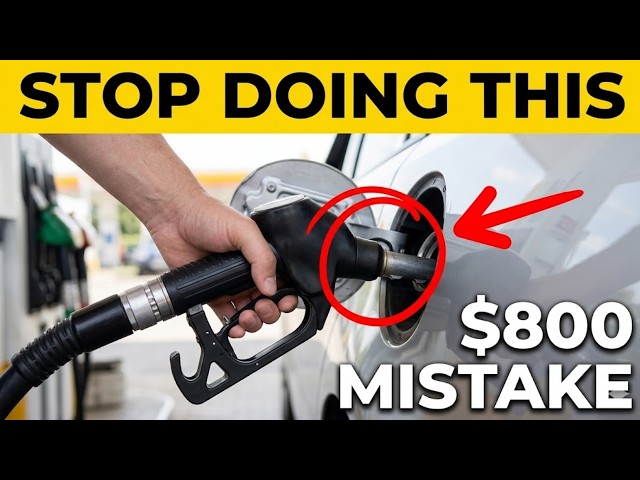
Gas station habits are quietly costing the average
driver $400–$600 every year — not because of fuel
prices, but because of small decisions made at the
pump and in the two minutes after leaving it.
🔍 WHAT THIS VIDEO COVERS
Most fuel-saving advice focuses only on driving
speed. This video goes deeper — covering how pump
interface design influences what you spend, how
your fuel system behaves during and after fill-up,
and the specific post-pump window that causes more
fuel waste than any single driving habit. Every
figure is sourced from the US Department of Energy,
the EPA, and NHTSA.
⏱ CHAPTERS
0:00 – The real reason your fuel bill keeps rising
1:15 – How gas pump screen design costs you money
3:40 – Premium vs regular fuel: what octane really means
5:10 – Fuel temperature and dispensing speed explained
Show More Show Less View Video Transcript
0:00
Every single time you leave a gas
0:02
station, you are likely leaving your own
0:05
money on the pavement. Most drivers are
0:09
unknowingly throwing away between $500
0:12
and $1,000
0:15
every single year. Not because fuel is
0:18
expensive, but because of exactly how
0:21
they behave at the pump and what they do
0:24
in the exact 3 minutes after leaving it.
0:27
We're counting down the 10 everyday gas
0:30
station habits that are quietly draining
0:33
your wallet. Make sure you stick around
0:36
for number one, because the biggest
0:38
mistake on this list doesn't even happen
0:41
while you pump. It happens the second
0:44
you put your car in drive. Let's get
0:47
into it. Number 10, the running on fumes
0:50
trap. You know that feeling when the low
0:53
fuel light has been staring at you for
0:56
20 m, but you push it just a little
0:58
further. You aren't saving money by
1:01
delaying your fillup. You're actually
1:03
cooking your car from the inside. The
1:06
pump that pushes fuel to your engine
1:08
lives completely submerged inside your
1:11
gas tank. It uses that liquid gasoline
1:15
to stay cool. When you constantly drive
1:18
on empty, you expose that pump to raw
1:21
heat and force it to suck up the
1:23
concentrated dirt at the bottom of the
1:25
tank. You're risking an $800 repair bill
1:29
just to avoid a 5-minut stop. Treat the
1:33
quarter tank mark as your new empty.
1:36
Number nine, the cheap gas illusion. We
1:39
all love hunting down the absolute
1:41
cheapest abandoned looking gas station
1:44
in town, but not all gas is the same.
1:47
Busy top tier stations use fresh fuel
1:51
packed with cleaning agents. Low traffic
1:54
stations often have fuel sitting longer
1:57
with fewer detergents. Over time, that
2:00
cheap gas builds a dirty sludge inside
2:03
your engine, choking its performance and
2:06
permanently dropping your MPG. Stick to
2:09
busy stations. Your engine will run
2:12
cleaner and you'll get more miles out of
2:15
every tank. Tension. Number eight, the
2:18
right-hand screen trap. Gas stations use
2:21
retail psychology against you. When you
2:24
swipe your card, they almost always put
2:27
the more expensive premium fuel option
2:30
on the far right side or highlight it in
2:33
a bright color. Our brains naturally
2:36
look there first, but the US Department
2:38
of Energy is clear on this. Using higher
2:42
octane than your engine requires does
2:45
not improve performance or fuel economy.
2:48
It doesn't clean the valves and it
2:50
doesn't give you better mileage. You're
2:53
just burning an extra 40 to 80 cents a
2:56
gallon out of pure habit. Check your
2:59
manual once and never look at the
3:01
premium button again. Number seven, the
3:04
passive upsell. And this next one is
3:07
sneaky. You're in a hurry. You just want
3:10
to pay and leave. So when the screen
3:13
throws a car wash offer at you, you just
3:16
hit yes to make it go away. The gas
3:19
stations are counting on that exact
3:21
cognitive fatigue. Do this passively a
3:24
few times a year, and that's a hundred
3:27
bucks spent on a tunnel wash you didn't
3:29
even want. Worse, those automated
3:32
brushes are quietly putting micro
3:35
scratches into your car's clear coat
3:37
every single time. Force yourself to
3:40
actively hit no. Number six, pumping at
3:44
maximum speed. Most drivers squeeze the
3:47
handle all the way, lock it on the
3:49
highest speed, and zone out. But pumping
3:52
fuel at maximum velocity creates massive
3:55
turbulence and vapor bubbles inside the
3:58
nozzle. Because pumps charge you by
4:00
volume, that vapor takes up space that
4:03
should be filled with liquid gasoline.
4:06
You are quite literally paying for
4:08
fumes. In fact, testing from measurement
4:11
agencies has shown that slower pumping
4:14
actually improves accuracy. Squeeze the
4:16
handle to the middle setting. You get
4:19
exactly the liquid you pay for. Number
4:21
five, refueling in the afternoon heat.
4:24
Here's where it gets worse. Gasoline
4:27
physically expands when it gets hot. The
4:30
fuel sitting in the pump's above ground
4:32
machinery and rubber hoses bakes in the
4:35
afternoon sun. Because you pay for
4:37
volume, hot expanded gas gives you less
4:40
combustible energy per gallon than cold,
4:43
dense gas. It's an invisible heat tax
4:45
that quietly steals your money drop by
4:48
drop. The fix: fill up early in the
4:51
morning or late at night when the
4:52
ambient temperature is cooler. By the
4:55
way, if you're doing just three of the
4:57
things we've already talked about,
4:59
you're probably losing more than $600 a
5:02
year already. And this next mistake is
5:05
the one almost nobody realizes they're
5:07
making. Number four, the one more
5:10
squeeze. We all love rounding up the
5:12
dollar amount, but when the pump clicks
5:14
off, your tank is full. I have a
5:17
neighbor, Jake, who used to always
5:19
squeeze the pump three or four extra
5:21
times just to make his receipt look
5:24
perfectly even. Last month, his Mazda
5:27
CX-5 through a check engine light. The
5:29
diagnosis. By overfilling his tank, he
5:32
shoved raw liquid gas into a sensitive
5:35
charcoal emissions filter that was only
5:38
designed to handle vapors. The EPA has
5:41
actually warned against topping off for
5:43
this exact reason. Jake had to pay a
5:46
$600 repair bill just because he wanted
5:50
to save 12 cents of gas. When it clicks,
5:53
you quit every time. Number three, the
5:56
hot tire lie. This is the part nobody
5:59
tells you. Flat tires drag on the road
6:01
and waste fuel. So checking the air pump
6:04
at the gas station seems smart, right?
6:07
Wrong. If you check your pressure after
6:09
driving to the station, your tires are
6:11
hot. Heat makes the air inside expand,
6:14
giving you a fake high reading. The
6:17
gauge tells you the tires are perfectly
6:19
full, but the next morning when they
6:21
cool down, they are actually
6:23
underinflated. Even the Department of
6:26
Energy estimates underinflated tires can
6:28
reduce fuel economy by up to 3%. Only
6:32
check your tire pressure cold first
6:34
thing in the morning before you drive
6:36
anywhere. Number two, the silent
6:39
evaporation leak. Your gas tank is a
6:42
highly pressurized closed loop system.
6:44
If your gas cap is old and the rubber
6:47
seal is cracked, your liquid gasoline
6:49
literally turns into vapor and floats
6:52
right out into the atmosphere while your
6:54
car is just sitting parked in your
6:56
driveway. You are paying for fuel that
6:59
evaporates before your engine ever gets
7:02
the chance to use it. And worse, that
7:04
micro leak will eventually trigger a
7:06
check engine light for a massive EVVAP
7:09
system failure. Always listen for the
7:11
click when tightening your cap at the
7:13
pump. If it feels loose or looks dry
7:16
rotted, a new one is 15 bucks. Buy it
7:19
today. Number one, the 3inut money burn.
7:23
This one mistake alone can wipe out
7:26
every other saving on this list and
7:28
almost everyone does it. You finish
7:30
pumping, you get in your car, and your
7:33
engine is cold. When a modern engine is
7:35
cold, the ECU runs in an open loop mode.
7:39
It purposefully dumps extra fuel into
7:42
the system running a rich fuel mixture
7:44
just to protect the engine and get the
7:47
catalytic converter up to temperature.
7:49
So what do most drivers do? They sit
7:52
idling in the parking lot checking their
7:54
phone, burning half a gallon an hour
7:57
going 0 miles. Then they floor it to
8:00
merge out of the gas station onto the
8:02
main road. Think of it like forcing an
8:04
athlete to sprint at top speed the exact
8:07
second they wake up without stretching.
8:09
Combining a cold engine with a heavy
8:11
foot forces your car's computer into an
8:14
absolute panic, dumping massive amounts
8:17
of fuel into the cylinders to prevent
8:19
the engine from stalling. Cold engines
8:22
can use significantly more fuel, in some
8:24
cases up to 30% more. According to fuel
8:28
economy studies, you are burning up your
8:30
newly purchased gas in the first 60
8:33
seconds of your drive. You paid for that
8:35
fuel and wasted it before you hit the
8:38
first traffic light. Start the car, put
8:40
it in drive within 30 seconds, and
8:42
accelerate smoothly and gently for the
8:45
first 2 m. Let's pull this all together.
8:48
If you fix just these three things
8:50
starting today, stop topping off the
8:52
tank. Stop using premium fuel if you
8:55
don't need it. And don't idle and floor
8:58
a cold engine. You've already saved
9:01
yourself hundreds of dollars a year.
9:03
Now, I want to hear from you. Which of
9:05
these 10 mistakes have you been making
9:08
without realizing it? Drop a comment
9:10
below. I read every single one. Hit
9:13
subscribe to your Motorare for the
9:15
mechanical truths that actually save you
9:17
cash. Because at the end of the day,
9:20
fuel isn't expensive. Bad habits are
#Autos & Vehicles