Up next in 10


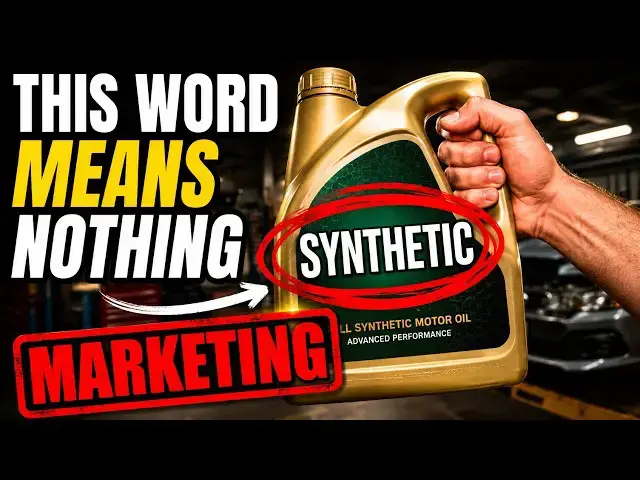
The word "synthetic" on your oil bottle has meant almost nothing since 1999 — and most drivers have no idea why. This video breaks down exactly what happened, which major oil brands are still using the loophole, and which ones are actually straightforward about what's in the bottle.
What this video covers:
✅ Why "full synthetic" doesn't mean what you think it means
✅ The real 1999 ruling that changed motor oil labeling forever (it wasn't a lawsuit)
✅ Group III vs Group IV base oil — explained without the chemistry degree
✅ Which major brands lean on the loophole (Castrol, Mobil 1, Liqui Moly, Quaker State)
✅ Which brands are actually transparent (Pennzoil Ultra Platinum, Amsoil Signature Series)
✅ The one certification stamp that actually matters more than the word "synthetic"
⏱️ TIMESTAMPS
00:00 This word means nothing
00:45 What "synthetic" actually means
02:15 The 1999 ruling everyone gets wrong
04:00 Castrol Edge — where it started
05:30 Mobil 1 — the irony nobody talks about
07:00 Liqui Moly — the German oil myth
08:15 Pennzoil vs Quaker State — same company, different oil
10:00 Amsoil Signature Series — the most honest brand
10:30 What actually matters more than the label
Show More Show Less View Video Transcript
0:00
There's a number on a court filing from
0:01
1997 that most oil companies hope you
0:04
never see. Lab tests found that bottles
0:07
labeled full synthetic, sold on the same
0:09
shelf, same year, same brand, contain
0:12
two completely different things. Some
0:14
bottles were genuinely synthetic. Other
0:16
bottles tested independently came back
0:19
as 100% regular oil. Same word on the
0:23
front, different liquid inside. Here's
0:25
the part almost nobody explains
0:27
correctly. What actually happened wasn't
0:29
a court ruling. It was an advertising
0:31
review board. And the decision they made
0:34
25 years ago is the reason the word
0:36
synthetic barely means anything today.
0:38
I'm going to show you exactly what's
0:40
really going on inside that bottle in
0:42
plain English. No chemistry degree
0:44
required. And by the end, you'll know
0:46
which brands are straightforward with
0:48
you and which ones are technically
0:50
telling the truth while hoping you never
0:52
ask a follow-up question. And before you
0:54
assume this is some conspiracy theory,
0:56
one of the biggest oil companies in the
0:58
world actually challenged this practice
1:00
directly. They spent real money testing
1:03
bottles off store shelves. They filed a
1:05
formal complaint. And what happened next
1:07
didn't just affect one brand for one
1:08
year. It quietly changed the entire oil
1:11
industry for the next 25 years. Most
1:14
drivers have no idea it happened at all.
1:16
Here's the part you need first before
1:18
any of that story makes sense. Part one,
1:20
the only thing you actually need to
1:22
understand. Here's the one concept that
1:24
explains the entire deception. There are
1:26
two ways to make a synthetic oil. The
1:28
first refine crude oil so intensely that
1:31
it becomes extremely pure. This is group
1:33
three. It still starts as crude pulled
1:35
from the ground. The second build the
1:37
oil molecule by molecule in a lab
1:40
starting from gas instead of crude. This
1:42
is group four or PAO. Nothing like it
1:45
occurs naturally. Here's the twist. Both
1:47
are legally allowed to say full
1:48
synthetic on the bottle. The label can't
1:50
tell you which one you're actually
1:51
holding. So, this isn't a story about
1:53
fake versus real. It's a story about
1:55
which brands are upfront about what's in
1:57
the bottle and which ones let that word
2:00
do more talking than the chemistry backs
2:02
up. One thing matters more than the
2:04
rest, the certification stamp. Look for
2:06
APIs or the ILSAC Starburst. That's your
2:11
real safety net. No matter which base
2:12
oil is inside, keep that in mind as we
2:15
go. Part two, where this whole story
2:17
started. In the late 1990s, Castor's
2:20
most popular synthetic oil quietly
2:22
switched its main ingredient. It had
2:24
been using the labbuilt PAO oil. Then,
2:27
without making a big announcement, it
2:29
switched to the heavily refined crude
2:31
oil version instead, Group Three. A
2:33
competing oil company tested bottles
2:35
from storeshelves and found some of them
2:37
contain no labuilt oil at all, just
2:40
refined crude. They filed a complaint
2:42
not with a court but with an advertising
2:44
industry review board called the
2:46
National Advertising Division. This is
2:48
the detail that gets misrepresented
2:50
constantly online. This was never a
2:53
lawsuit. No judge was involved. The
2:55
review board looked at the evidence and
2:56
decided that heavily refined crude oil
2:59
could fairly be called synthetic because
3:01
the manufacturing process changes it
3:03
enough to count. That ruling had zero
3:05
legal authority. It couldn't force
3:07
anything. But every major oil company
3:10
saw what had just happened. And over the
3:11
next few years, most of them quietly
3:14
made the same switch because the refined
3:16
crude version was about half the cost to
3:18
produce. That's the real story, not a
3:20
courtroom drama, a marketing decision
3:23
that the rest of the industry copied
3:24
once they saw it was allowed. Part
3:26
three, the transparency countdown.
3:28
Here's where this gets useful. Let's
3:30
look at five major brands and rank them
3:32
by one simple question. who's actually
3:34
being straightforward with you about
3:36
what's in the bottle and who's letting
3:38
the word synthetic do more talking than
3:40
the chemistry backs up. We're counting
3:42
down from least transparent to most.
3:44
Number five is the brand most
3:46
comfortable letting the label do the
3:48
heavy lifting. Number one is the brand
3:49
that hasn't budged in 50 years. Number
3:52
five, Castrol Edge. This is the brand
3:54
that started everything you just heard
3:56
about. Today's Castrol Edge uses the
3:59
refined crude version, Group Three. Like
4:02
most major brands on the shelf, it still
4:04
passes every current performance
4:06
certification and for typical daily
4:08
driving, it does its job well. The
4:09
honest framing here, you're paying a
4:11
premium price for a brand name and a
4:14
strong additive package, not for labuilt
4:17
oil. Castrol doesn't go out of its way
4:19
to clarify that distinction on the
4:21
label. That's why it lands at number
4:22
five. Number four, Mobile One. Mobile
4:24
was the company that originally
4:26
challenged Castrol back in the 1990s for
4:29
using crudebased oil while marketing it
4:32
as synthetic. Today, most of Mobile
4:34
One's own standard lineup also uses the
4:36
refined crude version. Their longer
4:38
interval extended performance line
4:40
contains a higher percentage of the
4:42
labuilt oil, but their everyday formula
4:45
largely followed the same industry shift
4:47
everyone else made. There's a real irony
4:49
here. The company that started this
4:51
entire argument ended up making the same
4:53
business decision it once criticized.
4:55
That's worth knowing and it's why Mobile
4:57
One only edges out Castrol by one spot.
5:01
Number three, Liquy Moly. A lot of
5:03
people assume any German branded oil
5:05
must be the labbuilt premium version
5:07
because European countries have stricter
5:09
labeling rules. Here's the nuance that
5:11
matters. In the United States, most of
5:13
Liquole's lineup is actually the same
5:16
refined crude group 3 oil as everyone
5:19
else. Only two specific products in
5:21
their US range use the labbuilt version.
5:24
The brand still performs well and
5:25
carries strong manufacturer approvals.
5:28
Liquoly lands in the middle because it
5:30
doesn't lean on the German engineering
5:32
assumption the way marketing around it
5:34
often does. The chemistry is honest,
5:36
even if the popular assumption about it
5:38
isn't. Number two, Penso and its sibling
5:41
brand, Quaker State. Both are owned by
5:43
Shell. Here's where it gets genuinely
5:45
interesting. Penso's top tier oil, Ultra
5:48
Platinum, has built its reputation on a
5:50
real technological advantage. Shell
5:52
takes natural gas and converts it into a
5:55
base oil through a specialized process,
5:57
resulting in a base oil with very few
6:00
impurities. And independent testing has
6:02
shown it keeps engines noticeably
6:04
cleaner over time. Worth noting, a 2026
6:07
supply disruption affecting Shell's
6:09
natural gas processing plant has led to
6:11
some label wording changes in Penso has
6:13
stated the formulation itself hasn't
6:15
changed. But it's a good example of why
6:17
checking the current bottle in front of
6:19
you still matters more than any video,
6:21
including this one. Quaker State's
6:23
standard full synthetic line does not
6:25
use this same process. It uses the more
6:28
common group three refined crude. There
6:30
is a separate higher tier from Quaker
6:32
State called Ultimate Protection that
6:34
does use the natural gas process. So,
6:37
the lesson here isn't Quaker State bad,
6:39
Penso good. It's that within the same
6:41
company, the tier you choose actually
6:44
matters more than the brand name on the
6:46
bottle. Penso earns the number two spot
6:49
because the technology is real and
6:51
verifiable. You just have to know which
6:53
bottle on the shelf is the one that has
6:54
it. Number one, Amsoil Signature Series.
6:57
Amsoil built its entire reputation on
7:00
labbuilt PAO oil starting back in 1972
7:04
when it became the first company to sell
7:07
a synthetic motor oil that met API
7:10
standards at all. While most of the
7:11
industry quietly switched to the cheaper
7:13
group 3 option after 1999, Amsoil held
7:17
out for decades on a PAO heavy formula.
7:20
Here's the most current and most honest
7:22
part of this story. Amsoil's own
7:24
enthusiast community has noted that
7:26
recent batches of signature series
7:28
contain less pure PAO than the formula
7:31
used to now blended with esters and
7:34
other synthetic components rather than
7:36
being a single pure base stock. Amsoil
7:39
has also confirmed a significant
7:40
reformulation of signature series is
7:43
underway. None of this makes it a bad
7:44
oil. The additive package remains
7:46
genuinely strong and it still
7:48
outperforms typical store brand
7:51
synthetics on extended interval testing,
7:53
but the we never compromised once
7:55
version of this story isn't quite
7:57
accurate anymore. And you deserve the
7:59
current picture, not the legacy one. It
8:01
still takes the top spot on this list.
8:04
Not because the formula has stayed
8:05
frozen since 1972, but because Amsoil
8:09
remains the brand most willing to
8:10
publish its actual test numbers instead
8:13
of just leaning on the word synthetic
8:15
and hoping nobody asks a follow-up
8:17
question. Part four, what this actually
8:19
means for your next oil change. Aaron,
8:21
here's the practical takeaway without
8:23
the chemistry lecture. For the vast
8:25
majority of daily drivers doing a
8:27
standard oil change schedule, the
8:29
difference between the refined crude
8:30
version and the labbuilt version is
8:33
small enough that it rarely shows up in
8:35
realworld engine wear. The certification
8:37
stamp API
8:39
ILSAC
8:41
Starburst matters more day-to-day than
8:44
which manufacturing method made the base
8:46
oil where the labuilt oil genuinely
8:49
earns its higher price. severe driving
8:52
conditions, extended oil change
8:54
intervals beyond what's typical, extreme
8:57
heat, heavy towing, or track use. If you
9:00
change your oil on a normal schedule and
9:02
drive normally, you're very unlikely to
9:04
notice a difference. What actually
9:06
matters more than any of this debate,
9:08
changing your oil on schedule, using the
9:10
viscosity grade your manual specifies,
9:13
and making sure the bottle carries
9:15
current certification. Get those three
9:17
things right and the base oil argument
9:19
becomes far less important than the
9:21
marketing makes it sound. So here's what
9:23
you now know that the bottle alone won't
9:25
tell you. The 1999 decision that started
9:29
all of this wasn't a courtroom battle.
9:31
It was an advertising review board
9:33
ruling that had no legal teeth and the
9:36
entire industry followed it anyway
9:38
because it was cheaper. Most major full
9:41
synthetic brands today use the heavily
9:43
refined crude version, not the labuilt
9:46
version. And that's not automatically a
9:48
problem. Modern refining has closed much
9:51
of the performance gap. Some brands are
9:53
straightforward about this. AMS soil has
9:55
stuck with labbuilt oil since 1972.
9:58
Penso's top tier uses a genuinely
10:01
impressive natural gas process. Others
10:04
like Quaker State and Mobile One
10:06
Standard Lines simply followed the
10:08
industrywide shift toward the cheaper
10:11
option while keeping the word synthetic
10:14
front and center on the label. None of
10:16
this means you're being scammed. It
10:18
means the word synthetic tells you less
10:20
than the certification stamp does. And
10:23
now you know to look for both. For 25
10:24
years, drivers have argued in parking
10:26
lots and online forums about which
10:29
synthetic oil is really the best. Here's
10:31
the irony in all of it. Most of them
10:33
were arguing about a word that stopped
10:35
having a clear meaning back in 1999. The
10:38
bottle didn't change. The definition
10:41
did. If this changed how you'll read a
10:43
bottle next time you're standing in that
10:45
aisle, share it with someone who's about
10:47
to buy oil this week. Subscribe to your
10:50
motor care for more automotive
10:52
information that holds up under
10:53
scrutiny. And tell me in the comments,
10:55
what oil are you currently running? And
10:57
did you know which base oil was actually
10:59
inside it? I want to see how many of us
11:01
actually knew before
#Autos & Vehicles