0:00
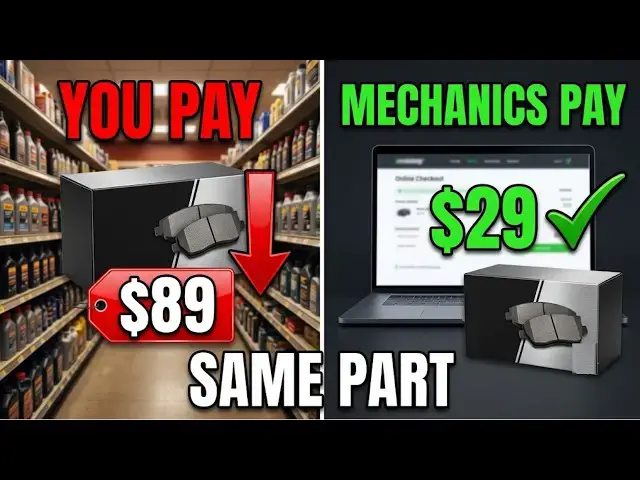
The last time you bought a car part from
0:01
AutoZone, O'Reilly or Advance Auto,
0:04
there is a better than average chance
0:06
you paid somewhere between 40 and 100%
0:09
more than you needed to. Not for a
0:11
better part, for the exact same part in
0:14
a different box. That number is not an
0:16
opinion. It comes from verified pricing
0:18
surveys across all four major retail
0:21
chains. And once you understand why that
0:24
gap exists and where mechanics who
0:26
actually fix cars for a living go
0:28
instead, you will never walk into one of
0:30
those stores the same way again. There
0:32
is one place professional mechanics have
0:34
been quietly using for years, and most
0:36
everyday drivers have never even heard
0:38
of it. By the end of this, you will. The
0:40
retail markup nobody tells you about
0:43
here is the first thing to understand.
0:45
When you walk into an auto parts store,
0:48
you are not buying parts at cost. You
0:50
are buying parts at retail. And the
0:52
retail markup on standard mechanical
0:54
parts, filters, sensors, brake pads,
0:57
belts runs between 40 and 100% above
1:00
what the store paid for them. That is
1:02
not a guess. That is the documented
1:04
margin that auto parts retailers operate
1:07
on, confirmed across multiple industry
1:09
sources. So when you pay $68 for a
1:12
steering component at O'Reilly, the
1:13
store likely paid somewhere around $40
1:16
to $50 for it. The same part from the
1:18
online catalog that professional
1:20
mechanics use. constantly lists for
1:22
under $25. Same part, same manufacturer,
1:25
different price because one model has
1:27
6,000 physical stores to pay for and one
1:30
does not. A pricing comparison across
1:33
identical AC Delco spark plugs found
1:35
that online trade pricing averaged 37%
1:39
cheaper than AutoZone.
1:42
That is not an occasional deal. That is
1:43
a consistent structural difference in
1:46
how each business model prices parts.
1:48
The biggest surprise here is not that
1:50
stores charge more. Everyone knows
1:52
stores have overhead. The surprise is
1:53
that one specific place consistently
1:55
sells the exact same branded parts.
1:58
Bosch, Denso, Wagner, Monroe for
2:01
dramatically less than any retail chain,
2:04
and almost nobody outside the trade
2:06
checks there first. The secret most
2:08
people miss. Same factory, different
2:10
box. Here's the part that changes how
2:12
you look at every part store shelf for
2:15
the rest of your life. Many OEM parts
2:17
come from the exact same manufacturers
2:20
that sell aftermarket versions. Ford has
2:22
long used suppliers like Denso for
2:24
certain components. Bosch often sells
2:26
the same spark plugs in both dealer
2:28
packaging and aftermarket packaging.
2:30
Different box, same factory, lower
2:33
price. This is not a flaw in the system.
2:35
It is how the system is designed. And
2:37
once you know it, you can work with it
2:38
instead of paying extra for a label. But
2:40
the box the part comes in is only half
2:42
the story. The other half is where you
2:44
buy it. And the difference between those
2:45
two decisions is where the real money is
2:47
saved or lost. Where mechanics actually
2:50
shop. Most independent repair shops do
2:52
not walk into AutoZone for their parts.
2:54
They call a wholesale distributor. The
2:56
distributor delivers the part directly
2:58
to the shop, often within the hour. The
3:00
shop pays trade pricing, typically 25 to
3:03
40% below what you would pay at the
3:05
retail counter for the same product.
3:06
That is why your repair bill shows a
3:08
part marked up above retail. The shop
3:10
bought it below retail, marked it up to
3:13
cover labor, warranty, and overhead. And
3:15
the final number sometimes lands near or
3:18
above what you would have paid at the
3:19
counter. The shop is not being
3:20
dishonest. They are working on a margin
3:22
model, but it means the starting point,
3:24
the wholesale price, is significantly
3:26
lower than anything a regular customer
3:28
can access by walking in off the street.
3:31
For the DIY driver, the closest
3:33
equivalent to trade pricing is Rock
3:35
Auto. It operates as an online only
3:37
catalog. No retail locations, no counter
3:40
staff, no floor displays, and no lease
3:42
costs on 6,000 stores. Those savings
3:45
pass directly to the price of the part.
3:47
It carries parts from the actual
3:49
manufacturers, Bosch, Denso, Monroe,
3:52
Vagner, Dorman, Gates at prices that are
3:55
consistently and significantly below
3:57
what the retail chains charge for the
4:00
same products. The one honest caveat,
4:02
Rock Auto ships from multiple
4:04
warehouses. If you order several parts
4:06
at once, they may ship from different
4:08
locations and arrive separately. Factor
4:10
in shipping cost when comparing. For a
4:12
single part urgently needed today, the
4:14
retail store wins on speed. For a
4:16
planned repair where you have a few
4:17
days, the price difference is almost
4:20
always worth the wait. How to actually
4:22
use this? This next step takes less than
4:24
1 minute and it can save you hundreds of
4:26
dollars every single year. Before you
4:28
buy any part, look it up on Rock Auto
4:30
first. You do not need an account. Enter
4:32
your year, make, model, and engine. Find
4:35
the part you need and note the price
4:38
alongside shipping. Then check the
4:40
retail store price. The difference tells
4:42
you whether it is worth waiting. For
4:44
parts you need immediately, broken down,
4:46
need it today, go to the store. But when
4:48
you are there, check whether the higher
4:50
tier brand at the retail store is
4:52
actually worth the premium over a name
4:55
brand part ordered online. Often it is
4:57
not. For planned maintenance, brakes,
5:00
filters, belts, sensors you know are
5:03
aging. Plan ahead by a week and order
5:05
online. The savings on a full brake job
5:08
are real. A complete set of rotors and
5:10
pads from name brand manufacturers will
5:13
typically run 30 to 50% less than the
5:16
equivalent at a retail chain. On a $300
5:19
brake jobs worth of parts, that gap is
5:22
$90 to $150 in your pocket for the exact
5:26
same components. There is also a middle
5:29
option worth knowing about. Napa
5:30
operates differently from the other
5:32
three major chains. Most Napa locations
5:35
are independently owned, not corporate,
5:37
and many operate on a hybrid model that
5:39
serves both retail customers and trade
5:42
accounts. In some areas, and
5:44
particularly smaller towns, the local
5:46
Napa is the closest thing a DIY driver
5:49
will find to trade level access and
5:52
trade level part quality. Napa is worth
5:54
pricing alongside online options,
5:57
particularly on electrical and sensor
5:59
parts, where some mechanics specifically
6:01
prefer Napa's sourcing relationships
6:04
over the other retail chains. When the
6:06
retail store is the right call, there
6:08
are times the retail store is exactly
6:10
the right place to buy. If you need a
6:12
part today and the car is not drivable,
6:14
the convenience is worth the price
6:16
difference. No argument there. If you
6:18
need free services, battery testing,
6:20
free code reading, free installation on
6:22
simple items like batteries and wipers,
6:25
that has real value worth factoring in.
6:27
If you are unsure of the exact part you
6:30
need and want someone at a counter to
6:32
help verify it before you buy, that
6:34
expertise has value a website cannot
6:37
always replicate. And if you need a
6:39
rapid warranty exchange, not something
6:41
that fails unexpectedly and needs
6:43
swapping out the same day, the retail
6:45
store's walk-in return policy is easier
6:47
to work with than returning a part by
6:49
mail. The goal is not to avoid retail
6:51
stores completely. The goal is to stop
6:53
using them as the default without
6:55
checking because every time you skip
6:57
that check, you are paying the
6:59
convenience premium whether you needed
7:00
it or not. Closing summary. Here is what
7:03
to take away from this. The same part
7:05
often comes from the same factory
7:06
regardless of the box it arrives in.
7:08
Paying for the branded box is optional,
7:11
not mandatory. Retail auto parts stores
7:13
operate on markups of 40 to 100% on
7:17
standard parts. That markup funds the
7:19
stores, the staff, and the locations. It
7:21
is not hidden. It is just not
7:23
advertised. Rock Auto, the online
7:25
catalog professional mechanics have been
7:27
quietly using for years, consistently
7:29
prices the same name brand parts 30 to
7:32
40% below retail chains. The trade-off
7:35
is shipping time and a less convenient
7:37
return process. NAPA is worth checking,
7:39
particularly on electrical parts and
7:41
sensors where their sourcing model
7:43
differs from the other three major
7:45
chains. Mechanics buy wholesale because
7:47
they know the retail price is not the
7:49
base price. Now you know it too. If this
7:51
is the first time anyone has explained
7:53
where the price difference actually
7:55
comes from, that is worth a like because
7:57
every driver who sees this saves money
8:00
on the next repair they do themselves.
8:02
Subscribe to Your Motor Care for
8:03
breakdowns like this every single week.
8:06
No filler, nothing to sell you, just the
8:08
information that puts you on the same
8:10
side of the counter as the people who
8:11
actually know. And drop a comment with
8:13
this. What is the most you have ever
8:16
overpaid for a part you later found
8:18
cheaper somewhere else? And what was the