Up next in 10


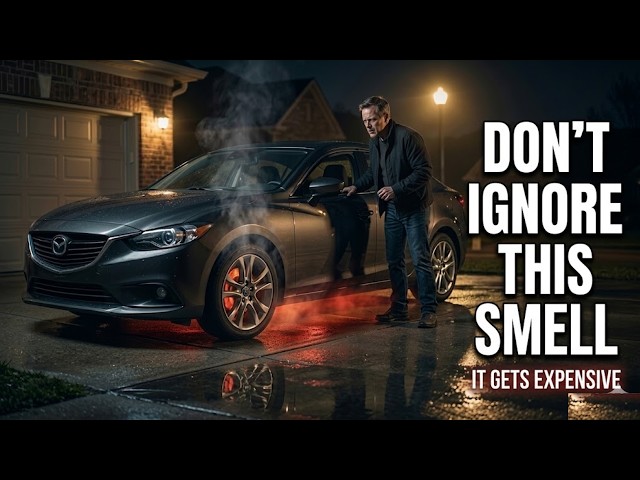
Your car smells like burning after you park it —
and one of these 5 smells means you should stop
driving immediately until one specific thing gets
checked. Here is exactly what each smell means,
what causes it, and what it will cost you if you
keep ignoring it.
🔍 WHAT THIS VIDEO COVERS
Most drivers smell something burning after parking
and do nothing — because there is no warning light
and no obvious smoke. This video breaks down all 5
burning smells your car produces after parking,
what mechanical problem each one points to, the
exact repair cost of ignoring each one, and a
free 60-second driveway test that tells you whether
your brakes are the problem — no tools, no mechanic
required.
⏱ CHAPTERS
0:00 – Why your car smells like burning after parking
Show More Show Less View Video Transcript
0:00
Your car smells like burning after you
0:02
park it. You step out. You sniff the
0:05
air. Something is hot. No smoke, no
0:07
warning light, nothing on the ground.
0:09
So, you do what most drivers do. You
0:12
walk inside and tell yourself it's
0:14
probably nothing. Here is the truth.
0:16
That smell is your car communicating
0:19
something specific. And depending on
0:21
which smell it is, you could be looking
0:23
at something that costs absolutely
0:25
nothing to fix or something heading
0:28
toward a $2,000 failure that you could
0:31
have stopped today. The problem is that
0:33
every burning smell means something
0:36
completely different. And most drivers,
0:38
including experienced ones, get this
0:40
wrong. By the end of this video, you
0:43
will know exactly which smell means
0:45
danger, which one is completely
0:47
harmless, and the one specific smell
0:50
that means you need to stop driving
0:52
until one thing gets checked. If you
0:55
remember only one thing from this entire
0:58
video, remember that smell, because that
1:00
one catches people completely offguard.
1:03
What your nose is actually detecting.
1:06
Here is something most drivers never
1:08
realize. Your nose is one of the most
1:10
accurate diagnostic tools you own. It
1:13
costs nothing. It works instantly and
1:16
for certain problems, it detects trouble
1:18
earlier than any warning light your car
1:20
has. Here is why you smell it after
1:23
parking and not during the drive. While
1:25
you are moving, air flows under and
1:27
around the car, carrying smells away.
1:30
The moment you park and step out, that
1:33
air flow stops. Everything that got hot
1:35
during your drive is now sitting still.
1:38
And the moment you open the door, all
1:40
that trapped heat and smell rolls upward
1:43
around the car directly towards you.
1:46
Think of it like lifting the lid off a
1:48
pot that's been cooking. You didn't
1:49
smell it from across the room, but the
1:51
moment that lid comes off, it hits you.
1:54
That is exactly what happens when you
1:56
step out. And this matters more than
1:58
most people realize because what you are
2:00
smelling has been happening for the
2:02
entire drive. You just couldn't detect
2:05
it until you stopped. The problem has
2:07
already been running for as long as your
2:09
journey took. Smell one. Burning plastic
2:12
or melting wires. Now pay attention
2:14
here. This is the one. If you smell
2:17
something sharp, acrid, chemical, like
2:19
burning plastic or the inside of an
2:22
electrical socket that's been
2:23
overloaded. Do not walk past this.
2:26
Somewhere in your car, a wire is
2:28
overheating. Either it's touching
2:30
something hot it shouldn't be, or it's
2:32
pulling more electrical current than
2:34
it's built to handle, and the insulation
2:37
around it is starting to melt. Here's
2:39
the scary part. Electrical fires in
2:41
vehicles are real. They account for tens
2:44
of thousands of vehicle fires each year
2:47
in the United States alone. And unlike a
2:50
mechanical failure that gives you
2:51
warning signs over days or weeks, an
2:54
electrical problem can go from a smell
2:56
to a serious situation without much in
2:59
between. Consistently smelling burning
3:01
plastic after every drive means get the
3:04
wiring inspected before continuing to
3:06
use the vehicle regularly. A wiring
3:08
inspection costs between $50 and $150.
3:12
Ignoring a real wiring fault can cost
3:15
anywhere from 500 to several thousand or
3:18
worse, you don't get to choose the
3:20
timing. Now, here is where it gets
3:22
counterintuitive. Not every burning
3:24
plastic smell is a wiring problem.
3:27
Sometimes a burning plastic bag blows
3:29
under the car during driving and lands
3:32
directly on the exhaust system. The
3:34
exhaust runs at temperatures that melt
3:36
plastic almost instantly. It burns off
3:39
and produces an identical smell. Check
3:41
underneath after you park. If you can
3:43
see melted debris on the exhaust pipes,
3:46
that's your answer. No fault. It burns
3:48
away on its own. The difference is
3:50
simple. Debris smell disappears after
3:53
one or two more drives. Wiring smell
3:56
comes back every single time. If it
3:58
keeps coming back, that is your car
4:00
asking for help. Smell two, burning
4:03
rubber. Burning rubber is thick and
4:05
heavy. Most people recognize it
4:07
immediately. There are three causes. One
4:09
of them is significantly more serious
4:12
than the other two. The first and most
4:14
common is a drive belt that has started
4:16
slipping. Your engine runs several
4:18
rubber belts that power components like
4:21
the alternator, power steering, and air
4:23
conditioning. When one starts to slip on
4:25
its pulley, the friction heats the
4:27
rubber and produces that smell. A
4:29
replacement belt costs between $25 and
4:32
$75 for the part. leave it and that belt
4:35
snaps while you're doing 60 mph on the
4:38
motorway. Suddenly, the power steering
4:41
goes heavy in your hands. The battery
4:43
stops charging or the engine overheats
4:45
and you're on the side of the road
4:47
instead of in your driveway where the
4:49
problem should have been fixed for $75.
4:52
The second cause is a tire rubbing
4:55
against something, a wheel arch liner, a
4:57
suspension component, or a tire running
4:59
partially deflated and generating
5:02
friction heat against the wheel. Check
5:04
your tire pressures. Look inside each
5:06
wheel arch for rubber contact marks. The
5:08
third cause is the one to take most
5:11
seriously. And it connects to the next
5:13
section. Smell three, the seized brake
5:16
caliper. This is the smell most people
5:18
misidentify. It is not quite rubber, not
5:21
quite electrical, something in between.
5:24
Hot metal with an acrid edge. Here is
5:26
what is happening. Your brakes work
5:29
using a caliper that clamps a pad
5:31
against a spinning disc to slow the car.
5:33
When you release the pedal, the caliper
5:35
releases and the disc spins freely.
5:38
Sometimes it doesn't release. A seized
5:40
caliper stays partially clamped even
5:43
when your foot is nowhere near the
5:44
pedal. That brake pad drags against the
5:47
disc mile after mile after mile. The
5:50
entire drive, by the time you park, that
5:52
wheel can be hot enough to radiate heat
5:55
straight through the rim. And once
5:56
again, your nose detected the problem
5:59
before the dashboard did. Here is the
6:01
60-second test. No tools, no mechanic.
6:04
Do this in your own driveway. After a
6:06
normal drive, hold your hand roughly 6
6:09
in from each wheel in turn. Do not touch
6:11
the wheel itself. It may be hot. On a
6:14
car with healthy brakes, all four wheels
6:16
should feel roughly similar. If one
6:18
wheel pushes significantly more heat
6:20
towards your hand than the others, that
6:23
is the wheel. A seized caliper
6:24
replacement costs between $200 and $400
6:28
per corner. But here's what mechanics
6:30
see constantly. Drivers who ignore the
6:32
smell long enough don't just need a
6:34
caliper. The constant friction wears
6:37
through the brake disc, too. Now it's a
6:39
caliper and a disc. The bill doubles.
6:42
$400 to $800 per corner. And in severe
6:45
cases, an overheated brake system can
6:48
experience brake fade, a temporary loss
6:50
of braking effectiveness due to extreme
6:52
heat. That is no longer a cost problem.
6:55
That is a safety problem. The smell told
6:57
you weeks before any of that happened.
6:59
Coming up, two more smells your car
7:02
produces after parking. One of them is
7:04
the earliest possible warning for the
7:06
most expensive engine repair most
7:08
drivers ever face. Most people describe
7:10
it as almost pleasant, and they ignore
7:12
it. Smell four, burning oil. This one
7:15
has a thick, greasy, acrid quality. If
7:18
you've ever accidentally spilled oil on
7:20
a hot stove, you know this smell
7:22
instantly. A small oil leak somewhere in
7:24
the engine is dripping on a hot surface.
7:27
Your exhaust gets hot enough to burn
7:29
leaking oil almost instantly. The leak
7:31
itself might be tiny, barely a residue
7:33
rather than a visible puddle. Common
7:35
sources are the valve cover gasket, oil
7:38
filter seal, or the drain plug. Here's
7:40
the part that matters. One driver
7:42
noticed a burning oil smell every drive
7:44
for months. The car still drove fine. No
7:47
warning lights, no obvious puddle under
7:49
the car, so they kept driving. By the
7:51
time the oil warning light finally came
7:53
on, the engine had been running low on
7:55
oil for weeks. The bearings inside the
7:58
engine were already damaged. That's not
8:00
a leak repair anymore. That's an engine
8:02
rebuild. A small oil leak repair costs
8:05
between $100 and $300, depending on the
8:08
source. An engine that has run dry or
8:10
close to it can cost between $4,000 and
8:13
$10,000 to address. The rule is
8:15
straightforward. If you consistently
8:17
smell burning oil, check your oil level
8:20
today. If it's dropping between your
8:22
normal checks, you have a leak that
8:23
needs to be found. Your nose was the
8:26
first warning system. Use it. Smell
8:28
five. Sweet, syrupy, almost pleasant.
8:31
This one surprises people because it
8:33
doesn't smell dangerous. Some describe
8:35
it as maple syrup. Others say pancakes.
8:38
One or two say it almost smells like a
8:40
warm dessert. This is coolant.
8:42
Specifically, it's the ethylene glycol
8:44
in your engine coolant leaking somewhere
8:46
and burning off on a hot surface. And
8:49
here's why this is the most important
8:51
smell in this entire video. Coolant
8:53
keeps your engine from overheating. If
8:55
it's leaking, two things are happening
8:57
at the same time. The leak is burning
8:59
off, creating that sweet smell, and your
9:01
coolant level is dropping. An engine
9:03
that runs low on coolant overheats. An
9:06
engine that overheats severely can
9:08
suffer head gasket failure. Head gasket
9:10
replacement is one of the most expensive
9:12
engine repairs that exists. Typically
9:14
between $1,500 and $4,000. And the sweet
9:18
smell appears long before the
9:19
temperature gauge moves. Long before any
9:22
warning light comes on, long before any
9:24
other symptom appears. Your nose
9:26
detected the problem before the
9:28
dashboard did. Again, if you smell
9:30
something sweet after parking, check
9:32
your coolant reservoir when the engine
9:34
is fully cold. The reservoir is a
9:36
translucent plastic tank, usually near
9:38
the front of the engine bay. It has
9:40
minimum and maximum lines on the side.
9:42
If the level is below the minimum line,
9:44
or if it drops between your checks, find
9:47
the source of the leak before driving
9:49
further. Because most expensive car
9:51
problems don't start with a bang, they
9:53
start with a smell that drivers ignore.
9:55
When to ignore it and when not to. This
9:58
approach has real limits. If you smell
10:00
something burning once after an
10:02
unusually long motorway drive, heavy
10:04
traffic, or towing something, and it
10:06
never comes back, that was almost
10:08
certainly normal. Every car runs hotter
10:10
under unusual demand. It's not always a
10:13
fault. If you cannot identify which
10:15
category your smell falls into, smells
10:17
are genuinely subjective. Do not guess.
10:20
A visual inspection by an independent
10:22
mechanic takes less than 30 minutes.
10:24
Many do it for free. And if you ever
10:26
smell burning while driving, not after
10:29
parking, but during the drive, that's a
10:31
different situation entirely. Pull over
10:34
safely. Let the vehicle cool. Do not
10:36
continue until you know the source. A
10:38
smell while moving means something is
10:40
happening right now, not the residue of
10:43
a completed journey. Sharp acrid
10:45
chemical smell. Check for debris under
10:47
the car first. If it returns every
10:49
drive, get wiring inspected. Do not
10:51
delay. Thick rubber smell. Most likely a
10:54
drive belt or tire contact. $75 now or a
10:58
breakdown later. Hot metal with acurid
11:00
edge after a normal drive. Do the hand
11:03
test. One wheel significantly hotter
11:05
than the others means a seized caliper.
11:07
Fix it before the disc goes with it.
11:09
Burning oil smell. Check your oil level
11:12
today. Find the leak before the engine
11:14
pays the price. Sweet or syrupy smell?
11:16
Check coolant level when cold. This is
11:19
the earliest warning your coolant system
11:21
will ever give you. Take it seriously.
11:23
Any of these smells returning
11:25
consistently after every drive, that's
11:27
your car asking for attention. The
11:29
earlier you respond, the cheaper the
11:31
answer almost always is. If this helped
11:34
you work out what your car has been
11:35
trying to tell you, subscribe to your
11:38
motor. This channel covers realworld
11:40
diagnostics that save you money before a
11:43
small problem becomes a decision you
11:45
didn't want to make. Drop a comment
11:46
below. Which smell does your car have?
11:49
Or have you ever ignored one of these
11:50
and paid for it later? Be honest.
#Autos & Vehicles