Up next in 10

River Dried Up After 60 Years, Then Workers See What’s Underneath.
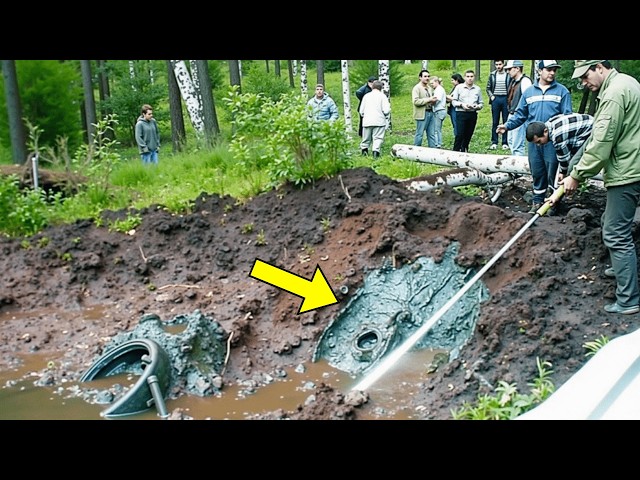
Locals fished it, kids swam in it every summer, and farmers had always depended on it. But after the worst drought the state had seen in sixty years, the river simply ran dry.
🔔 Hit the bell next to Subscribe so you never miss a video!
❤️ Like, Comment and Subscribe if you are new to the channel!
Join Our Family For More Exclusive Content and Perks :
https://www.youtube.com/channel/UCOaD4JxNYk29LHbHTOx3SQA/join
🔗 More Amazing Stories from Our Channel:
✅In 1997, She Got Septuplets — See What They Look Like 21 Years Later! https://www.youtube.com/watch?v=0dQpSkmEv_Y
#storytime
#did_you_know
Show More Show Less View Video Transcript
0:00
The Harllo River had been running
0:01
through the flatlands outside Milfield,
0:03
Tennessee for as long as anyone alive
0:04
could remember. Locals fished it, kids
0:07
swam in it every summer, and farmers had
0:09
always depended on it. But after the
0:11
worst drought the state had seen in 60
0:13
years, the river simply ran dry. It
0:16
happened gradually, the way bad things
0:19
often do. Water levels had been dropping
0:21
since May, exposing banks thick with
0:23
dark silt that hadn't seen open air in
0:25
decades. By July, the flow had narrowed
0:28
to a thin trickle. And by the third week
0:30
of August, even that was gone. And
0:33
that's when things that had been
0:34
underwater and covered in sludge for
0:36
decades slowly started to reach the
0:38
surface. Things that nobody was ever
0:40
supposed to find were now laid open for
0:43
everyone to see. And on this particular
0:45
section of the river, it was a local
0:47
maintenance crew that made the
0:48
discovery. But before we start, smash
0:50
the like button, subscribe, and don't
0:52
forget the notification bell so you
0:55
never miss any of our upcoming stories.
0:57
The state sent a maintenance crew led by
0:59
foreman Dale Carter to inspect a dried
1:02
riverbed after a long drought and clear
1:04
anything that could block future water
1:05
flow. It was expected to be routine
1:07
work, something Dale had done for nearly
1:09
20 years without incident. But from the
1:11
start, the atmosphere felt slightly off
1:14
with a faint metallic smell lingering in
1:16
the air. The crew began surveying the
1:18
dry riverbed, moving through thick silt
1:21
and scattered debris such as branches
1:23
and discarded objects. About 40 minutes
1:25
into the job, one worker noticed
1:27
something unusual partially exposed in
1:30
the cracked mud. When Dale approached,
1:32
he saw a large curved metallic surface
1:34
about 3 ft wide with a greenish blue
1:36
color and clear signs of being man-made
1:39
rather than natural. As they
1:40
investigated further, Dale realized the
1:43
object wasn't isolated. By testing the
1:45
ground nearby, he detected hollow
1:47
metallic echoes beneath the surface,
1:49
suggesting that what they were seeing
1:50
was only a small part of a much larger
1:52
buried structure. The scale of it
1:54
immediately set the crew on edge, as it
1:56
appeared far larger than anything they
1:58
had encountered before. Dale contacted
2:01
the county office and reported the
2:03
discovery. He was instructed to halt all
2:05
work, secure the area, and wait for
2:07
further orders. With that, the crew
2:09
stood back, watching the exposed metal
2:11
in silence as they waited, realizing
2:14
their routine assignment had suddenly
2:15
become something far more unusual and
2:17
potentially significant. While waiting
2:20
for further instructions, Dale examined
2:22
the exposed metal more closely and
2:24
discovered an engraved date, 1,862.
2:28
Shortly after, his supervisor called
2:30
back, sounding unusually tense, and
2:33
informed him that an archaeologist was
2:35
on the way, emphasizing that no one
2:37
should have touched the object. Despite
2:39
already handling it, Dale falsely
2:41
assured him that the site was untouched
2:43
and that no one else was around, even
2:45
though several locals had gathered
2:47
nearby out of curiosity. To avoid
2:49
trouble, Dale asked the onlookers to
2:51
leave before the archaeologist arrived,
2:53
and they agreed. Not long after, a
2:56
convoy of black SUVs pulled up and a
2:58
group of stern suited men stepped out,
3:00
led by a sharply dressed man claiming to
3:02
be the archaeologist. His appearance and
3:04
behavior immediately struck Dale as odd.
3:07
He looked nothing like any archaeologist
3:09
Dale had encountered before. Appearing
3:11
overly clean, formal, and accompanied by
3:14
an intimidating team. After a brief
3:16
introduction, Dale showed him the metal
3:18
structure and explained what they had
3:20
found. Strangely, the man showed little
3:22
curiosity, asked no questions, and
3:25
quickly dismissed Dale and his crew. The
3:27
suited men then secured the area,
3:29
forcing the crew back and setting up a
3:31
guarded perimeter with yellow tape. This
3:33
abrupt takeover raised serious
3:35
suspicions for Dale, who quietly voiced
3:37
his doubts to his team, convinced that
3:39
something about the situation was off.
3:41
As they left, the unease lingered. Dale
3:44
finally broke the silence, asking his
3:46
crew if they felt the same. Their
3:48
unanimous agreement confirmed it. What
3:50
they had witnessed was far from normal,
3:53
and whatever lay buried beneath the
3:54
riverbed was clearly more significant
3:56
and more secretive than anyone had
3:59
anticipated. The crew became
4:01
increasingly convinced that the
4:03
operation at the riverbed was not
4:04
legitimate. The arrival of blacked out
4:06
SUVs, armed looking personnel, and the
4:09
strange reaction to the engraved date
4:11
suggested prior knowledge of what was
4:13
buried there. Dale decided they needed
4:15
answers and made the call to return that
4:17
night after the site had quieted down.
4:20
They prepared in silence, gathering
4:22
basic gear and returning undercover of
4:25
darkness. When they arrived, most of the
4:27
vehicles were gone, leaving only a few
4:29
guards and a partially cleared riverbed.
4:32
What had once been a fragment of metal
4:33
was now revealed as a massive buried
4:35
structure. From a distance, they
4:37
confirmed it was a bunker marked 1,862
4:42
with an open iron entrance. Carefully
4:44
observing the guards, they identified a
4:47
repeating patrol pattern and a brief gap
4:49
in coverage. Using the treeine for
4:52
concealment, the crew moved quickly and
4:54
silently across the exposed ground and
4:56
slipped inside the bunker before they
4:58
were noticed. The moment they entered,
5:01
they were swallowed by total darkness
5:03
and a sudden drop in temperature.
5:05
Inside, the air felt old and sealed,
5:08
carrying the smell of stone, rust, and
5:10
metal. They advanced cautiously,
5:13
navigating by touch along rough walls
5:15
while keeping silent. After some
5:17
distance, the passage turned sharply,
5:19
cutting off any remaining light from
5:21
outside, Dale stopped the group,
5:23
confirmed they were deep enough to avoid
5:25
detection, and switched on his
5:26
flashlight. The beam illuminated the
5:29
corridor ahead, and whatever it revealed
5:31
caused Dale to freeze completely,
5:33
signaling they had entered something far
5:35
larger and more significant than they
5:37
had imagined. Inside the bunker, Dale
5:39
and his crew discovered a vast storage
5:41
space filled with neatly stacked wooden
5:43
crates. Many contained rifles preserved
5:45
in oil cloth, while others held Civil
5:48
War era documents, medical kits, and
5:50
personal belongings, all remarkably
5:52
intact. It became clear they had
5:54
uncovered a hidden cash dating back to
5:57
1,862.
6:00
As they explored further, they suddenly
6:02
heard voices deeper inside. Reacting
6:04
instantly, they turned off their lights
6:06
and hid between the crates. Moments
6:08
later, two men appeared, carrying bags
6:11
and quietly removing artifacts. The crew
6:14
realized this wasn't an official
6:15
operation. It was a coordinated theft.
6:17
More men were working inside, quickly
6:20
emptying the bunker piece by piece. Dale
6:22
carefully documented everything using
6:24
his phone faces, license plates, and
6:27
stolen items before quietly calling
6:29
emergency services. He and his crew
6:31
stayed hidden while the thieves
6:33
continued working. Within minutes,
6:35
police sirens approached and officers
6:37
stormed the site, arresting six men
6:39
involved in the operation. During
6:42
questioning, the truth surfaced. The
6:45
entire situation had been staged. The
6:47
job assignment, the fake supervisor, and
6:49
even the supposed archaeologist were all
6:52
part of a planned scheme. The criminals
6:54
had manipulated the system to get a
6:55
legitimate crew to unknowingly locate
6:57
the bunker for them so they could steal
6:59
its contents without suspicion.
7:01
Investigators later discovered that the
7:03
bunker had been located using old survey
7:05
records and archival maps, and the
7:07
entire operation had been planned in
7:08
advance. The drought had simply made the
7:11
site accessible. So, a fake official job
7:13
was created to bring a legitimate crew
7:15
in and expose the location without
7:17
suspicion. The goal was to use the
7:19
crew's discovery as cover while a
7:22
disguise team quietly cleared the site.
7:25
According to investigators, the plan was
7:27
nearly perfect, but it failed because
7:29
Dale chose to return that night, which
7:31
exposed the full operation. With
7:33
testimonies from locals who had
7:35
witnessed the activity at the riverbed,
7:37
the case against the suspects quickly
7:39
strengthened. Their statements confirmed
7:40
that the fake archaeologist had been
7:42
controlling access and directing
7:44
everyone away from the entrance. This
7:46
evidence helped clear Dale and his crew
7:48
of any involvement.
7:50
The main suspect, the man in the Navy
7:52
blouse, was later identified through
7:54
vehicle records and arrested in another
7:56
state. He had no legitimate credentials
7:58
and a history of illegal artifact
8:00
trading under false identities. The
8:02
trial concluded quickly once all
8:04
evidence and testimonies were presented.
8:06
Dale described everything from the
8:07
initial discovery to the night operation
8:10
in detail. All defendants were convicted
8:12
and the judge condemned the attempt as
8:14
an effort to steal historically
8:16
significant material belonging to the
8:18
public. The courtroom response was quiet
8:20
and final, marking the end of the case.
8:22
In the days that followed, professional
8:24
archaeologists took over the bunker
8:26
site. Dale was allowed to observe as the
8:28
full scope of the discovery was
8:30
revealed. Hundreds of Civil War era
8:32
artifacts preserved in sealed
8:34
conditions, including weapons,
8:36
documents, and medical equipment. Most
8:38
significant were intact regimental flags
8:40
found in an inner chamber, preserved for
8:43
over a century due to the airtight
8:44
environment. The discovery became
8:46
national news, and the recovered
8:48
artifacts were distributed between major
8:50
museums and a local county exhibit. Dale
8:53
and his crew later visited the display,
8:56
seeing the objects they had first
8:58
uncovered in darkness, now preserved
8:59
behind glass with official descriptions.
9:02
Their names were included in the exhibit
9:03
documentation, formally recognizing
9:06
their role in the discovery. For Dale,
9:09
the experience remained unusual, but
9:11
grounded in a simple outcome. A routine
9:14
inspection had uncovered a hidden
9:15
historical site and stopped a
9:17
coordinated theft. Life eventually
9:20
returned to normal work, but the event
9:22
stood as a lasting reminder of how an
9:24
ordinary job had led to an extraordinary
9:26
discovery. At the opening of the
9:28
exhibit, Dale and his crew stood
9:30
together. Seeing the items they once
9:33
found in darkness, now carefully
9:35
displayed. A panel credited them for
9:37
their role. And for Dale, seeing his
9:40
name there felt like the most surreal
9:41
moment of all quiet recognition for a
9:43
discovery that could have easily been
9:45
lost forever. At the opening of the
9:47
Civil War exhibit, one of the locals who
9:50
had testified approached Dale and
9:51
thanked him for speaking up. She
9:53
admitted she almost left before the
9:55
critical moment, but stayed, and that
9:57
decision ended up exposing the entire
9:59
operation. Dale simply replied that he
10:01
was glad she had. Life then returned to
10:04
normal. Dale went back to routine county
10:07
maintenance work, handling drainage and
10:09
river control as before. Outwardly,
10:12
nothing had changed, but people at the
10:14
office treated him with quiet respect
10:15
now. Dale himself didn't see it as
10:18
anything extraordinary, just that he had
10:19
noticed something wrong and followed it
10:20
through properly. A couple of weeks
10:22
later, Heavy Rain finally returned to
10:25
Milfield after a long drought. Dale woke
10:28
in the night to the sound of it on the
10:29
roof and listened, realizing how much he
10:32
had missed it. The next day, he visited
10:34
the river and saw water flowing again,
10:37
slowly covering the site where the
10:38
bunker had been uncovered.
10:40
Within days, the river rose enough to
10:42
submerge the entrance completely. The
10:45
structure, the door marked 1,862,
10:49
and everything inside disappeared
10:51
beneath the current as if it had never
10:52
been there. From the bridge, the river
10:54
looked completely normal again, quiet,
10:56
ordinary, unchanged. Meanwhile, the
10:59
recovered artifacts were preserved and
11:01
placed in museums, properly cataloged
11:04
and displayed. What had been hidden
11:06
underground for over a century was now
11:08
publicly documented and studied. The
11:11
investigation confirmed it had all been
11:13
a coordinated attempt to illegally
11:15
extract historical material before
11:17
authorities could intervene. Dale
11:19
returned fully to his routine work.
11:21
Though the experience stayed with him,
11:23
he often thought about how a simple
11:25
inspection of a dry riverbed had turned
11:27
into a discovery tied to history,
11:29
deception, and recovery. In the end, he
11:32
saw it not as something extraordinary
11:34
about him, but as a reminder that
11:36
attention to detail and doing the job
11:38
properly had made all the difference.
11:40
Thank you for watching. If you like this
11:42
story, don't forget to hit the like
11:44
button, subscription, and ring the
11:45
notification bell so you never miss our
11:47
upcoming stories.
#Jobs & Education