Up next in 10

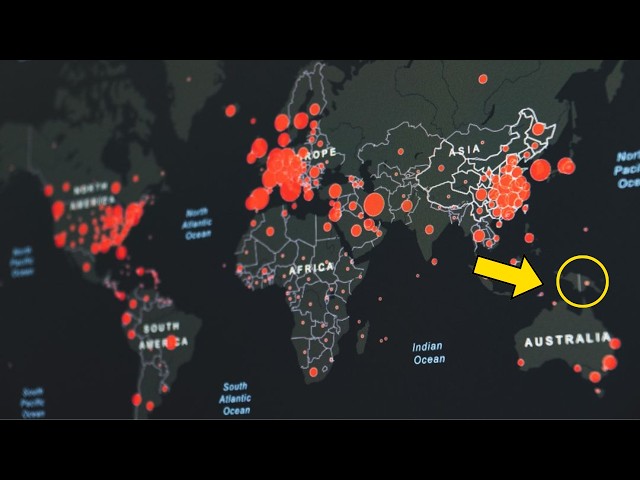
If Nuclear War Starts, Only These Two Countries Might Survive
They say the more things change, the more they stay the same. That seems particularly true lately for those of us who lived through the ‘80s: back then, there was a constant fear that the Soviet Union would try to launch nuclear missiles at the United States. Getting hit with even a single nuke would be bad enough. However, America would get enough of a warning to launch their own nukes in response, resulting in mutually assured destruction…better known as the end of the world!
🔔 Hit the bell next to Subscribe so you never miss a video!
❤️ Like, Comment and Subscribe if you are new to the channel!
Join Our Family For More Exclusive Content and Perks :
https://www.youtube.com/channel/UCOaD4JxNYk29LHbHTOx3SQA/join
🔗 More Amazing Stories from Our Channel:
✅In 1997, She Got Septuplets — See What They Look Like 21 Years Later! https://www.youtube.com/watch?v=0dQpSkmEv_Y
#storytime
#did_you_know
Show More Show Less View Video Transcript
0:00
They say the more things change, the
0:02
more they stay the same. That seems
0:04
particularly true lately for those of us
0:06
who lived through the '80s.
0:08
Back then, there was a constant fear
0:10
that the Soviet Union would try to
0:12
launch nuclear missiles at the United
0:13
States.
0:14
>> [music]
0:14
>> Getting hit with even a single nuke
0:16
would be bad enough. However, America
0:19
would get enough of a warning to launch
0:20
their own nukes in response, resulting
0:22
in mutually assured destruction. Better
0:25
known as the end of the world. Now,
0:27
America's attack on Iran and other
0:29
global tensions have reignited fears
0:31
about a nuclear war wiping all of
0:33
humanity off the face of the planet. But
0:35
here's a silver lining on the
0:36
apocalypse. Some of humanity might
0:39
actually survive. In fact, one combat
0:41
expert is certain that two countries
0:43
would make it through an all-out nuclear
0:45
war.
0:46
What are those countries? And what makes
0:49
them so special? But before we tell you
0:51
what are those countries, smash the like
0:53
button, make sure to subscribe, [music]
0:55
hit the notification bell so you won't
0:57
miss any new life-saving tips.
0:59
Why is the fear of nuclear war on the
1:01
rise?
1:03
As mentioned before,
1:05
widespread fears of an all-out nuclear
1:07
war go all the way back to the '80s.
1:10
Now, decades later,
1:11
why have those fears been reignited? The
1:14
short answer is America joining with
1:16
Israel to launch an attack on Iran, one
1:18
which killed that country's Ayatollah
1:20
and caused widespread damage to civilian
1:22
targets, including a girl's school.
1:25
Unsurprisingly, Iran has struck back in
1:27
a variety of ways, including blockading
1:30
and then mining the Strait of Hormuz,
1:32
which is used to transport vital oil to
1:34
countries all around the world. Why does
1:36
anyone think an attack on Iran could
1:38
result in a nuclear war? For decades,
1:41
certain national leaders, especially
1:43
those in Israel,
1:44
have warned that Iran is right on the
1:46
cusp of developing nuclear weapons
1:48
technology with which they could
1:49
threaten the [music] world. Attacking
1:51
the country and killing its leader is
1:53
seen by some as a kind of preemptive
1:55
strike intended to keep America and
1:57
other countries safe. However, others
1:59
worry that Iran may already have nukes
2:01
[music] and by attacking, the United
2:03
States risks a reprisal that could
2:05
result in all-out nuclear war.
2:08
The surprising reason most of humanity
2:10
dies in a nuclear war.
2:13
You've likely grown up hearing about how
2:15
nuclear war is likely to wipe out all of
2:17
humanity.
2:19
However, do you know how it is likely to
2:21
happen?
2:22
You see, not everyone is going to be
2:23
wiped out right away by the explosive
2:25
force of the bombs. Instead, many people
2:28
would end up starving or freezing to
2:30
death. Why is that? Simple.
2:33
Nuclear war [music] would change the
2:34
environment of every country on the face
2:37
of the planet.
2:38
You see,
2:39
the bombs might not wipe out all of
2:41
humanity,
2:43
but they will wipe out almost all
2:44
agriculture and industry. That means
2:47
many of those who survived the initial
2:48
blast would be stuck in a world where
2:50
they can no longer grow or import food.
2:53
This might be a short-lived worry,
2:54
[music] though.
2:55
Most of the world would be covered by
2:57
snow in a new ice age.
2:59
And with no power for things like
3:00
heaters, plenty are likely to freeze to
3:02
death. If that's not bad enough,
3:05
don't forget radiation poisoning.
3:08
It might take a while to kill you,
3:10
but with no access to medicine or
3:12
hospitals,
3:13
the final days of those affected
3:16
would be excruciatingly painful.
3:19
What two countries would survive?
3:21
So, all of that horrifying information
3:24
above,
3:25
that's obviously the bad news.
3:28
Fortunately, there's a bit of good news
3:30
to go with it. According to Annie
3:32
Jacobsen, who wrote Nuclear War: A
3:34
Scenario,
3:35
there are two countries that would
3:36
likely survive in the event of a nuclear
3:38
war, and it's not the countries you
3:40
might expect. You see,
3:42
Jacobsen is convinced that the two
3:44
countries that might thrive in the
3:45
post-apocalypse are New Zealand and
3:47
Australia.
3:48
Why would these countries be able to
3:49
survive when the other nations of the
3:51
world are doomed? For one thing, these
3:54
countries wouldn't be hit by the new ice
3:55
age as hard as most other countries,
3:57
allowing more people to survive
3:59
underground. Furthermore, these areas
4:01
would still be able to sustain
4:02
agriculture after the nuclear
4:04
apocalypse. Therefore, the tiny remnant
4:07
of humanity, remember we're only talking
4:09
about two countries here, might not
4:11
represent that many people, but they
4:13
would be able to keep themselves alive
4:14
by growing their own crops. Are there
4:17
any other countries that might still be
4:18
able to survive after a nuclear attack?
4:21
As you might expect, it all depends on
4:23
how many nukes are fired [music] and how
4:25
many ultimately explode after being shot
4:27
down by various missile interception
4:29
systems.
4:30
Depending on a variety of factors,
4:32
Chile, Iceland, Switzerland, South
4:35
Africa, and Tuvalu could survive. In
4:37
addition to supporting post-apocalyptic
4:39
agriculture, these countries do not have
4:42
their own nuclear weapons, making them
4:44
less likely to be priority targets for
4:45
Iran or other nations.
4:48
The refugee problem nobody wants to talk
4:50
about.
4:52
There is another dark question.
4:54
If Australia and New Zealand are safer,
4:57
could the rest of the world simply move
4:58
there?
4:59
In reality, no. These countries do not
5:02
have the space, infrastructure, housing,
5:05
hospitals, or food distribution systems
5:07
[music]
5:07
to suddenly absorb hundreds of millions
5:09
of desperate people. Even if their
5:11
governments wanted to help, the scale
5:13
would be impossible. In a global nuclear
5:15
disaster,
5:17
borders would likely become extremely
5:18
controlled, and refugee waves could
5:20
create enormous moral and political
5:22
crises.
5:24
That is what makes the survival question
5:25
[music] so uncomfortable. It is not just
5:28
about which places are safest. It is
5:30
about how quickly civilization could
5:31
become smaller, poorer, and more
5:34
isolated.
5:36
The real lesson.
5:38
The point of this story is not to tell
5:40
everyone to buy a ticket to Australia or
5:42
New Zealand. The real lesson is much
5:44
bigger.
5:45
Nuclear war has no true [music] winners.
5:47
Even the countries with the best chances
5:49
would face a broken planet.
5:51
The sky could darken,
5:53
harvest could fail,
5:55
medicine could run out, trade could
5:57
stop, and the countries that survive
5:59
would not be living in victory. They
6:01
would be living in the ruins of everyone
6:02
else's mistake. That is why researchers,
6:05
journalists, and former officials keep
6:07
warning about nuclear escalation. The
6:09
biggest danger is not only the weapons
6:11
themselves, it is the belief that they
6:14
can be used, controlled, or limited once
6:16
a crisis begins. So, yes, Australia and
6:19
New Zealand may have some of the
6:20
strongest survival advantages in a
6:21
nuclear winter scenario, but the most
6:24
important answer is not where humanity
6:26
could survive after nuclear war.
6:28
The most important answer is how
6:30
humanity prevents that war from ever
6:32
starting. Because if the nukes start
6:34
flying, even the safest countries on
6:36
Earth may discover that survival is not
6:38
the same thing as living.
#Jobs & Education