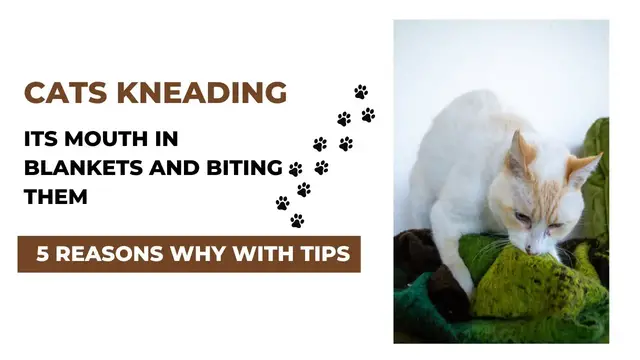

Cats Kneading Its Mouth In Blankets And Biting: Reasons and Tips
Jun 5, 2023

When a cat kneads its mouth in blankets and bites, it can be due to various reasons. Here are some possible explanations and tips:
Comfort and Contentment: Kneading, also known as "making biscuits," is a behavior commonly associated with contentment and relaxation in cats. It's often seen in kittens while nursing to stimulate milk production. When adult cats knead their mouths in blankets, it may be a way of reminiscing about their kittenhood and finding comfort.
Tip: If your cat is kneading and biting blankets in a calm and relaxed manner, it's likely a sign of contentment. Allow them to continue this behavior as long as it doesn't damage the blankets or become overly aggressive.
Scent Marking: Cats have scent glands in their mouths, and kneading can be a way for them to mark their territory. By biting and kneading blankets, they leave their scent behind, signaling that the area is theirs.
Tip: If the scent marking behavior becomes excessive or bothersome, you can try providing alternative outlets for scent marking, such as scratching posts or designated areas with soft blankets that are specifically for your cat.
Teething or Dental Issues: Kittens and young cats may knead and bite blankets to soothe their teething discomfort or alleviate pain caused by dental problems. If your cat is exhibiting other signs of dental issues, such as drooling, bad breath, or reluctance to eat, a veterinary visit is recommended.
Tip: Consult your veterinarian to rule out any dental problems and ensure your cat's oral health is in good condition. They can provide appropriate treatment or advice on how to alleviate discomfort during teething.
Stress or Anxiety: Cats sometimes engage in repetitive behaviors like kneading and biting blankets as a way to cope with stress or anxiety. This behavior can provide a sense of comfort and security.
Tip: If you suspect stress or anxiety is the underlying cause, try to identify and address the source of your cat's distress. Provide a calm and safe environment, offer interactive toys, engage in playtime, and create a consistent routine. In severe cases, consult a veterinarian or a feline behaviorist for further guidance.
Attention-Seeking Behavior: Cats may knead and bite blankets to gain attention from their owners. If they receive positive reinforcement or interaction whenever they exhibit this behavior, they might repeat it to get your attention.
Tip: Avoid rewarding the behavior by ignoring it or redirecting your cat's attention to an appropriate alternative, such as a toy or interactive play. Reinforce positive behaviors, like playing or being calm, with attention and affection.
Remember, every cat is unique, and their behaviors can vary. If you have concerns about your cat's kneading and biting habits, it's always a good idea to consult with a veterinarian or a professional animal behaviorist for personalized advice and guidance.
https://www.travelingwithyourcat.com/cats-kneading-and-biting-blankets/
Show More Show Less #Hobbies & Leisure
#Home & Garden
#Pets & Animals
#Pets
#Cats