Up next in 10



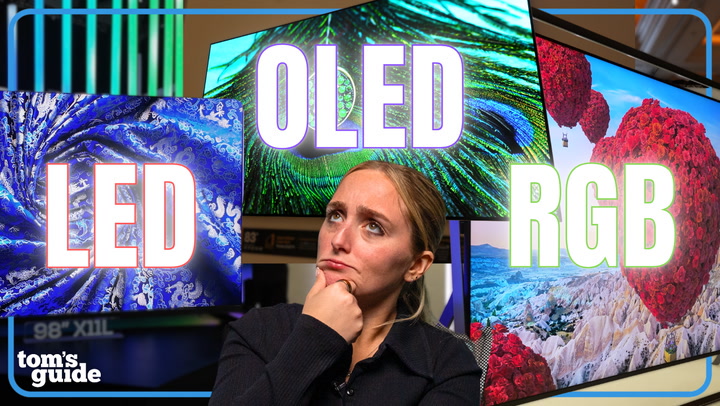
Buying a TV in 2026 is no simple task if you're unfamiliar with different TV technologies. Not only are there key differences between Mini-LED vs. OLED TVs, but each brand's marketing language further confuses what any given TV actually offers. Then, we have the emergence of RGB Mini-LED TVs and RGB Micro-RGB TVs... yeah, our brains hurt too.
In this video Kate breaks down what these TVs offer, the benefits, the trade-offs, and which is the best TV brand in the different display categories. We talk LG OLED, Samsung Neo QLED, Hisense ULED, TCL QD-Mini LED, Sony QD-OLED and more. Let us know what TV is on your radar for 2026
Show More Show Less View Video Transcript
0:00
Modern TV technology and branding is so confusing right now
0:04
Buying a 4K TV in 2026 feels way more complicated than it should be
0:09
Not because the technology is impossible to understand, but because brands keep renaming these same core concepts
0:16
You've got LCD, mini LED, micro LED, RGB mini LED, RGB micro LED, Neo QLED, QNED, SQD mini LED, OLED, QD OLED
0:27
You guys, my brain hurts. But the good news is that a good amount of this really is just marketing
0:33
And in this video, I'll break down what these core display technologies actually are
0:38
how different brands describe them, and which differences truly matter when you're shopping
0:46
Let's start with mini LED. Mini LED is still an LCD TV, but instead of using a small number of large LEDs behind the screen
0:55
it uses thousands of much smaller ones. In this case, mini-LED is actually the name of the technology
1:02
These LEDs are grouped into local dimming zones, allowing the TV to control brightness more precisely across different parts of the image
1:09
That's why mini-LEDs can get extremely bright while still delivering much better contrast than traditional LED TVs
1:17
The main trade-off is possible blooming or light spilling over to parts of the scene
1:21
that it shouldn't, especially in high contrast, because the LEDs are not individually controllable or self-emissive like OLED
1:29
But improvements to processing and more powerful processors that can manage a higher number or more complex quantity of local dimming zones
1:37
can mitigate blooming greatly. Right now, mini-LED is the most active area of TV development
1:43
because it offers major picture quality gains without the manufacturing complexity, namely size limitations and burning concerns that you have with OLED
1:51
It also is generally less expensive to produce than an OLED TV
1:55
I'll talk about OLED more a little bit later on in this video, but we have a couple more things to go over with mini LED first
2:03
So since every TV brand is doing mini LED, they've all developed ways to differentiate or plant their own flag in mini LED
2:12
This is where marketing terms start to, let's say, muddy the waters a little bit
2:17
Ever since 2021, Samsung calls its mini LEDs Neo QLED, even though there's still LCD TVs with mini LED backlights and a quantum dot layer
2:26
In simplest terms, the quantum dot layer is a thin film that sits on top of the backlight
2:31
and contains billions of tiny semiconductor nanocrystals, the quantum dots. That rolls off a little bit nicer off the tongue, don't you think
2:39
Anyway, those are what can convert a basic blue backlight into specific vibrant colors
2:45
Samsung typically offers several new Neo QLED models every year, with models listed like QN95, QN90, QN85
2:53
The higher the number, the more premium the TV generally. At the time of recording this video
2:58
Samsung actually has not yet revealed the 2026 refreshes for the higher end Neo QLED sets
3:04
only the QN80H and the Samsung QN70H, which prioritize size coming in 100 inch versions
3:12
I would expect more Samsung TV news soon, so make sure you hit that subscribe button Compared to Samsung TCL uses the more literal term QD mini LED emphasizing the combination of mini LED backlighting and quantum dots
3:28
More recently, TCL has innovated with SQD mini LED. SQD builds on this idea by refining the quantum dot layer
3:36
the color filter, and processing to produce even pure colors, even at high brightness, giving us super quantum dot SQD. Again, the individual pixels themselves
3:47
do not emit light, but how the backlight translates into a final picture has been
3:52
greatly refined. I'm personally really impressed with what I've seen so far
3:57
To that point, I've already done a video about the first SQD TV, the TCL X11L
4:02
so make sure you go check that out if you want to learn more. hisense brands its mini led tvs as uled mini led where uled is not a panel type but an umbrella term
4:15
for its processing and tuning the u stands for ultra with ultra features lumped together ultra
4:21
local dimming ultra wide color gamut ultra 4k resolution and ultra smooth rate again a lot of
4:28
this is just marketing but that's also why you're going to see hisense tvs labeled as the u9 u8 u7
4:34
U6 year after year. Like with Samsung, the higher the number, the more premium the TV, but generally
4:40
speaking, Hisense mini-LED TVs are some of our favorite value options. I personally had a U8 for
4:46
a while and I really liked it. LG takes a different approach by branding all of its LCD TVs as QNED
4:53
for quantum nano-emissive diode. Basically, quantum dots plus nano cells that absorb unwanted backlight
5:00
to help with blooming and of course the mini led backlight honestly that's all i want to say about
5:05
qned when it comes to lg we really only are recommending oled tvs sorry lg but generally
5:11
speaking lg does not prioritize innovation with qned mini led nearly as much as it does with oled
5:18
tradition of mini led uses white or blue leds behind the screen and relies on these filters
5:26
or quantum dots I've already mentioned to create color. RGB mini LED replaces those white or blue
5:33
LEDs in the backlight with separate red, green, and blue sub-LEDs in each of the individual LEDs
5:40
which improves color accuracy, brightness, and efficiency. Samsung, Hisense, Sony, TCL, and LG
5:46
are all tinkering with their own versions of RGB-based display technology. So yes, I've been
5:52
talking a lot about RGB mini LED here on the channel. Maybe you've already heard some of these
5:58
explanations of it. Sorry if that's repeating. But more importantly, when it comes to buying a new TV
6:03
in 2026, you're probably not going to be buying an RGB mini LED TV right now. They're more expensive
6:10
to produce than traditional mini LED backlights. They're not available widely. And frankly, we
6:15
haven't been able to run benchmarks. Truthfully, me and most TV reviewers haven't had the chance
6:21
to look at them in places other than controlled environments set up by these manufacturers, just being honest here
6:28
Despite my hesitations, I do think RGB Mini LED will be what Mini LED simply is in the not too far off future I do like what I seen so far It has the same benefits over OLED that I already mentioned The possible concern though is color blooming
6:44
or color crosstalk, where basically, if an LED is producing red right next to
6:49
where white is supposed to be, that white part might look pink just due to
6:54
you know, the colors bleeding over. It does not look very good when that happens
6:58
but by the time RGB is more budget friendly, hopefully that will be refined
7:04
Not only do we have RGB mini LEDs now, but we also have RGB micro LED
7:10
This is not the same thing as micro LED. You guys are my friends
7:15
I'll admit to you that I don't even quite understand how brands like Samsung and LG can actually use micro LED in a TV name
7:23
when RGB micro LED is just a backlight of LEDs that are smaller than traditional mini LEDs
7:30
sub 100 micrometer if we're getting technical. And right now Samsung and LG are the key players. I have already made videos about both of their
7:37
specific offerings that they displayed at CES 2026, but that's really all I need to say because
7:43
micro RGB currently only comes in massive expensive screens that are not really consumer ready
7:49
Not something that anyone watching this video is probably buying this year, but
7:53
let me know if I'm wrong about that assumption. So I said that RGB micro LED is not micro LED. Micro LED is a fundamentally different display
8:04
technology. Like OLED, it is self-emissive, meaning each pixel produces its own light
8:09
and it's probably most associated with Samsung, which was kind of the first to market micro LED
8:14
TVs with the infamous wall, if you recall. Unlike OLED, micro LED does not suffer from
8:20
burn in and can reach much higher brightness levels. Think like professional massive billboard
8:26
style displays or the types of screens you're going to see in billion dollar stadiums. Micro
8:31
LED is still extremely difficult and expensive to manufacture, especially at smaller screen sizes
8:37
honestly, which is why it remains largely limited to ultra premium, very large displays. You guys
8:43
actually love the video about Hisense's RGBY innovation I shared from CES. So if you want to
8:49
see more talk or demos of micro LED let me know. Again not really a consumer product but there's no
8:55
doubt micro LED looks really impressive when you see it in person. We have finally made it to OLED
9:02
Thanks for bearing with us guys. I have reviewed many OLED TVs here on the channel so chances are
9:07
you have a little bit of an idea of what makes it different from LED but the short version instead
9:13
of using a backlight, each pixel in an OLED display produces its own light. That means when part of
9:19
the image is black, those pixels are simply turned off, resulting in perfect blacks and exceptional
9:25
contrast. OLED is best known for its cinematic image quality, great off-angle viewing, fast
9:30
response times, though generally it can't reach the same peak brightness as many LED and still
9:36
carries some long-term durability burning concerns, even though those have, generally speaking
9:42
improved significantly in recent years. Also, OLED panels only come in specific sizes
9:48
so like 48, 55, 65, 75, 83 and 97. When it comes to OLED LG is where it at They call their OLED OLED Evo basically a next OLED And for 2026 you looking at the LG G and C latest updates with a primary RGB tandem OLED
10:07
Compared to RGB mini LED, where the LEDs have sub-LEDs, this OLED technology uses a four-layer design in which individual red and green layers are each illuminated by separate blue emissive layers
10:20
I don't really need to get too into the weeds. Just know that when it comes to the latest gen OLED, our testing and anecdotal evidence show that it is a significant improvement for OLED as a whole
10:32
And that's why LG continues to be the best selling OLED brand
10:37
Cutie OLED is another path to OLED refinement led by Samsung and then Samsung supplies OLED panels to Sony
10:44
QD OLED combines OLED with quantum dots by using blue OLED light and converting it to color through the quantum dots
10:51
This allows for higher color brightness and improved color volume compared to traditional OLED without relying on that white subpixel
10:58
Sony's Bravia 8 Mark II and Samsung's new S95H OLED are attractive options for 2026
11:05
They're definitely solid in terms of brightness and compared to OLED or more traditional OLED
11:11
it's accepted that QD might be optimal for preventing burn-in long-term. I say might because it's actually quite hard to quantify
11:18
I should call out that Samsung is doing some pretty cool things when it comes to reducing glare on those QD OLED TVs
11:23
That's something that OLED traditionally struggles with. So keep that in mind if you're shopping for an OLED that you're going to put in a bright room
11:30
behind the scenes there is growing acknowledgement that tv naming conventions and marketing have
11:38
become a little bit of a problem in the conversations i've had with people at cta and other industry
11:43
events there seems to be some active work happening around clear guidelines and more transparent
11:49
terminology of course nothing is finalized yet but the fact that these conversations are happening
11:54
at all signals that the industry understands this confusion is not sustainable heck i'm following
11:59
this stuff very closely all the time and even I had to do a lot of research to make this video
12:04
and I also probably left out a lot of stuff just for the sake of making this the most useful for
12:08
those watching this actually buying a tv I mean I haven't even mentioned 8k maybe we'll do that
12:14
in another video the easiest way for me to cut through all of this noise is to focus less on the
12:19
branding and more on the fundamentals mini led neo qled qd mini led uled and qned are variations of
12:28
of the same core idea executed with different levels of quality. OLED and QD OLED prioritize contrast
12:35
and perfect pixel control. Micro LED is probably the future, but it is definitely not the present
12:40
So once you understand how the light is made and how it's controlled, the names hopefully will start to matter a lot less
12:46
and finding the right TV becomes a lot easier to spot. Hopefully this video helped you make some sense of it
12:52
Hit that like button if that was the case and let me know if you like this type of breakdown content
12:57
Otherwise, that's it for me for this one. I will catch you next time
#Online Video
#Computers & Electronics
#Consumer Electronics
#TV & Video Equipment