Up next in 10


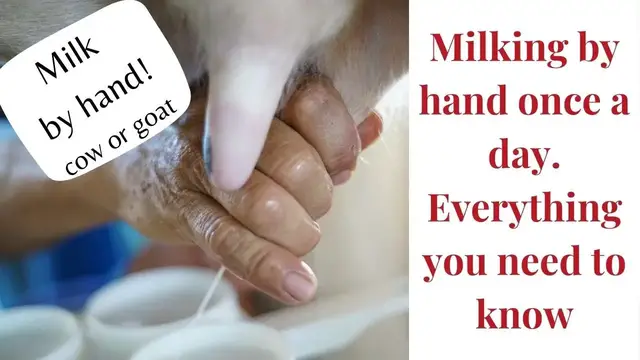
Learn the most essential tips and steps to hand milk a cow or goat once a day!
Keep your milk animal healthy and productive with advice from years of experience.
This video is full of information that will help you become an expert when it comes to:
- assessing your milk cow
- recognizing signs of mastitis and other illness
- udder and teat care
- nutritional needs
- hand milking
- once-a-day milking options
- and much more!
Be sure to catch the wrap up and enjoy the blooper reel for a good laugh.
Find more information and keep up with Rhonda and Buttercup:
Thefarmerslamp.com
Show More Show Less View Video Transcript
0:00
Hi, I'm Rhonda Crank and this is Buttercup
0:08
She's an A2, A2 Jersey milk cow. And if you're not familiar with A1 or A2 milk, you can learn more about that on a farmer's lamp
0:16
Buttercup gives us three to four gallons of milk a day, or she produces three to four
0:23
gallons of milk a day. And we can't use all of that
0:27
So we practice once a day milking. Once a day milking is what we want to talk to you about today
0:33
Before we start talking about once a day milking, our setup's a little different, so I want to talk to you about that for just a second
0:39
We drink raw milk. I strain it, I bring it in, I put it in sterilized glass jars, and I refrigerate it
0:47
Raw milk will last two to three weeks in the refrigerator, and if you can get it chilled to 40 degrees Fahrenheit or below within an hour, it can last up to four weeks
0:57
Now I can't verify that with personal experience because it doesn't last at our home that long
1:04
If for some reason someone's gone or we don't use some milk, if I get too much in the refrigerator
1:10
I'll take the oldest milk and I will give it to the chickens or the pigs or the dogs or some to the barn cats
1:17
Just depends. But we grew up on raw milk. So that's how our family drinks it
1:22
Now if you prefer pasteurization or homogenization even though it kills and changes proteins, vitamins and micronutrients in milk
1:32
If that's what you choose for your family. You can certainly buy a pasteurizer or homogenizer for the home
1:40
They're very expensive but that's an option for you if that's what you choose is best
1:44
Now what is once a day milking? Well that's exactly what it sounds like
1:49
traditionally milk cows are milked twice once in the morning and once in the
1:53
evening after a cow gives birth and her milk comes in which is usually around
1:58
seven to ten days they're milked twice a day now even on homestead some people
2:04
take their calves off within 24 hours to 48 hours some take them off in a month
2:11
whatever they choose for their farm or their homestead and then they give the
2:16
calf a bottle. Sometimes they milk the cow and give the calf part of the mother's milk and
2:21
sometimes they do milk replacers. We try to do as many things as possible in rhythm with nature
2:28
So we let the calf have everything it wants for the first four or five months of age. Then we
2:34
wean it if she hasn't already. Now a cow, when her calf is one to two months old, a milk cow
2:40
is bred again because it takes her nine months and during that nine months she will produce
2:46
milk except for the last two months. The last two months of a pregnancy, a milk cow dries up and she
2:55
starts storing up vitamins and nutrients for her clostrum and the milk for the new calf that she's
3:01
about to give birth to. So that's why they normally naturally wean them around eight to nine months
3:08
But our normal is we take the calf off around four months. I don't know if we'll wait the whole four
3:14
months for this one for FP he's half black Angus and he's a very large calf and even though he's
3:20
only three months old I'm going to have to start milking twice a day because he's getting too much
3:27
of the milk he's already eating grass and eating hay but when I go to milk her he runs up there
3:33
and gets everything he can he's learned our routine and so we're not getting what we need
3:39
so we're going to probably start weaning him early and I'm going to go ahead and start twice
3:43
a day milking. Once a calf is weaned you will have to milk twice a day anyway. Only a very experienced
3:50
very skilled dairy maid or dairyman can successfully do once a day milking without
3:56
harming the cow's udder or her teats. Now why would someone want to do once a day milking? It's
4:03
healthier for the calf. It's not raised on formula so we want them to be as healthy as they possibly
4:10
can be. We can't use three to four gallons of milk. Now if you've got a large family, you very
4:16
well might need three or four gallons of milk a day, but we can't consume that. So we want to have
4:23
let the calf have it. It's natural for him. You don't have time to milk twice a day. It's a very
4:29
busy world and people have very busy lives. So it's hard for them to milk morning and evening
4:37
You can milk in the evening instead of the morning if that works better for you
4:42
The process is pretty much the same. There's an old saying that I'm going to share with you here that I really love
4:48
A cow has one udder and four teats. One teat for the farmer, one teat for the calf
4:55
One teat for all the other farm animals and one teat to share
5:00
So I think that's very appropriate and I like that. Now how to do once a day milking
5:07
You have a couple of options here. You just have to choose which setup will work for you, for your homestead, for your barn, for your goals, for your family
5:15
Now, like I said, the first two weeks, or maybe I didn't say this yet
5:20
I'll say it here. The first two weeks, allow the calf everything it wants
5:25
It's getting all the colostrum. Usually, the cow's milk will come in day 10 to 14 unless they've had multiple calves
5:34
this is buttercup's second calf on day six we went out to check on her and her bag was full
5:41
and she was hurting so we just milked her right there in the pasture because he wasn't drinking
5:48
as much her milk came in faster because he was her second calf the calf will drink one half to
5:56
one gallon of milk a day the first few weeks and then of course as it grows it'll drink more and
6:01
Like I just told you, FP is drinking most of the three to four gallons a day that Buttercup is producing
6:09
The colostrum will be in the milk for the first seven to ten days
6:14
And some people don't like the taste of that. So if they have to milk her, if her bag's too full and they have to milk her
6:22
they will give that to the animals or give it to the calf in a bottle
6:26
It has a weird taste. just so you know it does have an unusual taste to me it's not undrinkable but to
6:33
the rest of my family they won't touch it so we let the calf have it if her
6:38
milk comes in another reason you may want to watch her very carefully if her
6:43
milk comes in and you don catch it she can very easily get mastitis so you will want to start milking as soon as her milk comes in full Also if you don milk her she will reduce the production of her milk
6:59
Option number one. This is how we're doing it right now. Because like I said, we don't need more than a gallon of milk a day for our family
7:06
We leave the cow and the calf together 24-7. In the morning, I bring her into the barn
7:12
I feed her. I milk her. And this is a great setup if you don't need a lot of milk
7:18
Now, FP has learned that when I take her in, I'm getting the milk
7:23
So he has started nursing her earlier, and I'm not getting as much
7:28
So I'm going to have to start twice a day milking. I've learned that dairy cows are very tookey about their schedules
7:37
She knows when I'm supposed to be up there. And I would say eight mornings out of 10, she is already there waiting for me
7:44
And the same thing in the evening. Because I will eventually have to milk her twice a day, I'm going ahead
7:51
And at the time of day that I want to milk her in the evenings, I'm giving her her second feed, giving her some hay, giving her some alfalfa, and letting her know, okay, this is our second meetup
8:05
And so when I start milking twice a day, she will already be there waiting on me at that time
8:11
Your dairy cow, as I was saying, is very tukey about her schedule
8:15
You can operate within a 15-minute window. Now, what do I mean by that
8:20
I always head out to the barn around 645 and start milking by 7
8:26
Now, if I had to, I could go to the barn around 630 and start milking at 7
8:31
You see, that's a 15-minute difference there. Or I could head out at 7 and start milking at 7.15
8:38
That's 15 minutes later. If you have to change your time, do it in 15-minute increments
8:45
I have a friend who had a cow that, for some reason, the person they brought the cow from had been milking her at 11 o'clock at night
8:54
And they didn't want to do that. They wanted to just start milking her around 7
8:59
and she just went out to the barn and thought she would take the cow in there and start milking the cow
9:04
and that cow ran her all over the pasture. So she had to back up and actually start bringing the cow in 15 minute increments until she got her
9:16
and it took her a couple of months to get her to the 7 o'clock window. They're just very habitual animals
9:23
So you have to do things with them slowly. The same thing with her feed or her supplements
9:28
You can avoid stomach issues, bowel upset. If you just change things a quarter at a time, if you want to reduce her feed or you want
9:37
to reduce a supplement or something like that or even increase it, do it a quarter at a
9:43
time until 25% at a time until you get it to where you want it to be
9:49
Our goal is to do very little grain, if any, feeding. But dairy grass has to be very rich, very nutritious, and very high in calories
9:59
And the pasture, the dairy pasture, is still in the development stage here
10:04
So it's going to be another two to three years before we can get to the place where we don't supplement her with any kind of grain
10:12
At that point, we will feed her pumpkins, forage, kale, and a few other things that we grow for her in addition to her hay and her grass
10:22
Now that's option one. Option two, which I think is probably the best option, and it's what we've done in the past, but it's not the setup here where we can do this
10:34
So we will get there one day, but option two, you shut the cow and the calf in the barn at night in separate stalls
10:44
The stalls are side by side. They can see one another, but the calf cannot nurse overnight
10:49
When you come in to milk the next morning, you'll milk a gallon or so, and then you leave the rest of the milk for the calf
10:57
You turn the cow and the calf out to pasture together, and then in the evening, 7 or 8, around dusky dark, you bring them back in, put them in separate stalls, and the calf will learn, I have to nurse during the day
11:11
because a lot of times a calf will sleep a lot during the day
11:15
He'll play. He's exploring everything, and he just doesn't take the time to eat
11:20
Mama's out grazing, but he will learn, I've got to eat when we go out of the barn
11:25
and I've got to eat before we come into the barn. So he will learn the routine
11:29
and then that'll work really nicely for both of them. There won't be as much separation anxiety
11:36
and she won't be as nervous. Option number three. Because the calf sleeps and plays during the day, you can do the opposite of option one
11:47
Instead of bringing her in in the morning to milk her once a day, you bring her in in the evening and you milk her
11:56
Then you can put her back out to pasture with him. Now, of course, the calf will learn what's happening and he will nurse when he thinks you're going to take his milk
12:06
Now, I want to talk to you about your cow. You are your dairy cow's first line of defense
12:13
You've got to know your cow. Cows are a lot smarter than people give them credit for
12:18
And a dairy cow is very, very different from beef cattle. You can't treat her like a beef cattle
12:25
She will bond with the person who's milking her. So whoever is responsible for the milking, at our home, it's me
12:34
It's hard to have time off or to be sick. if possible what we've done is my my husband goes out with me as often as he can so that he knows
12:45
our routine and so that they're familiar with her and she's familiar with them they get to feed her
12:51
she says okay this person feeds me so that if something does happen and I'm not able to be here
12:58
she will trust them to bring her to the barn she takes herself to the barn you have to take her
13:03
out of the barn but she will trust them because she will not let her milk down for just anybody
13:10
I think it's very funny because even now my husband will go in and he will start to try to
13:16
milk her and he can get a little bit and she will just look at me and then as soon as I touch her
13:21
the milk lets down and she just milks fine so before you milk it's important to assess your cow
13:27
When I bring her into the barn, even when I'm putting her halter on her, I'm
13:32
assessing her Some of that may be my old nursing I was a nurse for 24 years Some of it may be that You need to look at your cow You need to know your cow You going to look at her eyes
13:45
You're going to look at her nose. You're going to look at her true hips. You're going to especially assess her udder and her teats
13:52
Some people call the udder the bag, and I do that interchangeably. So you're going to check her udder and her teats for cuts, scrapes, lumps, discoloration
14:02
uh fp has started biting her so i'm having to treat some bites he's getting his teeth in you're
14:09
going to check that uh you're going to have to treat anything anything that shouldn't be there
14:14
you're going to have to treat them any lumps or swelling redness heat or discharge that's a big
14:20
concern that's mastitis probably and you're going to have to do a mastitis test on the milk it can
14:27
set up in a matter of hours so you constantly even when I'm out in the pasture and she comes up to me
14:34
I'm looking at her we're very careful with our milk cows but I've had I have friends who say that
14:40
they did everything right and they still got mastitis it's a real problem I can't just say
14:46
oh you know I grew up milking cows and we've always had milk animals and I don't have to worry
14:52
about that. No, you have to check your cow. You want to know her at the first sign of trouble
14:58
You're the one who's going to see it. Now I said assess her eyes. If her eyes are sunken
15:04
she has some illness in her body somewhere. So you want to look for other signs to see if you
15:10
can figure out what's going on. If she's just freshened, if she's just had a calf, it can be
15:16
a sign of a retained placenta. Her nose drainage should be clear. Her nose should be moist
15:22
and slimy. Now her true hips, those are those bones that stick out at the back. You want between that
15:28
hip and her rib cage to be round and full. Her ribs should not be visible. If you see them, then she's
15:36
not getting some nutrition that she needs. So you're going to have to increase her hay, her feed, give
15:41
her some alfalfa. It depends a lot on whether what she's grazing on. Now to milk a cow, here is my
15:49
process. I've already said I bring her in and I've assessed her. So I brush her udder. I brush the
15:55
udder to remove loose hair and dirt and as a way of assessing it. Then I wash her teats and the area
16:02
around the bag and around each teat with warm water. The warm water I find warms my hands for
16:09
one but it also helps her milk come down and she seems to really appreciate the warm water
16:16
Some people dip the teats in farm iodine. And sometimes I do this
16:20
If she's got cuts or something, I do that. But as a general rule, I only dip her teat if she has a cut or a scrape or something
16:30
And I do that after I milk. But if it's something you grew up doing that you want to do, you go ahead
16:36
If you do dip your teat in farm iodine, then you wash it off with warm water before you milk, of course
16:41
The first thing you do when you want to start milking, I use a fine mesh strainer and I milk each teat twice into that
16:49
That's two streams from each teat. I look for clumps or discoloration in that milk
16:54
If I see any, then I've got to perform a mastitis check
16:58
And like I said, I've never had it, but it's still my habit. It's still routine to run that first little bit of milk through that strainer because it's just a first line of defense for her and for us
17:08
You don't want to drink that. Most of the time, I milk into a stainless steel bucket and then I pour it into a strainer before I leave the barn
17:16
However, this year has been an extremely bad year for flies for us
17:23
And I've never seen it like this before. And so Buttercup has been very irritated when she comes in
17:28
So I spray her with a natural fly repellent before I milk her, but she still kicks quite a bit at the flies
17:35
She kicks out of irritation. She's just been very frustrated. So I've lost a couple of buckets of milk, half a bucket of milk
17:42
So I switched to a quart, a sterilized quart mason jar. We use wide mouth jars, so I have those
17:51
So then I milk into that jar and I pour it to the strainer when it's full
17:55
Also gives me a better idea of how much milk I'm getting
17:59
Now once I'm done milking, I wash her teats again and then I dry them
18:03
Water will dehydrate the skin if you decide it evaporates. So I just pat her dry
18:09
Then I put a small amount of utter cream that we make
18:14
Right now I'm just using Expeller Pressed Extra Virgin Coconut Oil. I put that in the palm of my hand and I melt it in the winter
18:22
I add some other things to that to make it a little thicker. And then I massage it in
18:27
I know people say she's spoiled because I do that. But her teeth health is important to her and to us
18:34
so it's just something I do to help her you know in the winter it's especially important because
18:41
she'll get chapped teats she may be exposed to wind cold or snow and so it's just better
18:47
to go ahead and get in the habit of doing that then I turn her back out to pasture
18:51
with FP and the other cow that's with them they're set they're in a separate pasture from
18:56
the rest of the herd cows are herd animals so we have one of the beef heifers or a yearling bull
19:03
is kept over here with her so that her herd needs are met. You know you would think she and her calf
19:07
would make a herd but that's not how their minds work. So just that third animal being over here
19:14
with them they graze better, her mental condition is better and so the healthier the cow mentally
19:21
physically, emotionally the healthier the milk. So we do everything we can to be sure her needs are
19:26
If it's hot outside your cow will not produce as much milk. Weather changes can
19:33
cause a decrease in production and stress of any kind. A sudden change in
19:37
feed or milking habits will decrease her milk production. Next month we're
19:43
hopefully going to breed her for a July birth. Well we wanted to. It looks like
19:51
it's going to be even later so why we do that is we prefer a May June birth but
19:57
she gave birth in July this year July the 28th so we didn't get to breed her
20:03
like we wanted to so we do the May June birth we like that because that's when
20:09
the deer in our area are birthing out the calves that we have that are born in
20:15
that time frame May and June they don't seem to have as many health issues the
20:20
The flies aren't real bad yet. The weather just right So you know the best laid plans right So in a recap of what we been talking about what is once a day milking it exactly what it
20:36
sounds like milking once a day instead of the traditional way of twice here we try to do
20:42
everything in rhythm with nature and that means letting the calf have everything it needs at least
20:46
for the first four or five months she gives us three to four gallons of milk a day we don't need
20:52
all that so the calf gets that and then we wean it five or six months of age. Once the calf is weaned
21:00
you will have to milk twice a day. Only a very experienced dairy mate or dairyman can milk a cow
21:07
once a day continuously without harming the cow. So why would you want to do once a day milking
21:13
There's a few reasons. It's healthier for the calf. They're not getting formula
21:18
It's, they're getting all the colostrum and all the antibodies from the mother
21:23
You can't use 3-4 gallons of milk. You don't, unless you have a large family, you couldn't use that much milk in a day
21:30
And you don't have to milk twice, you don't have the time to milk twice a day
21:34
The first couple of weeks the calf will drink a half a gallon to a gallon a day, just depending
21:39
on its breed. And then as it grows and gets older it will drink more and more
21:44
Let's talk about our options for once a day milking. going to allow the calf, at least for the first two weeks, complete access. You don't touch her
21:54
unless her milk comes in. If it's her second calf or later, she's had more calves than one
21:59
then her milk's going to come in earlier. And you may have to start milking her once a day at 10
22:04
days or so. Option one is what we're doing right now because of our current setup. You just leave
22:10
the cow and the calf together 24 7. First thing in the morning 6 7 o'clock I usually take her in
22:18
around 7 you bring the cow into the barn for milking. You feed her you milk her and this works
22:26
if you don't need a lot of milk. Option two is probably the best way you shut them in the barn
22:34
in stalls separate stalls that are side by side where they can see one another smell one another
22:39
This way the calf can't nurse overnight. Then first thing in the morning you go into the barn and you milk her
22:46
You take about a gallon from her and then you give the calf the rest. Once you've milked her, then you turn the cow and the calf out in the pasture together for the rest of the day
22:56
Then in the evening, 7, 8 o'clock, close to sundown, you bring the cow and the calf into the barn
23:03
and shut them away in their separate stalls. now option three is the opposite of option one the calf during the day will sleep a lot he's
23:14
exploring so he doesn't nurse as much during the day so you would bring her into the barn earlier
23:20
in the evening to milk her now we'll tell you the calf will learn your rhythm and he will learn when
23:27
you're going to shut them up and when he's not going to be without milk and when you're going milk her and he will start nursing her to get all the milk he can so shutting them away at night is
23:37
a good idea there will be a lot of bellowing there will be a lot of crying when they're separated but
23:43
they will learn their routine and they'll settle back into it the rhythm's the same you feed her
23:49
you milk her and then you put her back out to pasture with the calf remember you are your
23:55
dairy cows first defense you want to assess her every time you milk her you want to look for cuts
24:03
lumps on her udder anything that is out of the ordinary you want to assess her eyes her nose
24:11
her hips and her knees as well her eyes should not be sunken that's a sign of illness in her body
24:17
somewhere her nose should be moist and any drainage that she has should be clear her hips should be
24:24
full and you should not be able to see her ribs. Now if you see buttercup, you see her hip bones
24:33
that's natural. That's the way God made their hips, but between her hips and her ribs is full
24:39
and that's what you want it to be. Her knees should not be swollen or tender when you touch them
24:46
Her feet should not be swollen, bleeding, cut, or draining. As you've heard me say probably on the
24:53
the farmer's lamp in some of our videos assess their poop. Poop tells you a lot
24:58
about the health of an animal. You know the traditional cow pile? Well that's what
25:04
you want it to be. Dairy cows are not like beef cattle and they cannot be
25:10
treated as such. They require special attention. Mastitis can set in quickly so
25:17
So every day you assess for mastitis. That's swollen teats, red teats
25:23
I hope you've learned something about once a day milking and milking in general
25:31
I know I'm always learning. As Papa said, my Papa said, there's as many ways of getting a farm chore done as there
25:38
are farmers. Here at the Farmers Land we're here to help
26:07
Hi, I'm Rhonda Crank and this is Buttercup. She's an A2 A2 Jersey milk cow
26:12
And if you're not familiar with A1 or A2 milk, you can learn more about that on the farmer's lamp
26:21
They're gonna work. Your calf will learn, like I said, the calf..
26:35
Okay, so we've... Why would you want to do once a day milking
26:43
There's probably a lot of... Now let's talk about the options for practicing once a day milking
26:55
We'd love to have you join us at www.thefarmerslamp.com. You can find us on Facebook, follow us on Pinterest, and subscribe to us on YouTube
27:04
You can visit our country store on the website and get your free subscription to Homesteading Today magazine featuring some of your favorite homestead bloggers
27:13
As always, we're here to help. Safe and happy journey
#Food
#Pets & Animals
#Animal Products & Services