
Palestinian Christian forced out of dream home by Israeli occupiers attacks.
Sep 4, 2026
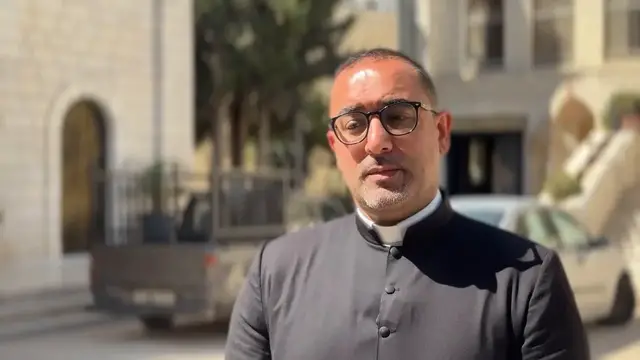
SHOTLIST: RAMALLAH, WEST BANK, PALESTINE (SEPT. 3, 2026) 1. VARIOUS OF TAYBEH TOWN, LOCATED EAST OF RAMALLAH / HOMES BELONGING TO CHRISTIANS AND RESIDENTIAL AREAS IN TAYBEH / LATIN CHURCH IN TAYBEH 2. VARIOUS OF BASHAR FAWADLEH, PRIEST OF LATIN CHURCH OF REDEEMER IN TAYBEH, SPAKING TO REPORTER (Arabic) / LATIN CHURCH IN TAYBEH 3. VARIOUS OF HOUSE FROM WHICH BASHIR NAIM WAS FORCED TO ABANDON DUE TO ATTACKS 4. KAVANE SPEAKING TO REPORTER (Arabic) 5. WIDE SHOT OF HOUSE RAMALLAH, WEST BANK, PALESTINE - SEPT. 3, 2026: Seven years ago, Bashir Naim, a Palestinian Christian, built his dream house, where he hoped to raise his children and grandchildren. But he lived there for only a few days before being forced out by violence from Israeli occupiers. Naim spent more than $270,000 building the house in Taybeh, east of Ramallah, one of the most prominent predominantly Christian communities in the occupied West Bank. He surrounded it with a fence and surveillance cameras in an effort to ensure his family's safety, but he says repeated attacks eventually turned home into what felt like a "prison." In recent months, the town has witnessed an escalation in occupier attacks targeting homes, farmland and livelihoods, prompting warnings from local and church officials that continued violence is pushing more families and young people to consider leaving. - Harassment that escalated into attacks Standing outside his dream house, Naim told Anadolu that the approximately 421-square-meter residence was designed as a future home for himself, his wife, his two sons and their families. "I wanted this house to be for me, my wife, my sons and my grandchildren," he said. "I have two sons whom I wanted to marry off, and we were all going to live here," he said. Naim also set aside part of the property for his work repairing refrigerators and washing machines. But as he prepared to move into the house, he said occupiers began repeatedly appearing around the property. What initially involved harassment during the day escalated into nighttime attacks. According to Naim, the problem went beyond occupiers simply appearing near his home. The security measures he had installed were also targeted. "They came at night, stole the surveillance cameras and cut off the internet service," he said. The harassment then escalated, he said, to occupiers following him and his son and attempting to attack them. "Every time we came to the house, they would follow us and try to attack us, until my son and I had to take refuge inside," he said. As the incidents continued, Naim installed additional security measures around the property. But the precautions intended to protect his family instead made him feel as though he was living behind barriers rather than in the home he had spent years building. "Look at all these precautions I have taken. My house has become a prison," he said, pointing to the fence surrounding the property. Ultimately, Naim was unable to stay. After moving some of his furniture into the house, he and his son spent only four or five nights there before leaving. - Emigration only viable option Instead of beginning a new life in the home he had built, Naim returned to his father's old house in Taybeh. But for Naim, the consequences went beyond being forced to abandon his home. The future of his family in Palestine itself has now become uncertain. He said his two sons, who completed their studies at Birzeit University in the West Bank, are now considering emigration and asking him to obtain a passport so they can leave the country together. His eldest daughter has already left for France and sought asylum there following the attacks against the family, he said. "My children are now thinking about emigrating and pressuring me to obtain a Palestinian passport and leave with them," he said. Following the family's displacement, the Palestinian Presidential High Committee for Church Affairs condemned what happened, saying Naim's family had been forced to leave their home because of continued "threats and attacks" by occupiers. - Not an isolated incident Bashar Fawadleh, priest of the Latin Church of the Redeemer in Taybeh, said Naim's story is not an isolated incident but reflects the pressure facing residents as occupier attacks continue alongside restrictions on movement and worsening economic conditions. "This citizen represents the Palestinian who wants to remain on his land and live in his home," Fawadleh told Anadolu. According to Fawadleh, more than 16 families have left Taybeh over the past three years, while dozens of families and young people are currently considering emigration. Fawadleh previously warned in August that occupier attacks were expanding to different parts of Taybeh, targeting homes, agricultural land and sources of income. Asked whether the attacks specifically target Christians, he said the iss
Show More Show Less