
Israel curbs West Bank labor, leaving Palestinian families under economic strain.
Aug 3, 2026
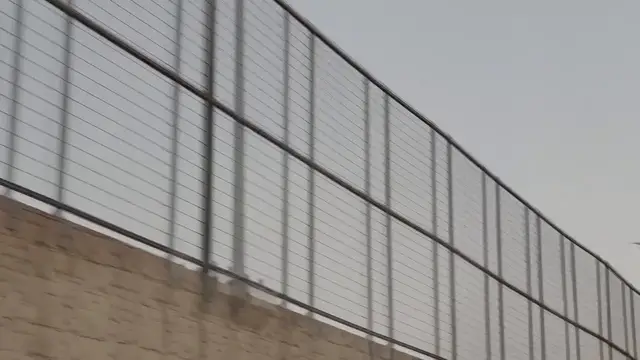
Shotlist West Bank - Recent 1. Various of separation wall, traffic, people 2. Hamdi Salama, Palestinian worker, walking and getting in shared taxi 3. SOUNDBITE (Arabic) Hamdi Salama, Palestinian worker (partially overlaid with shot 4): "Before October 7, we used to pass through the 300 checkpoint. After October 7, I think they removed all permits for all workers in Palestine, and there were no workers left, no permits for workers at all." SHOT OVERLAYING SOUNDBITE 4. Various of shared taxi, driver SHOT OVERLAYING SOUNDBITE 5. Cars waiting at checkpoint 6. Checkpoint 7. Various of separation wall, traffic, buildings 8. SOUNDBITE (Arabic) Hamdi Salama, Palestinian worker (starting with shot 7): "Over the past two years, many have been killed, many have been injured, and prisons are full of workers." 9. Various of street, traffic, people Israel - Recent 10. SOUNDBITE (English) Assaf Adiv, executive director, MAAN Workers Association: "[People say,] 'I have a fifty percent [chance] of being shot, but if I stay at home, there’s an eighty percent [chance] that my children will starve. So I prefer to risk myself and go to work'." West Bank - Recent 11. Various of separation wall, trucks, buildings Storyline Israel has tightened restrictions on Palestinian workers from the occupied West Bank, suspending numerous permits since the October 7, 2023 attacks. Although some permits have been reinstated, many Palestinians remain unable to legally work in Israel, placing heavy economic pressure on families. A separation wall divides Israel from the occupied West Bank, where workers line up at checkpoints each morning to reach jobs. Hamdi Salama, a construction worker from Bethlehem, makes the daily journey to his job in Jerusalem. "Before October 7, we used to pass through the 300 checkpoint. After October 7, I think they removed all permits for all workers in Palestine, and there were no workers left, no permits for workers at all," he said. The 300 checkpoint is one of the main crossings between Bethlehem and Jerusalem. Before October 7, thousands of Palestinian workers passed through here on their way to jobs in Israel. Hamdi lost his permit along with thousands of other workers. He only managed to get a new one a few months ago, but now pays thousands of shekels each month: far more than the few hundreds he used to pay. For many Palestinians, legal work is now out of reach. Unable to obtain permits, many Palestinians have turned to risky crossings without authorization, using breaches in the separation barrier or remote areas. "Over the past two years, many have been killed, many have been injured, and prisons are full of workers," said Hamdi Salama. Those caught risk arrest and imprisonment. Others are shot while trying to cross. But many say they have little choice if they want to provide for their families. "[People say,] 'I have a fifty percent [chance] of being shot, but if I stay at home, there’s an eighty percent [chance] that my children will starve. So I prefer to risk myself and go to work’," said Assaf Adiv, executive director of the independent Union MAAN Workers Association in Israel. The tightened restrictions have also affected Israel’s labor market. Construction, one of the sectors most dependent on Palestinian workers, faces major shortages as many employers struggle to replace them. [Restrictions: No access Chinese mainland]
Show More Show Less #news