
Iraq: US war against Iran disrupts Iraq's border trade.
Aug 20, 2026
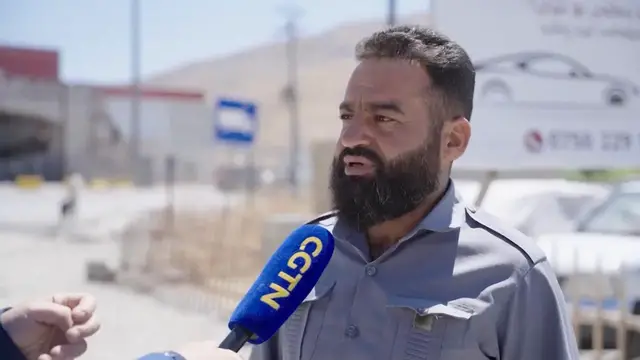
Shotlist Haji Omeran, Iraq - Recent (CGTN - No access Chinese mainland) 1. Various of hills, freeway 2. Border town 3. Advertisement board for truck services 4. SOUNDBITE (Arabic, dubbed in English) Rasul Ahmed, truck driver (ending with shot 5): "After the war, the transfer between the borders decreased so much, but still we have some trade." 5. "I Love Haji Omaran" sign 6. Various of street-side shops 7. SOUNDBITE (Farsi, dubbed in English) Shariq, Iranian trader (no full-name given)(starting with shot 6/ending with shot 8): "The border crossing has become less and less, not like before. Iran's currency is very low value because of the inflation, and unless we have guaranteed work here we cannot afford to come." 8. Various of hills Choman, Iraq - Recent (CGTN - No access Chinese mainland) 9. Various of "I Love Choman" sign 10. Various of glass-maker Sherzad Salih working 11. SOUNDBITE (Arabic, dubbed in English) Sherzad Salih, glass-maker: "Our work became very barred. We cannot do anything because of the sound of drones and missiles. We hope to God that things might get better again." 12. SOUNDBITE (Arabic, dubbed in English) Ahmed Jamal, barber: "Because of the sound of the drones, missiles and fighter jets, people do not dare to come out of their houses. There are so many people crying in their houses because of these horrible sounds." Haji Omeran, Iraq - Recent (CGTN - No access Chinese mainland) 13. Various of freeway, traffic Storyline The ongoing U.S. war against Iran is disrupting overland trade in northern Iraq, where border crossings serve as economic lifelines for communities on both sides of Iraq and Iran. Haji Omeran, a main crossing between Iraq's Kurdistan Region and Iran, was closed to commercial traffic when U.S.-Israeli strikes against Iran began on February 28. Although it has reopened, trade has yet to recover. "After the war, the transfer between the borders has decreased so much, but still we have some trade," said Rasul Ahmed, a truck driver from Kurdistan's capital Erbil. "The border trade has become less and less, not like before. Iran's currency is very low value because of the inflation, and unless we have guaranteed work here, we cannot afford to come," said Shariq, a trader from Piranshahr, Iran. In Choman, a city in Erbil Governorate of the Kurdistan Region, the economic impact has been severe. Local businesses rely heavily on the steady flow of people and goods across the border, meaning any disruption to cross-border movement is felt almost immediately. "Our work became very barred. We cannot do anything because of the sound of drones and missiles. We hope to God that things might get better again," said Sherzad Salih, a local glass-maker. "Because of the sound of the drones, missiles and fighter jets, people do not dare to come out of their houses. There are so many people crying in their houses because of these horrible sounds," said Ahmed Jamal, a barber. U.S. President Donald Trump's administration initially said that the war against Iran would be over within four to six weeks. Yet six months on, thousands have been killed, and the economic fallout is continuing to ripple far beyond the battlefield. With the conflict still showing no clear signs of ending, communities along this border remain caught in the uncertainty.
Show More Show Less