
Iran: Iran to announce "restricted zone" outside Hormuz Strait: top security official.
Sep 7, 2026
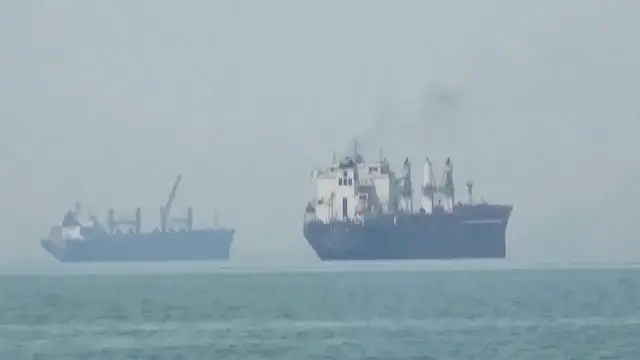
Shotlist FILE: Tehran, Iran - May 2026 1. City view, national flags of Iran 2. Traffic, national flags of Iran FILE: Tehran, Iran - May-June 2026 3. Various of Iranian national flags, traffic FILE: Tehran, Iran - June 6, 2026 4. National flags of Iran on road lamps, traffic FILE: Tehran, Iran - July 2026 5. Various of traffic FILE: Strait of Hormuz - May 22, 2026 6. Various of ships at sea FILE: Strait of Hormuz - June 5-6, 2026 7. Various of stranded vessels FILE: Washington D.C., USA - March 2026 8. White House, U.S. national flag, traffic FILE: Washington D.C., USA - Date Unknown 9. Various of White House, U.S. national flag FILE: Washington D.C., USA - Oct 2024 10. White House FILE: Washington D.C., USA - Date Unknown 11. Various of capitol building Storyline Secretary of Iran's Supreme National Security Council Mohsen Rezaei has said that his country would announce a restricted zone outside the Strait of Hormuz in the coming days and place any ship attempting to transit the area on Iran's sanctions list. In an interview with state-run IRIB TV broadcast Sunday night, Rezaei said that the zone would extend from the boundary of the U.S. naval blockade to the Strait of Hormuz and further into the Persian Gulf. Ships that enter the zone without coordination with Iran would face sanctions affecting their insurance coverage and future passage through the waterway, he added. Iran can monitor and sink American ships, but it has not decided to do so because these ships carry oil and sinking them would damage the region's environment. Rezaei rejected U.S. President Donald Trump's claim that the Strait of Hormuz is open, calling it "a complete lie." Following U.S.-Israeli strikes on Iran on Feb. 28, Tehran restricted vessel passage through the Strait of Hormuz, while U.S. forces imposed a naval blockade targeting ships traveling to or from Iranian ports and coastal areas. Iranian military officials said Saturday that maintaining internal unity and external deterrence remains essential to countering enemies, asserting that U.S. attempts to compensate for military strategic failures through hybrid warfare will fail. Chief of Staff of the Iranian Armed Forces Ali Abdollahi said that Iran's military has successfully thwarted military aggression by U.S. and Israeli invaders through asymmetric warfare. Abdollahi said the U.S. had mistakenly assumed that Iran would choose to surrender before launching military action against the country, but "this illusion will never come true." He added that the U.S. is currently attempting to pressure Iran through "cognitive warfare," "economic warfare," and other forms of comprehensive hybrid warfare in an effort to make up for its failures on the military strategic front. However, these attempts will not succeed in forcing Iran to change its position. Iran will not surrender to the U.S., he said. [Restrictions: No access Chinese mainland/Israel Media/Al-Arabiya/Persian language TV Stations outside Iran. Strictly No Access BBC Persian/VOA Persian/Manoto TV/Iran International/Radio Farda]
Show More Show Less