
Iran: Iran prepares massive multicity funeral for Khamenei.
Jul 3, 2026
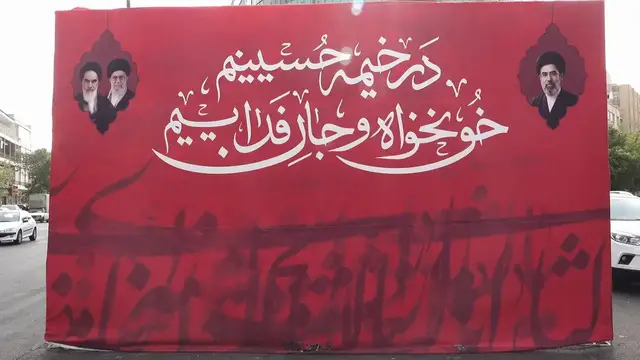
RESTRICTION: BROADCAST AND DIGITAL: NO USE BBC PERSIAN, NO USE VOA PERSIAN, NO USE MANOTO, NO USE IRAN INTERNATIONAL, NO USE RADIO FARDA, NO RESALE, DO NOT OBSTRUCT COURTESY OR LOGO — EDITORIAL USE ONLY — SHOTLIST: TEHRAN, IRAN (JULY 3, 2026) (ANADOLU - RESTRICTED) 1. VARIOUS OF POSTERS OF IRAN'S FORMER LEADER ALI KHAMENEI DISPLAYED ON BUILDINGS AND ALONG STREETSTEHRAN, IRAN - JULY 3 - RESTRICTION: BROADCAST AND DIGITAL: NO USE BBC PERSIAN, NO USE VOA PERSIAN, NO USE MANOTO, NO USE IRAN INTERNATIONAL, NO USE RADIO FARDA, NO RESALE, DO NOT OBSTRUCT COURTESY OR LOGO - EDITORIAL USE ONLY: Iran is preparing for an extensive multicity funeral ceremony for former Supreme Leader Ayatollah Ali Khamenei that authorities say will draw millions of mourners and foreign delegations. Iran's former Supreme Leader, Ayatollah Ali Khamenei, and four members of his family, who were killed in a US-Israeli strike in Tehran on February 28, will be laid to rest more than four months after the war broke out. Spanning several days and extending across multiple cities in Iran and Iraq, the ceremonies are set to become one of the most extensive logistical, diplomatic, religious, media, and security operations the country has undertaken in decades. Authorities say more than 10 million people are expected to gather in Tehran alone over the three days beginning on Saturday, while millions more are expected to travel to Qom and Mashhad to take part in the ceremonies there. Senior political and military officials have issued separate messages calling for a large public turnout, describing the ceremonies as a historic display of national unity and resolve. - When will the ceremonies officially begin? The official ceremonies begin on Friday, with a state tribute ceremony in Tehran, where senior Iranian officials, foreign dignitaries, and special guests will pay their respects to Ayatollah Khamenei and meet members of his immediate family. High-ranking foreign officials, including presidents, parliamentary speakers, prime ministers, foreign ministers, and special envoys, are expected to attend, with official ceremonies continuing into the evening. Beginning at 6:00 a.m. local time on Saturday, July 4, public farewell ceremonies will be held at Tehran's Imam Khomeini Mosalla, one of the world's largest mosque complexes, which regularly hosts Friday congregational prayers as well as major international exhibitions. Public mourning will continue at the Mosalla on both Saturday and Sunday, allowing hundreds of thousands of people – both from across Iran and other countries – to pay their final respects before the funeral procession through the capital on Monday. The main procession in Tehran will take place on Monday, July 6, followed by a second procession in the central Iranian city of Qom on Tuesday, July 7. The body will then be transferred to Iraq for official ceremonies in the cities of Najaf and Karbala on July 8. In Qom, the proceedings will begin at the shrine of Hazrat Masoumeh and proceed toward Jamkaran Mosque, with the final route will be determined according to crowd conditions and security arrangements, according to officials. The final burial ceremony will be held on July 9 at the shrine of Imam Reza in the northeastern city of Mashhad, bringing to a close a week-long series of commemorations. - What arrangements have been made for the funeral? Officials described the events as one of the largest international gatherings organized by the Islamic Republic. Tehran Governor Mohammad Sadegh Motamedian said all three branches of government have coordinated extensively to ensure the smooth arrival, accommodation, and safe departure of millions of visitors traveling from across Iran and the wider Islamic world. Authorities have planned transportation from visitors' arrival points to accommodation sites and departure points, with operations monitored around the clock. Particular attention has been given to public health in light of the soaring summer temperatures. Three major medical universities in the capital – Tehran University of Medical Sciences, Shahid Beheshti University of Medical Sciences, and Iran University of Medical Sciences – are reportedly working closely with the Armed Forces, the Islamic Revolutionary Guards Corps (IRGC), the Army, the Iranian Red Crescent Society, and private healthcare providers to establish an integrated emergency healthcare network during the funeral ceremonies. Field hospitals have been deployed throughout the city, while hundreds of ambulances and ambulance buses have also been put into service to provide rapid medical response. Emergency agencies, including the Iranian Red Crescent Society, Emergency Medical Services, and the Tehran Fire Department, have developed multiple operational contingency plans to manage both traffic flow and any emergencies arising from the exceptionally large crowds expected during the ceremonies. A national transpor
Show More Show Less