
China: Efforts continuing to clear road to Xizang's Gyirong Port after mudslide.
Aug 29, 2026
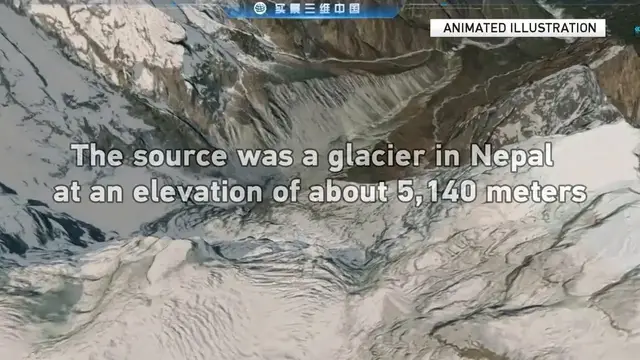
Shotlist Gyirong County, Xigaze City, Xizang Autonomous Region, southwest China - Aug 29, 2026 1. Various of machinery, rescuers in disaster relief operation; excavators, people working to clear blocked road Beijing, China - Aug 29, 2026 2. Various of animation illustrating how glacier collapse triggers mudslide Storyline Rescuers are stepping up their efforts on Saturday to clear roads leading to the mudslide-hit border port of Gyirong in southwest China's Xizang Autonomous Region, paving the way for more personnel to reach the core disaster zone and save lives. A fast-moving chain mudslide on Wednesday, triggered by a high-altitude glacier collapse on the Nepalese side, had left seven people dead and 554 others missing at Gyirong Port in Xizang on the China-Nepal border, as of 01:00 on Saturday. China immediately sent professional rescuers, firefighters and military forces to search for those missing. A total of 2,141 rescue workers and 86 specialists have arrived at the disaster-hit area, according to the latest update by the region's emergency management department. As of noon on Saturday, the rescue personnel had been working intensively to clear roads leading to the Gyirong Port. They deployed multiple excavators and loaders to remove debris and silt from the mudslide. The cleanup operation has progressed to within approximately 1.5 kilometers of the port, according to the rescuers. Rain on Friday night and Saturday morning noticeably increased the river's flow along the road. Rescuers were seen clearing the silt and conducting search-and-rescue operations to see if there's any hope of a miracle. The rescue workers said that after clearing the debris at one location, they would gather heavy machinery and specialized equipment to continue moving forward. A newly released animation by China Media Group illustrated how the glacier collapse on the Nepalese side triggered the massive mudslide that struck the Gyirong Port. This is a classic disaster cascading effect. At an elevation of 5,140 meters, a glacier spanning 620,000 square meters located in the upper reaches of the Cuojian River broke off. The collapsing ice rapidly swept up loose rock and debris along its path, flowing into the Guobaxiaqu River, a boundary river between China and Nepal, before joining the Donglin Zangbo River. As it gathered mass and momentum downstream, it evolved into a powerful debris flow that ultimately devastated Gyirong Port and downstream areas. Plunging nearly 3,300 meters in elevation over a 20-kilometer run, the mudslide traveled toward the border port at an average velocity of 50 meters per second. From glacier collapse to the moment it struck the port, only seven minutes elapsed, leaving local residents virtually no time to seek safety. Upon slamming into the Donglin Zangbo River, the high-speed debris flowed in two directions. One branch surged upstream for nearly three kilometers, while the other swept downstream into Nepal, affecting a swath of tens of kilometers. [Restrictions: No access Chinese mainland]
Show More Show Less