
Brazil: PowerChina’s Brazil solar plant spotlights BRICS cooperation amid 20th anniversary.
Sep 13, 2026
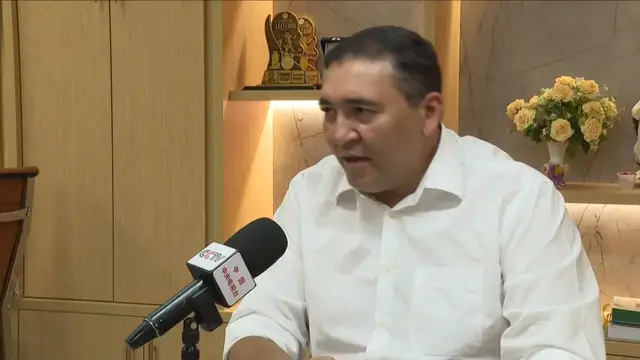
Shotlist Mauriti City, Ceará State, Brazil - Recent (CCTV - No access Chinese mainland) 1. Aerial shots of photovoltaic power plant project 2. Various of city view 3. Various of Vinícius Martins working 4. Various of workers 5. SOUNDBITE (Portugese) Vinícius Martins, technical assistant (starting with shot 4/ending with shot 6): "We have the opportunity to learn something new every day. This exchange of experience and knowledge is very valuable for us Brazilian employees. Of course, I believe it goes both ways. We can also contribute our own strengths. This project has changed my plans for my career development." 6. Various of workers 7. Various of street view 8. SOUNDBITE (Portugese) João Paulo Furtado, Mayor of Mauriti: "To work on the Chinese company's project, the local workforce received training and gradually grew into professional and technical personnel. In this process, a group of professional and technical talents was also cultivated." 9. Street view 10. PowerChina plant 11. Various of workers 12. Aerial shot of transmission towers 13. SOUNDBITE (Chinese) Diao Yanhua, Head, photovoltaic project in Mauriti (starting with shot 12/ending with shot 14): "We have fully leveraged PowerChina's advanced technological advantages and industrial chain strengths in engineering construction, new energy, power infrastructure and digital management, and combined them with Brazil's local resource endowments and huge market, achieving complementary advantages and win-win cooperation." 14. Aerial shot of photovoltaic power plant project 15. Various of street view 16. Various of customers at store 17. SOUNDBITE (Portugese) Guilherme Monteiro, store owner: "Our sales have grown by about 30 percent over the past two years. That increase is quite significant." 18. Various of street view 19. Aerial shot of city view Storyline Chinese energy giant PowerChina has built a 425‑megawatt photovoltaic plant in Mauriti, northeastern Brazil, delivering clean energy to the grid and creating local jobs, with the project highlighting the vitality of BRICS cooperation as the bloc marks its 20th anniversary. Over the past two decades, BRICS has grown into a major platform for cooperation among emerging markets and developing countries. Since its inaugural summit in 2009, the grouping has grown to 11 full members and 10 partner countries. China and Brazil, both BRICS members, have continued to deepen practical cooperation in green development and other fields in recent years. In Mauriti, Ceará state located in northeastern Brazil, a photovoltaic power plant invested and built by a Chinese company not only delivers clean energy to Brazil's power grid, but also boosts local economic development through talent training and industrial spillovers, sketching a promising picture of win-win cooperation and a shared green future. The Mauriti photovoltaic project has a total installed capacity of 425 megawatts. Its construction began in 2023, and the plant was put into operation in 2025. Vinícius Martins, born and raised in Mauriti, is among the local employees at the photovoltaic project. With few relevant jobs available in the city, he spent nearly three years at a machinery manufacturer before joining the project in 2023. Drawing on his expertise and initiative, he developed a data platform in his spare time that won recognition from the management team. Today, he serves as a technical assistant, contributing to the project’s operations while advancing his own career path. "We have the opportunity to learn something new every day. This exchange of experience and knowledge is very valuable for us Brazilian employees. Of course, I believe it goes both ways. We can also contribute our own strengths. This project has changed my plans for my career development," said Vinícius Martins, a technical assistant of the photovoltaic project. Locally, Vinícius is not the only employee who has improved his skills through the project. During construction, the Chinese side carried out more than 90 specialized training programs, cultivating a group of local professional and technical talents. "To work on the Chinese company's project, the local workforce received training and gradually grew into professional and technical personnel. In this process, a group of professional and technical talents was also cultivated," said João Paulo Furtado, Mayor of Mauriti. The changes brought by the project are not limited to talent training. The project has created a large number of local jobs and driven the development of related industries such as technical consulting and engineering construction. "We have fully leveraged PowerChina's advanced technological advantages and industrial chain strengths in engineering construction, new energy, power infrastructure and digital management, and combined them with Brazil's local resource endowments and huge market, achievin
Show More Show Less #news