Up next in 10



The U.S. Navy will put its first fleet of hypersonic-armed warships in Hawaii by 2030, marking a major strategic shift toward the Pacific.
Show More Show Less View Video Transcript
0:00
Just about every ship in the United States Navy that can shoot a hypersonic missile will be home ported in Hawaii by 2030
0:08
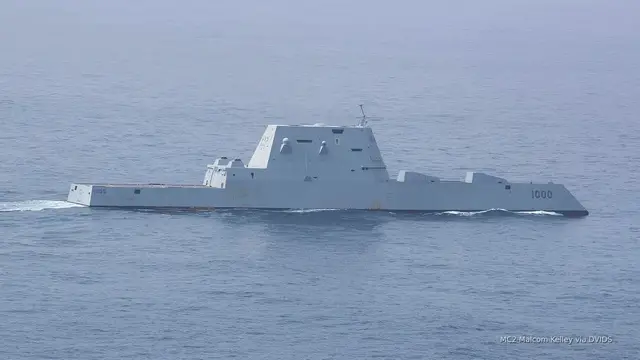
That includes all three Zumwalt-class destroyers and eventually some submarines. Will it be enough to make China think twice about trying to take Taiwan
0:20
I think it's a good step. I think it is because these hypersonic missiles
0:25
They right now don't have, and by they, I mean any nation, a defense against them
0:31
Not just because of their speed, up to Mach 22 according to the Russian's version
0:36
and even some 29s they say at that Mach 5, but also the maneuverability of the glide ones
0:43
That's retired Admiral and former U.S. Congressman Joe Sestak. At one time, he was the commander of the George Washington Carrier Strike Group
0:51
He says hypersonics are amazing weapons. Not only fast, but maneuverable. Hypersonics give militaries a chance to hit targets from very far away
1:01
before an enemy has time to react or reposition. And like the Admiral says, the missiles can maneuver at mock speeds
1:10
meaning most modern defenses cannot stop them. More on that later. Seastack says he glad to see the Navy sending the hypersonic armed Zumwaltz to Hawaii However since each boat can only carry 12 hypersonics apiece that isn exactly going to stop an invasion force should China launch one
1:30
If I was the commander of the Seventh Fleet, yes, I would like to have a couple hundred of those
1:37
Because assuredly, you are going to have miscues. Assuredly, the network is going to go down
1:44
and it might only go down in one place but not the other. So redundancy of this would be critical, I think
1:52
On that front, the Navy says it's also planning to homeport in Hawaii
1:56
an additional two, possibly three, Virginia-class attack submarines, each submarine outfitted to carry up to 12 hypersonic missiles
2:05
Work is already underway to upgrade the facilities at Joint Base Pearl Harbor-Hickam
2:10
to accommodate the Zumwaltz and the upgraded subs. The Navy's conventional prompt strike hypersonic missile does not have as cool of a name as the U.S. Army's Dark Eagle
2:22
but it's basically the same weapon, just made for maritime use. The U.S. Army showcased the Dark Eagle during this summer's talisman saber exercises in Australia
2:31
Which sort of brings us to the next point, when would the U.S. use its hypersonic missiles
2:38
Admiral Seastak says there basically two scenarios where he sees them as an option If China tries to put a blockade around Taiwan or if China launches an outright amphibious invasion with dozens maybe hundreds of smaller vessels
2:54
In either event, the U.S. will have a limited supply of the first strike hypersonics
3:00
So picking the right targets will be a key to victory. because really the strategic ones to take out will be those that potentially could be on the homeland of China
3:15
If they're going after Taiwan, that makes us the first to strike the other nation
3:21
So a decision is going to have to make here of what do you take out some of those strategic assets
3:27
like the ports from whence the small LCM-like vessels are coming, And the Chinese are building a brand new class of them, maybe 50 to 100 guys on each to go across that 100 kilometers of straits very quickly
3:40
You're not going to be able to pickle them all off with 36 of these. So do you take that port or do you aim it on the major surface combatants that they will have out there protecting them with some sort of shield around them, of which it's not going to be good enough probably for the next decade to protect against these
3:59
He's right. Currently there really isn a widely deployed effective defense against hypersonic weapons neither on the US side of the equation nor her adversaries But that cat game between missiles and missile defense could be evening out soon The Japanese are making significant strides on ship electromagnetic railguns
4:22
that fire bolts of metal. Israeli-based Rafael says its iron-beam laser system is ready for wide-scale deployment
4:31
and the company is working with Lockheed Martin to field a maritime version as well
4:36
And since Zumwaltz are the most technologically advanced ships in the U.S. fleet, Seastack says they are perfect candidates to field laser defense weapons, giving the once-blind Zumwaltz a formidable one-two punch
4:51
And that to have that missile defense capability that truly can handle anything, ballistics or hypersonics that they were envisioning, that would be an awesome capability to bring about along with the hypersonics that you're defending, not just these three ships, but for surety that carry a battle group
5:11
Regardless of how, when, or if the U.S. ever uses its hypersonics in a fight
5:17
one thing is for sure, they will not be the only weapons flying for freedom that day
5:23
Hypersonics will play a significant part of a layered battle plan, but they are just one part
5:29
For more reporting like this, download the Straight Arrow News app today
#news