live_tv
Livestream Starting Soon
00
Hours
:
00
Minutes
:
00
Seconds
Up next in 10



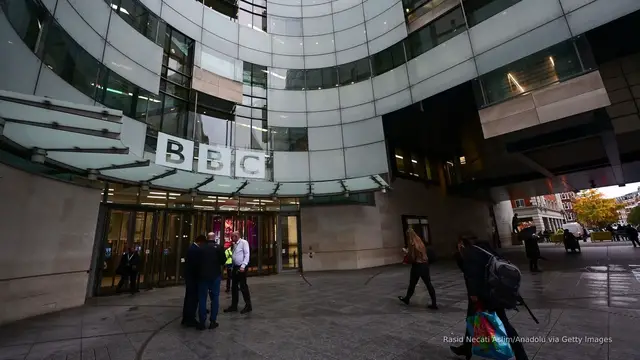
Former BBC executive Richard Sambrook unravels some of the controversy around the BBC's documentary edit of Trump's speech on Jan. 6, 2021.
Show More Show Less View Video Transcript
0:00
The BBC is facing controversy and legal action over an edit that it made to President Trump's
0:06
speech on January 6th in one of its documentaries. Now to better understand the inner workings
0:12
we're talking to a former BBC executive, Richard Sandbrook, who worked at the outlet for over 30
0:18
years. He says the edit was misleading and that it should have been caught. He also describes the
0:24
media landscape in the UK and identifies several parallels to the media in the US
0:32
I worked in the BBC for 30 years in total as a producer, program editor in news
0:41
and then in management. Sam Brook has decades experience working for the BBC
0:46
a news outlet facing scrutiny over an edit made to President Trump's January 6 speech
0:52
in a documentary that aired prior to last year's election. The BBC combining two sections of his speech into one seamless cut
1:00
We're going to walk down to the Capitol and I'll be there with you
1:06
And we fight. We fight like hell. And if you don't fight like hell, you're not going to have a country anymore
1:13
We're going to walk down to the Capitol. and we're gonna cheer on our brave senators and congressmen and women
1:24
and we fight we fight like hell in television in in daily news as well as in long form of course speeches and interviews have to be edited down and that custom and practice and perfectly normal
1:42
But there is a responsibility on the producers to make sure they don't misrepresent what's
1:48
being said. Sam Brooks says that in his experience, there should have been several people involved in
1:54
the project who could have flagged it. I think there were definitely a number of people who should have caught it
1:59
So there would have been a reporter. There would have been a producer
2:04
There would have been the picture editor, as we call them. Now, any one of those could have said, actually, this edit isn't right
2:11
On top of that, there would have been an executive producer who would have had oversight over them, who again should have caught it
2:18
After The Telegraph reported on what they called a misleading edit, a crisis at the BBC ensued
2:24
There were high-profile resignations, a lengthy apology from the BBC board chairman
2:30
and accusations of defamation by the White House. I also had a crisis at the BBC when I was head of news, much as has been happening this week
2:39
when I fell out with the British government over their case for the war in Iraq
2:46
But I didn't have to resign. I stayed on for another six years. So these crises do come and go
2:51
Like here in the US, Sandbrook says trust in the media is deteriorating
2:57
We seen trust in the media generally reduce much in line with with the way it has in the states and in other European countries certainly And there also a similar partisan divide in the media there where some outlets tend to report with a left and right political lean
3:13
Most of the newspapers are right-leaning and openly right-leaning. And broadcast in the UK is regulated to be objective and impartial
3:23
The Daily Telegraph is one of them. Daily Mail is the other obvious example. Rupert Murdoch's papers, The Times and The Sunday Times, perhaps as well
3:31
spend quite a lot of time attacking broadcasts for being too left-wing. Broadcasters believe they are
3:37
neutral. And that's where the tension generally lies. Similar to NPR and PBS here in the US
3:46
which are partially funded with federal or taxpayer dollars, Sam Brook explains the BBC
3:52
is funded by the public as well, but through a licensing fee. And that, he says, puts the
3:58
organization under even greater scrutiny. Everybody in the UK who has a TV has to pay a
4:05
license fee. It's viewed as public money and it is BBC is more accountable. It's not like a private
4:11
corporation where the owners will say, well, it's our company, we'll do what we want. And everybody
4:16
in Britain sort of thinks the BBC is part of them and then that they own a slice of it. So therefore
4:21
the kind of accountability is that much higher. Several media watchdog organizations rate the BBC
4:28
as being unbiased in the middle and in the center, according to Ad Fontes and Allsides ratings However Allsides writes bias reviews of this outlet have fluctuated between center and lean left results for years BBC online news has a center bias However BBC
4:47
sometimes displays some lean left bias indicators. The BBC, like any news organization, makes mistakes
4:54
sometimes. Every news organization makes mistakes sometimes. The important thing is to recognize
5:00
them and admit to them and put them right. And part of the problem this time is the BBC is very
5:06
slow to do that. But that's not to characterize all of its output as riddled with error. We
5:13
sometimes turn the whole picture upside down because there is one big error that everyone
5:17
leaps on and makes a great crisis out of. But all the rest of it is still carrying on to a very high
5:24
standard. And I think we need to sometimes keep that perspective. We'll, of course, continue to
5:29
follow any updates here. Thank you for watching our story and thank you to Richard Sandbrook for
5:34
taking the time to talk with us and for sharing his perspective on the issue. We've been following
5:40
the BBC story closely and there's another angle to this complex situation with the BBC's funding
5:46
The news outlet gets its funding through a public charter which is reviewed and renewed every 10
5:51
years. The current agreement expires in 2027. To learn more about how the BBC is funded and what
5:58
this upcoming charter review could mean for its future, download the SAN mobile app and search
6:04
BBC Funding. For Straight Arrow News, I'm Kara Rucker
#Law & Government
#news
#Politics
#Media Critics & Watchdogs