Up next in 10



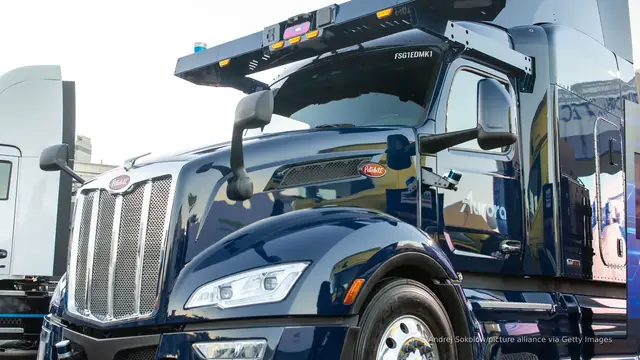
Aurora's first self-driving semi has been designated for deliveries in Texas and has already completed 1,200 miles.
Show More Show Less View Video Transcript
0:00
After years of trial runs and setbacks, Aurora says its first fully autonomous semi-truck has hit public highways in the Lone Star State
0:09
The company announcing Thursday the self-driving semi is making deliveries between Dallas and Houston and has completed roughly 12,000 miles so far
0:18
The Aurora CEO says he tagged along in the backseat for the truck's maiden ride
0:23
He called the experience the honor of a lifetime, adding in a statement
0:26
we founded Aurora to deliver benefits of self-driving technology quickly and broadly
0:32
Now we are the first company to successfully and safely operate a commercial driverless trucking service on public roads
0:40
The truck features sensors capable of tracking the length of four football fields and employs a high-tech computer system
0:47
The company says it's currently operating a single autonomous truck for deliveries, but plans to add more later this year
0:53
Aurora believes its new technology will be a solution to a current shortage of truckers and high turnover rates, as well as rising costs of operation
1:02
The company says it could also reduce labor costs and improve safety on highways
1:06
After four years of supervised testing, the company delivered more than 10,000 loads to customers across roughly 3 million miles with its autonomous vehicles
1:15
The breakthrough comes amid setbacks implementing driverless trucks on the open road
1:19
They were once thought to be introduced before robo-taxis and autonomous private vehicles
1:25
given the open nature of highways as opposed to city and residential streets
1:29
Aurora anticipated rolling out its new autonomous trucks last year, but delayed the deployment to this year
1:35
citing a need to update its self-driving system for surface street driving and construction sites The industry has faced obstacles in terms of technology setbacks and regulations Public opinion polls show nearly 70 percent of Americans are afraid of self
1:50
cars in the wake of some high-profile incidents involving companies like Tesla and Cruise
1:55
Cruise faced legal trouble after one of its robo-taxis hit and injured a woman in San Francisco
2:00
in 2023. Self-driving semis also face obstacles from regulations, but these barriers appear to be
2:07
easing. California regulators are currently considering a proposal allowing autonomous large pickup trucks of more than 10,000 pounds to be tested on public roads. The California
2:17
Department of Motor Vehicles says self-driving trucks fitting this criteria are already being
2:22
tested in states like Texas, Arizona, and Arkansas. The proposed rules are now in a public comment
2:28
period ending in June. Currently, California is the only state banning self-driving heavy-duty
2:33
trucks. The new proposal is reportedly likely to face opposition from safety advocates and labor
2:39
unions for commercial truck drivers who are worried about job loss due to semi-automation
2:44
and they also raise concerns over the technology's risk to public safety
2:48
California lawmakers passed legislation in 2023 mandating people aboard self-driving semi-trucks, but the bill was vetoed by Governor Newsom. He justified his veto saying more regulation was not
3:00
necessary because existing rules for self-driving vehicles were adequate. The Teamsters Union
3:05
supported the bill. Companies like Aurora often use states like Texas and California for testing
3:10
autonomous technology. California-based autonomous trucking company Gattic currently completes short-haul deliveries for major retailers such as Walmart. For more unbiased updates
3:21
download the Straight Arrow News app or go to san.com
#Cargo Trucks & Trailers
#Motor Vehicles (By Type)
#Off-Road Vehicles
#Trucks, Vans & SUVs
#Vehicle Shows
#news
#Autonomous Vehicles
#Vehicle Specs, Reviews & Comparisons
#Commercial Vehicles