Up next in 10

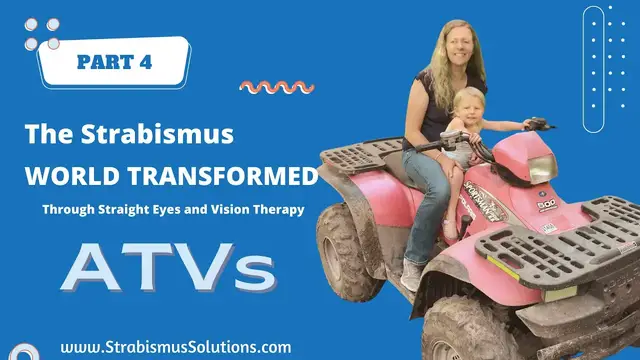
PART 4: ATVs The Strabismus World Transformed Through Vision Therapy and Straight Eyes
Dec 14, 2022


This is the fourth video in a series helping to explain the challenges of living with strabismus and how those challenges can be overcome through vision therapy and learning to use both eyes and straighten them.
Mastering Peripheral Course: https://learn.strabismussolutions.com...
Website:
https://strabismussolutions.com
Show More Show Less View Video Transcript
0:00
Hi, my name is Melissa and 36 years ago I was born with strabismus, which means that my eyes
0:10
weren't pointing in the same direction. So for the first 32 years of my life, I was only using one eye
0:17
and I didn't have any depth perception. Through years of vision therapy and strabismus surgery
0:22
my eyes are pretty much straight now and I'm able to use them together to have some pretty
0:27
amazing depth perception. This whole video series is all about helping you see the transformation
0:33
that I've experienced going from a 2D to a 3D world. It is so amazing and I'm excited to share
0:41
it with you. Let's jump in. Today I'm going to talk to you all about how driving an ATV has
0:50
changed since going through vision therapy and learning to use my eyes together
0:54
when I used to drive four wheelers or dirt bikes or any kind of ATV before I
1:01
learned to use both eyes I definitely felt like I had to go really really
1:07
slowly and this is for two different reasons one because I couldn't really
1:11
tell where the bumps were and I didn't know that this was a problem of course
1:15
at the time but now that I can see the bumps I recognize it just divots or
1:20
potholes different things that you need to slow down for you can speed up for
1:25
and I just didn't know so I always will just go super super slow and it was
1:30
really scary um also when I was watching I would because I was trying to see the
1:36
terrain I was staring down right in front of the four wheeler like in this picture you can see that that this is kind of what my focus would be I just looking right at what the very next thing in front of my tires that I going to be hitting
1:50
because, you know, even if you're only using one eye, your depth perception is going to still
1:55
you still have some depth perception and it's better up close than it is far away. And so I definitely was keeping my vision very focused on what I was going to
2:04
what terrain I was going to hit next. so this you know you might be a parent and be like hey maybe my child will be safer driver because
2:13
they are going really slow but what would actually happen is that I was so focused on what was
2:20
happening right in front of me that I wasn't paying at all attention to like the person that
2:26
was driving ahead of me down the trail or a turn in the trail and so there's so many times where I
2:31
was like not on the trail right or I would like jerk up because I realized I wasn't quite in the
2:35
right spot and I would twist it's like a recipe for disaster I'm so lucky that I never gotten any
2:41
terrible four-wheeler accidents that's another video but um it definitely was dangerous because
2:49
I didn't have a peripheral view and I was very um hyper focused on what was close up so fast
2:57
forward and I think last summer, maybe two summers ago, I was in the middle of vision therapy. I think
3:03
it was last summer and I went on a four wheeler ride and I was doing my old way because it's still
3:10
the old habit, right? Like I don't automatically just have these amazing visual habits. I still
3:14
had the habit of looking right in front of where the four wheeler was. And I remembered like, oh
3:19
I wonder if I can use my vision therapy skills for this And so I started experimenting with some different peripheral techniques There a lot of different peripheral techniques that I use
3:32
to expand what I'm seeing. You can learn more about that at learn.strabismasolutions.com. I
3:37
have a whole course all about peripheral. But while I'm driving this ATV, I thought, okay
3:42
I am going to use divided awareness and I'm going to keep, I'm going to look at the four
3:49
wheeler in front of me. That's where my central is going to be focused, but I'm also going to be keeping the road
3:54
in my peripheral view. So I'm going to be keeping that and the trees around
3:57
So I was kind of dividing where my eyes were looking. I also was trying to just judge those distances
4:05
You can use egocentric awareness to see how far are you away from the next driver and
4:10
what is that distance and really feel the space. I pictured the space behind me. I just started using
4:16
these different techniques that I use in vision therapy and each of these peripheral techniques
4:20
helps you see space better but it also helps you engage both eyes which is just going to
4:26
make your depth perception that much better and I was amazed as I was driving down this trail
4:32
it was so much more fun. I felt so much more safe like a lot of times I realized I was just really
4:40
nervous. Like, I hope I got to go fast enough to keep up with the group. I don't want anyone
4:44
waiting for me. And I was always nervous. And just, it was like a very tense thing for me. It was not
4:49
fun. I didn't want to go for a four wheeler ride for fun, but it became really fun. I all of a
4:55
sudden was like, Oh, I can see what the terrain is. Um, that depth perception helped me see that
4:59
I could see the distance between me and the next person I could see whether we going up and down and I could just enjoy the ride instead of stressing about if I was going to crash or not So I just made it so much more easy and so much I didn even
5:13
have to think about it as much. Once I started like reminding myself of all of my vision therapy
5:17
habits, it like clicked my brain into gear and it was like, oh yeah, we know how to see with good
5:22
habits. We've learned all these techniques and skills. We can apply them to this situation
5:27
and so it it made it way easier way more fun I could go faster and it was safer I swear it was
5:37
so much safer even though I probably was going a little faster and everyone didn't have to wait for
5:42
me I felt so much more in control of the machine and so much more aware of what was happening around
5:47
me I didn't have any more of those like times where I would jerk up and be like oh no and have
5:53
to hurry and turn it to try to see. So I saw a much more expanded view. Everything about it
6:01
is so much more fun. So I don't get to drive ATVs a ton, but when I do, it definitely helps to have
6:08
depth perception. You can find me on Instagram at strabismus2stereopsis or over at my website
6:16
strabismusolutions.com. I have a lot of different exercises. I have a course that I offer and you
6:23
You can even do a one-on-one consultation with me to talk about you and your progress
6:27
and how you can achieve these same results. I'd love to meet with you
6:32
and keep your eye out for more videos. There's gonna be one every Friday
6:36
until I run out of areas where I've seen huge changes from gaining 3D vision
6:42
Have a good one and I'll see you in the next video
#Health
#Vision Care
#Outdoors