Up next in 10

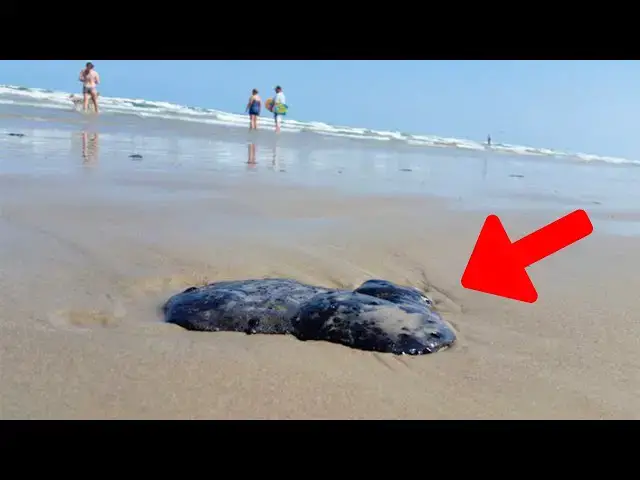
Mysterious Gray Mass Found on Beach, Scientists Identify Rare Creature
You Can Also Watch:
-Man Walks 20 Miles To Work Until One Day Cop Follows Him And Sees Why
https://www.youtube.com/watch?v=AHlFcQ0OF8g
#did_you_know #viral_stories
Show More Show Less View Video Transcript
0:00
mysterious grain Mass found on beach
0:03
scientists identify rare creature
0:07
in 2019 a gray Mass was discovered off
0:10
the coast of Santa Barbara coal oil
0:12
Point Reserve in Southern California
0:14
unfortunately there were initially
0:16
difficulties in identifying the creature
0:18
the only characteristic was the
0:21
extraordinary size of the strange figure
0:23
after the images spread on social media
0:25
marine biologists came to the rescue
0:27
what was it really about
0:30
a seven foot long 600 pound creature
0:33
that washes up on the beach cannot be
0:35
ignored especially by the staff at
0:37
Southern California's coal oil Point
0:39
Reserve at first they had no idea what
0:42
it could be well that's not entirely
0:44
true they recognized some similarities
0:46
with other creatures but frowned as they
0:48
approach the thing what was the sea
0:51
creature and how did it end up on a
0:52
California beach at first experts at the
0:56
cool oil Point Reserve thought it was a
0:58
sunfish the type of fish is after all
1:00
one of the greatest freshes on Earth
1:03
some of them can even weigh up to two
1:04
thousand pounds and while the gray Mass
1:07
might not be that far from the Sunfish
1:09
some aspects weren't what they
1:11
envisioned creature was big enough to be
1:13
a sunfish but was it really
1:16
coal oil Point Reserve employees found
1:19
the creature off the coast of Santa
1:20
Barbara California in 2019.
1:23
the creature had already passed away
1:25
right at the feet of the
1:26
environmentalist who had made it their
1:28
life's work to study such creatures
1:31
affected by the University of California
1:32
Santa Barbara and is one of the best
1:35
examples of coastal environments
1:37
hopefully researchers would soon have an
1:39
idea of what the animal was
1:41
the reservoir faced the Pacific Ocean so
1:44
there's a large amount of sea creatures
1:45
fauna and vegetation anyway researchers
1:49
have no shortage of incredible animals
1:51
to identify in the depths but what kind
1:53
of fish could it be the intern who
1:56
spotted the animal said it just looked
1:58
like a gray Mass this was true at least
2:01
until he and the other staff got closer
2:03
to see the body Jessica Nielsen a
2:06
naturalist told press at the University
2:07
of California Santa Barbara that she was
2:10
shocked at first nothing like this had
2:13
ever washed up in the reservoir unlike
2:15
other animals this one had strange
2:17
characteristics that she couldn't place
2:19
in an interview she said this is
2:22
definitely the most remarkable organism
2:23
I've ever seen washed up after all I've
2:26
been working here for four whole years
2:28
it seems to be getting really mysterious
2:31
after posting the strange creature on
2:33
the reserve's Facebook page they waited
2:35
to see if anyone online might have an
2:37
idea eventually biologist Thomas Turner
2:40
showed interest in the mystery as an
2:43
evolutionary biologist he would surely
2:45
have an answer to the big question
2:46
wouldn't he unfortunately he too was as
2:50
speechless as Nielsen he even brought
2:52
his wife and son to see the thing for
2:54
himself on the beach
2:55
during an interview with CNN in February
2:58
2019 Turner said it's very unusual fish
3:01
that's for sure because it doesn't have
3:04
a caudal fin all of its teeth are fused
3:06
together so it kind of just as a round
3:09
opening for a mouth in addition
3:11
reference must also be made to the size
3:14
of the animal
3:15
Turner signaled the incredible size by
3:17
spreading his arms during the interview
3:19
he said the animal was definitely six
3:21
feet long just unbelievable
3:24
with no tail fin and impossibly large
3:26
body and 600 pounds the coal oil Point
3:29
reserves research team concluded the
3:32
animals must actually be a large Sunfish
3:34
also known as a mola Mola the team
3:37
posted pictures of their find on
3:39
inaturalist a social media platform for
3:41
environmentalists to see if anyone else
3:44
had any opinions it was again confirmed
3:46
it was a sunfish they had found
3:48
all was not as it seemed though a fish
3:51
expert at the South Australian Museum
3:53
rail Foster had a different opinion and
3:56
throughout the theory the team had put
3:58
forward in California
3:59
Foster looked at the animal and said it
4:01
wasn't a normal sunfish
4:03
actually thought that this animal
4:04
probably didn't correspond to an already
4:07
documented fish species with this new
4:09
thought he turned to someone who
4:11
probably knew the answer to the mystery
4:13
unsure if his opinion was right he
4:15
decided to contact Marianne nyogard a
4:18
marine biologist
4:19
after writing her reply in an email and
4:22
a letter with photos attached he waited
4:24
and hoped for a reply soon
4:26
a hint at this point would have been
4:28
extremely useful unfortunately she
4:30
wasn't particularly moved by the
4:31
pictures and said she didn't have a
4:33
solution to this problem either the
4:35
creature remained unidentified
4:38
Niagara did not give up directly on
4:40
identifying the animal she asked for
4:42
better visual support to be sure of
4:44
things during an interview with CNN she
4:47
said the images just weren't very clear
4:49
so I was reluctant she now had a new
4:52
task she wanted to find out with Foster
4:54
what creature was on the shore of the
4:56
reserve so she turned to Nielsen and
4:59
Turner for better higher quality images
5:01
Nielsen and Turner were more than
5:03
willing to go back and snap some better
5:05
photos so the scientists could form a
5:07
better opinion but then they encountered
5:09
a new problem when the two came to the
5:11
beach the creature was no longer to be
5:13
found
5:14
a few days had passed since the
5:16
discovery and the tide had come and
5:18
taken the creature back with it but they
5:20
wouldn't give up that easily
5:22
search was well structured Nielsen and
5:25
Turner started on opposite sides of the
5:27
beach and approached the middle maybe
5:28
they'd find the animal there again they
5:31
had to try and they were right
5:33
just a little way from where they
5:34
originally found the animal lay the gray
5:36
mass now they managed to take some
5:39
better quality pictures and send them to
5:41
The two scientists with any luck the
5:43
pictures would help with the answer
5:45
while taking the pictures Nielsen and
5:47
Turner noticed something about the
5:49
mysterious creature they saw something
5:51
they hadn't noticed before they
5:53
discovered some characteristics that
5:55
could potentially be particularly
5:57
helpful in the case
5:58
now all they had to do was forward the
6:00
images to Foster and niaguard felt like
6:03
they were about to have a breakthrough
6:04
what sea creature did they find soon
6:06
they'll know for sure
6:08
in 2019 Nielsen told the University of
6:11
California Santa Barbara website the
6:13
current it was really exciting to get
6:15
the images because I might be able to
6:17
help with this unusual discovery that
6:19
would be fascinating the excitement was
6:21
really unbelievable
6:23
as soon as the photos got into
6:24
niaguard's hands the animal could be
6:26
identified niaguard told CNN that she
6:29
almost fell out of her chair when she
6:31
realized what the scientists had found
6:32
there after the second round of photos
6:35
taken by Nielsen and Turner arrived
6:37
niaguard actually managed to identify
6:39
the creature instead of a normal Sunfish
6:41
it appeared to be a mola tecta also
6:45
known as a hoodwinker fish
6:47
interestingly in 2017 it was niaguard
6:50
herself who was allowed to determine the
6:52
name and species of this fish there are
6:55
so many different Sunfish species that
6:57
it can sometimes be difficult to
6:58
identify them exactly Sunfish were first
7:01
discovered in 1758 at that time however
7:04
it was thought that there was only one
7:06
ordinary Sunfish and there was no
7:08
mention of the many species the
7:10
discovery was made later
7:12
only much later was a new species of
7:14
sunfish discovered namely in the
7:16
southern hemisphere off the coast of
7:18
Australia New Zealand South Africa and
7:20
other countries only niaguard herself
7:23
decided to devote herself to the
7:24
mysterious creatures
7:26
during an interview with CNN niaguard
7:28
said the hoodwinker mostly goes
7:30
unnoticed because nobody knows the
7:32
difference there's a long history of
7:34
confusion with the Sunfish family this
7:36
fish just manages to never be cited it's
7:39
usually just mistaken for a mola mola
7:41
but it's actually a molotecta at First
7:44
Niagara hadn't thought of the mole
7:46
attacked because it's not normally found
7:48
anywhere near the United States
7:51
in an interview with the guardian
7:52
niaguard explained I've only spotted the
7:55
moloteka in cold water so far it has to
7:58
be said that it's really extraordinary
7:59
for this fish to suddenly approach
8:01
California
8:03
she went on to explain which waters the
8:05
Ebola teca actually likes to be in
8:07
definitely in the southern hemisphere
8:09
however it's not entirely unlikely that
8:12
fish will also seek out new territories
8:14
it's just exciting for the scientific
8:16
community
8:17
niaguard told CNN the discovery of the
8:20
species is actually the very first in
8:22
America and indeed in the northern
8:24
hemisphere it's obviously very exciting
8:27
for a marine biologist
8:29
in an interview with the current Niagara
8:30
described her enthusiasm at being able
8:33
to identify the fish
8:35
tekka was only recently discovered and
8:37
there's still so much to learn about
8:39
this species I'm so glad we were able to
8:41
help researchers identify the animal
#Wildlife
#Biological Sciences