live_tv
Livestream Starting Soon
00
Hours
:
00
Minutes
:
00
Seconds
Up next in 10

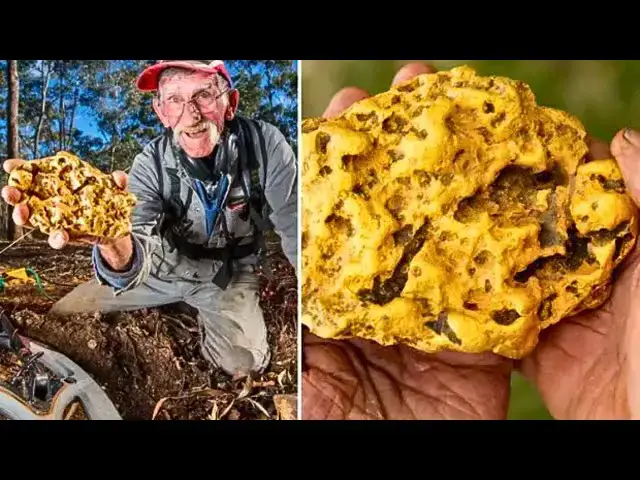
Man Found Giant Stone of Gold At Park , Only To Realize Later it's More Valuable Than Gold
Apr 13, 2023
Man Found Giant Stone of Gold At Park , Only To Realize Later it's More Valuable Than Gold
You Can Also Watch:
-Man Walks 20 Miles To Work Until One Day Cop Follows Him And Sees Why
https://www.youtube.com/watch?v=AHlFcQ0OF8g
#did_you_know #viral_stories
Show More Show Less View Video Transcript
0:00
Dave hole was no stranger to treasure
0:02
hunting while he had yet to find
0:04
anything of real value it didn't stop
0:06
him from exploring new terrain with a
0:08
metal detector and his tools and on one
0:11
fateful day as he walked through
0:13
maryborough Regional Park he discovered
0:15
something that would ultimately change
0:17
his life before we start can we get this
0:20
video to 1 000 likes please hit the like
0:23
button and subscribe to the channel big
0:26
rock in 2015 Dave stumbled upon this
0:30
strange looking Rock while going about
0:32
his normal route he couldn't quite put
0:34
his finger on it but he knew there was
0:36
something strange about it besides how
0:38
surprisingly heavy it was
0:40
he had a hunch but he didn't want to get
0:42
his hopes up hole took what he thought
0:44
was gold or home and got to work trying
0:47
to break it apart he tried everything he
0:49
could but the thing was incredibly
0:51
sturdy he even hit it with a
0:54
sledgehammer which failed to scratch its
0:56
surface stumped hole stored The Rock in
0:59
his home for the next four years
1:00
planning on one day getting all the gold
1:03
out of it it wasn't until 2019 that he
1:07
stuck it in his backpack and marched
1:09
over to the Melbourne Museum
1:11
there whole Med geologist Dermot Henry
1:13
the person responsible for testing
1:16
samples that people bring into the
1:18
museum in particular a large part of his
1:21
role involves examining possible
1:22
meteorites to test their authenticity
1:25
of course testing the specimens was
1:27
really more of a formality than anything
1:30
even after working at the museum for 37
1:32
years and testing thousands of samples
1:35
only two of those had ever turned out to
1:37
be real meteorites this is why when Mr
1:41
Hull walked into his office and hoisted
1:43
a large red rock out of his backpack the
1:46
scientists did a double take
1:48
this particular artifact was very
1:50
promising Henry thought it had this
1:52
sculpted dimpled look to it he remarked
1:55
that's formed when they come through the
1:57
atmosphere they are melting on the
1:59
outside and the atmosphere sculpts them
2:02
could it really be true that this was
2:04
the genuine thing
2:06
upon lifting The Rock Henry was even
2:08
more encouraged it was way heavier than
2:11
it should have been for a normal rock
2:12
found on Earth especially considering
2:15
its size generally speaking meteorites
2:18
tend to be heavier due to dense deposits
2:20
of iron and nickel found inside of them
2:23
all signs were pointing to Mr hole's
2:25
Discovery being something very special
2:27
indeed
2:28
lo and behold when the tests were
2:30
completed both Henry and whole were left
2:33
in absolute amazement
2:35
the Red Rock was a meteorite and even
2:37
more fascinating it was an impressive
2:39
4.6 billion years old which carries
2:42
serious implications
2:44
the geologist cut out a cross-section of
2:46
the meteorite with a very powerful tool
2:49
known as a diamond saw
2:51
what they beheld was more awe-inspiring
2:54
than almost anything the scientists had
2:56
seen in his years of working
2:58
the cross section revealed beautiful
3:00
silver droplets inside but not just any
3:03
droplets these have been formed billions
3:05
of years ago crystallized from the cloud
3:08
of incredibly hot gas that formed our
3:10
solar system as we know it
3:12
the name of the meteorite Mr Holt would
3:15
soon learn was afod chandried H5
3:18
crondroid had a highly interesting
3:21
origin story much more intriguing than
3:23
any gold deposit could ever hope to be
3:26
4.6 billion years ago the universe was
3:29
much different than it is today
3:31
it was comprised of tons of these same
3:33
rocks chondrite orbiting around the Sun
3:36
looking at this meteorite was almost
3:38
like looking at the origins of life
3:40
itself eventually these chunks of
3:43
chondrite would cluster together forming
3:45
Earth as well as the other rocky planets
3:48
luckily some of the fascinating material
3:50
was still left over the majority of the
3:53
remaining chandri now sits in the belt
3:55
between Jupiter and Mars every now and
3:58
then two pieces of it will collide
4:00
leading to a one-of-a-kind event
4:02
when this Celestial Collision happens
4:04
the impacts sends shards of the
4:07
otherworldly Rock hurtling towards Earth
4:09
this is how the piece of chandried that
4:11
was eventually discovered by Mr hole
4:13
began its Journey
4:15
due to the lack of weathering it's
4:17
likely that this specific piece had only
4:19
been on Earth for less than 200 years
4:21
this makes it likely that someone had
4:23
actually seen it fall
4:25
sure enough a look at local newspaper
4:27
records from the time almost confirmed
4:29
this Theory as residents of maryborough
4:32
in the 1950s report having seen Balls of
4:35
Fire shooting across the night sky
4:38
and modern experts are curious if Dave
4:40
Wills find could be related to an
4:42
extraterrestrial Discovery in a nearby
4:44
town
4:45
in September 1969 the village of
4:48
Murchison in Victoria Australia was loud
4:51
with talk about a mysterious meteorite
4:54
flying through the sky of course the
4:57
space Rock spoke for itself when it
4:59
blared into the atmosphere with an
5:01
otherworldly Roar after the meteorite
5:03
collided with Earth people spread far
5:06
and wide to search for its remnants
5:08
the Murchison Community calmed the land
5:11
cooperatively and systematically
5:13
desperate to get a glimpse of some
5:15
extraterrestrial crumbles the residents
5:17
found a multitude of spaceships most of
5:19
them being a charcoal gray color and
5:21
exhibiting obvious indents as if made
5:24
out of malleable clay
5:26
but there was one more feature that
5:27
stood out to the Rock foragers for one
5:30
reason or another The Rock smelled and
5:33
it was the kind of stench that you
5:34
couldn't easily place where the smell
5:36
came from and it lingered the rock
5:38
fragments were described as snow like
5:40
tar or methylated Spirits similar to
5:43
denatured alcohol it was all too odd
5:46
while some had to practically hold their
5:48
breath others were unbothered by the
5:51
meteorite set
5:52
professors and scientists everywhere
5:55
couldn't wait to get their noses near
5:56
the stuff their snouts were practically
5:59
itching after David Diemer a research
6:02
professor of biomolecular engineering at
6:04
the University of California Santa Cruz
6:07
crushed up a marble-sized piece of the
6:09
celestial Rock
6:11
he wrote that he noticed a strange
6:13
penetrating odor Rose from the mortar
6:15
simultaneously Smoky Dusty and sour
6:19
when meteorites make their way to Earth
6:20
they bring loads of information with
6:22
them regarding star formation and other
6:25
miscellaneous secrets of the universe
6:28
they're like alien carrier pigeons but
6:31
to get to the bulk of set information
6:32
researchers are often forced to burst
6:34
meteorites open like pinatas
6:37
scientists from the University of
6:39
Chicago The Field Museum and other
6:41
organizations that worked on the 2020
6:43
paper searched for Pressler grains which
6:46
are minerals older than our sun talk
6:49
about Ancient Grains by analyzing these
6:52
pre-solar carbs just kidding the
6:54
researchers can configure their
6:56
approximate age
6:57
they crushed the space Rock to access
7:00
that valuable pre-solar silicon carbide
7:03
and proceeded to pour the fine powder
7:05
into test tubes
7:07
The Toots were transported between
7:08
liquid nitrogen and hot water baths and
7:11
bombarded with some really nasty acids
7:14
as Jennica Greer a graduate student at
7:17
the Field Museum and the University of
7:19
Chicago and a co-author of the study put
7:22
it their findings showed that some of
7:24
the prezzler grains belonging to the
7:26
stinky Murchison meteorite dated back to
7:29
between five and a half and seven
7:30
billion years old but after putting the
7:33
rock through the the freeze thaw cycle
7:35
something changed Jennica Greer recalls
7:38
catching a whiff of rotten peanut butter
7:40
as if there was a decaying PB energy
7:42
sandwich in the room
7:44
she suspected the rocks change in Aroma
7:46
occurred as it lost volatile compounds
7:49
over time later materializing when the
7:52
grinding of the rock unveil new surfaces
7:55
there are trap cases and Isis in the
7:57
meteorite that evaporate and slowly
7:59
diffuse out Jennica said
8:02
we all know how smelly trapped gas can
8:04
be
8:05
a piece of the Murchison meteorite that
8:07
resides at the Murchison and District
8:09
Historical Society no longer has its gag
8:12
inducing smell
8:14
our sample has been exposed to air for
8:16
too long it now only has a vague earthy
8:19
smell said k-ball
8:21
the Murchison meteorite isn't the only
8:23
pungent carbonaceous chandride as the
8:26
researchers also got to sniff ugwozarkus
8:28
which was named after the Costa Rican
8:31
Town it crashed in Circa 2019
8:33
nicknamed The Cosmic my ball
8:36
this space Rock was too made of organic
8:39
compounds like amino acids though many
8:42
said the cosmic mud ball stank of cooked
8:44
brussels sprouts or compost Jennica
8:46
strangely picked up the smell of vanilla
8:49
you expected something more Terry but it
8:51
has a sweet smell she said
8:54
to clarify these brainy scientists and
8:57
researchers didn't set out to merely
8:59
play scratch and sniff with meteorites
9:01
but their noses simply couldn't resist
9:03
the opportunity
9:05
as Jennica Greer said scientists are
9:07
humans too sometimes our noses get the
9:10
best of us