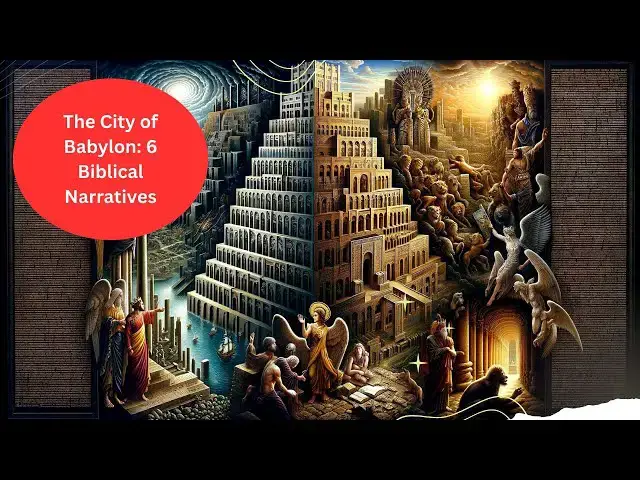

The City of Babylon: 6 Biblical Narratives
Apr 16, 2024
The city of Babylon, a major city of ancient Mesopotamia, holds a prominent place in biblical narratives, symbolizing various spiritual and moral themes across different books of the Bible. Here are six notable narratives or references related to Babylon in the biblical context:
Visit: https://scripturalthinking.com
or subscribe my YouTube channel https://www.youtube.com/@scripturalthinking
Tower of Babel (Genesis 11:1-9): This story is perhaps the most famous association with Babylon in the Bible. According to Genesis, humanity, speaking a single language, gathered in the land of Shinar (associated with Babylon) and decided to build a city and a tower tall enough to reach heaven. God, observing their pride and unity in defiance of His command to spread out and populate the earth, confounded their speech and scattered them across the world. The Tower of Babel narrative is often interpreted as an explanation for the diversity of languages and cultures in the world.
The Conquest of Judah (2 Kings 24-25): Babylon, under King Nebuchadnezzar II, invaded Judah, leading to the destruction of Jerusalem and the Solomon's Temple, and the exile of the Jewish elite to Babylon. This event, known as the Babylonian Exile, was a pivotal moment in Jewish history, leading to significant theological and cultural transformations among the Jewish people.
Daniel in the Lion's Den (Book of Daniel): The Book of Daniel contains stories and visions from the time of the Jewish exile in Babylon. Daniel, a Jew, becomes a trusted administrator under various Babylonian and Persian kings but faces persecution, including being thrown into a lion's den for his refusal to renounce his faith. God miraculously saves him, demonstrating His power and the rewards of faithfulness.
The Writing on the Wall (Daniel 5): Another famous narrative from the Book of Daniel is the story of Belshazzar's feast, where a mysterious hand writes a message on the palace wall, which Daniel interprets as foretelling the fall of Babylon. That very night, the city is conquered by the Medes and Persians, marking the end of Babylonian empire.
The Fall of Babylon (Jeremiah 50-51; Isaiah 13-14): The prophets Jeremiah and Isaiah prophesy the fall of Babylon, describing it as divine retribution for its arrogance, idolatry, and oppression of other nations, including Israel. These prophecies were fulfilled when the Persian king Cyrus the Great captured Babylon in 539 BC.
Babylon the Great (Revelation 17-18): In the New Testament, Babylon is used symbolically in the Book of Revelation to depict a city of great wealth, immorality, and opposition to God. "Babylon the Great" is described as a prostitute riding a beast, intoxicated with the blood of the saints. Her eventual destruction symbolizes the triumph of God's kingdom over worldly powers and corruption.
These narratives depict Babylon not just as a historical city but also as a symbol of human pride, rebellion against God, and moral decay, while also highlighting themes of judgment, deliverance, and the sovereignty of God over the affairs of nations.
Show More Show Less #History