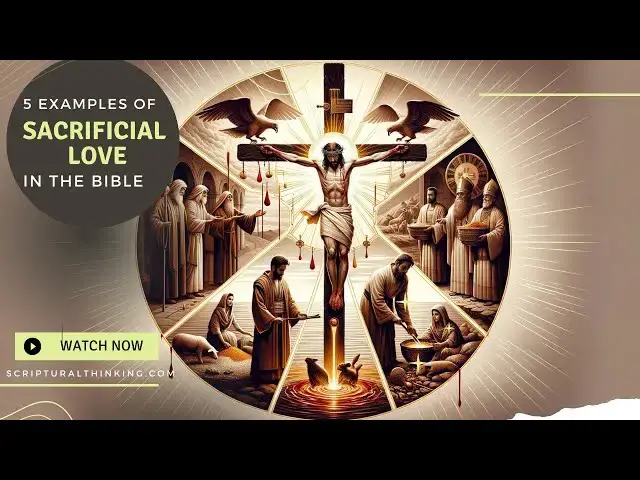

5 Ways Love is Expressed Through Sacrifice In The Bible
Apr 16, 2024
The theme of love expressed through sacrifice is deeply woven into the fabric of the Bible, illustrating how acts of selflessness and surrender are central to understanding biblical love. Here are five ways in which this theme is exemplified:
Visit: https://scripturalthinking.com
or subscribe my YouTube channel https://www.youtube.com/@scripturalthinking
The Sacrifice of Jesus Christ: The most profound example of love through sacrifice is found in the New Testament, where Jesus Christ's crucifixion is depicted as the ultimate act of love. According to John 15:13, "Greater love has no one than this: to lay down one’s life for one’s friends." Jesus' willingness to suffer and die on the cross for the sins of humanity embodies this principle, offering redemption and eternal life to believers.
The Binding of Isaac (The Akedah): In the Old Testament, Abraham's faith is tested when God asks him to sacrifice his son Isaac on Mount Moriah. Although God stops Abraham at the last moment, this story in Genesis 22 illustrates profound faith and willingness to make an ultimate sacrifice out of obedience and love for God. It is seen as a foreshadowing of the sacrifice of Jesus Christ, highlighting the theme of substitutionary atonement.
The Sacrifice of the Paschal Lamb: The Passover story in Exodus 12 details the Israelites marking their doorposts with the blood of a lamb to spare their firstborn from the final plague. This act of sacrifice symbolizes deliverance and redemption. The lamb’s blood, a protection against death, prefigures the sacrifice of Christ, whose blood delivers believers from spiritual death.
The Offerings and Sacrifices Under Mosaic Law: The Levitical laws outlined in Leviticus include various offerings and sacrifices to atone for sins, express gratitude, and maintain a covenant relationship with God. These acts, which often involved the sacrifice of animals, grains, or other goods, were expressions of love, obedience, and dedication to God, acknowledging human dependency on divine grace for forgiveness and sustenance.
Show More Show Less