Up next in 10


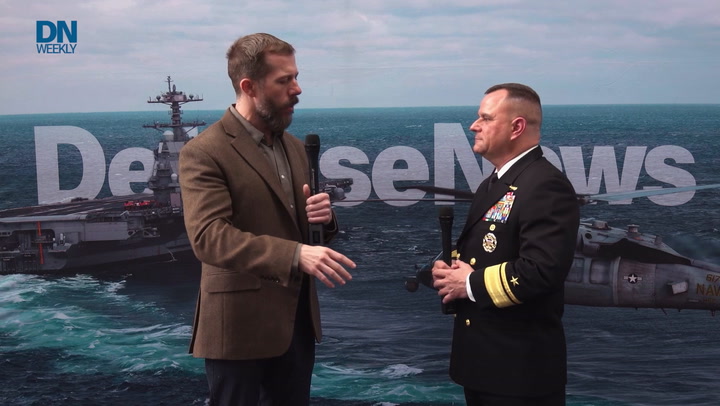
Facing issues in supply lines with an enemy as sophisticated as Iran, the Military Sealift Command is fast learning lessons in contested logistics.
Show More Show Less View Video Transcript
0:00
Rear Admiral Nicholson, I'm glad to have you here at Sea Air Space 2026
0:05
Obviously wanted to go into what you're seeing some at the show itself first and what some of the displays or just the themes that you're noticing that tie into Military Sealift Command's current mission and the future of the command itself
0:20
Thanks, J.D. It's really great to be here at Sea Air and Space this year. One of the things that's kind of unique, I think, this year, maybe between as opposed to years in the past, is the Maritime Action Plan and the big focus on the maritime industry writ large, which is not just the Navy and defense side, but also just commercial shipping
0:41
MSC straddles both sides of that industry. So we have a foot in the commercial side with some, in some cases, how our ships are designed and built
0:50
And also with our civil service mariners or SIVMARS that crew a number of our ships
0:55
And then we also have a foot in the defense side because we do run the Grey Hull Combat Logistics Force that directly supports a fleet, resupplying the fleet with what's going on
1:06
Excellent. Now, you mentioned combat logistics. We obviously seeing that play out in real time in CENTCOM and you know some elements in Southcom and just operations in Latin America and the renewed emphasis there Touching on Iran first I mean can you talk I mean maybe you know broad brush but like a little bit of the challenges that the Sea Left Command is encountering right now and just the difficulty or the nature of the
1:34
conflict itself and the uniqueness of it and what that's requiring for those sailors bringing those
1:39
supplies to the fight? Sure. Great question, because I think things are happening now in
1:46
this conflict that are a little different than we've seen in many, many decades. So if you think
1:51
back in the last several decades, the conflicts that we've had, typically either short or they're
1:57
long and sustained, but there were supply routes that were uncontested and easy to get through
2:03
either land or air or whatnot. What we're seeing in today's conflict is a different scenario where
2:10
it's requiring very long sea lines of communication to get the material, to get the supplies, to get
2:16
the various things that the fleet needs to operate. Unfortunately, we're pretty darn good at this
2:22
and we haven't forgotten our routes and how to do this and how to go very long distances with
2:26
supplies, and we've been able to do this. We keep the fleet supplied through our Combat Logistics
2:31
force. And that is something we've been very good at over the years and something we practice
2:36
in the war games and everything else we do However what a little different this time is how do you resupply the suppliers And that what going on right now And that what my team works very hard on
2:48
is that bulk logistics that comes from various different places in the theater or from the
2:53
United States that gets to the combat logistics force, and then they go forward and resupply the
2:59
fleet. That's something we really haven't practiced or done quite a bit of in quite some time
3:04
But we're up on the governor. It took us a little bit to get up on step, but we're there right now
3:09
And I think that's going very, very well. And part of the endeavor right now is just a sheer scale of what we're seeing
3:17
Obviously, we have the carrier strike groups there. The Marine Expeditionary Units are there with the Boxer, Tripoli
3:23
You know, what just on a kind of rudimentary level, what does that entail
3:28
getting those elements resupplied with thousands of personnel and equipment and fuel and food and all these things
3:36
How is that unfolding for your command in real time? And what does that look like
3:43
I mean, maybe in the weeks ahead or how is this influencing future conflicts and strategy around that
3:50
Yeah, fantastic. What we doing is that is a lot of people and a lot of machinery that needs a lot of fuel and a whole bunch of food right And so that what we and all of the ammunition and everything else repair parts and everything else that goes along with it all of the different various things that we resupply So this is something that we been
4:13
really focused on in military sea lift command for a long time. We, with our gray hauled ships
4:18
our combat logistics force, we do the last tactical mile. So those ships pull alongside
4:23
They do an underweight replenishment and they do a vertical replenishment or combination of both
4:28
And it's massive amounts of fuel that are being delivered, massive amounts of food and parts and everything else that needs to go to it
4:34
Very large sums of ammunition as well, too. What we are doing, which is a little different than before, was we're looking at how to get that bulk fuel into the theater on a regular basis so that large tankers can come in
4:48
They can refill our combat logistics force and then bring it forward. large supply ships bringing the food and all of the other supplies that are going on
4:56
And that's what's really happening now. It is a process now that in the past may have been directly from the Combat Logistics Force ship
5:04
that gets the fuel, that gets the food, it gets these sort of things at a logistics hub
5:10
and then brings it to the fleet. Now we're also focused on resupplying the logistics hub to get it to the fleet
5:17
And in some cases, we can skip the logistics hubs altogether because of some things that have happened in the last several years
#news