live_tv
Livestream Starting Soon
00
Hours
:
00
Minutes
:
00
Seconds
Up next in 10

Firing the Typhon: How the Army's new mobile strike capability is faring in the Pacific
Oct 13, 2025

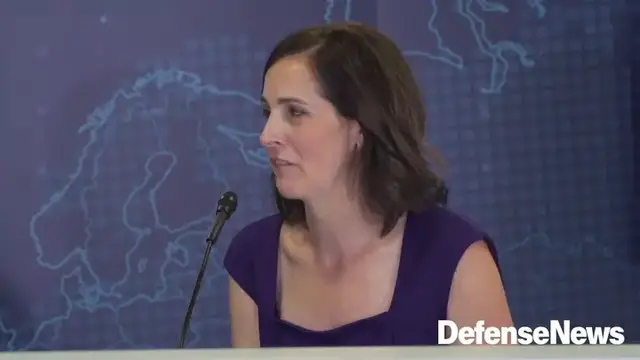
Col. Wade Germann from the Army's 3rd Multi-Domain Task Force talks about how his command has made strides in the Pacific in 2025.
Show More Show Less View Video Transcript
0:00
So you have actually recently completed an exercise in Australia called talisman saber
0:06
Attention, particularly with the first live fire shot of the mid-range capability missile or
0:13
typhoon missile. It's gotten a lot of attention over the last year or so. So talk a little bit
0:20
about what you are learning from, this was deployed in the Philippines, it is now in Japan
0:27
You had it in Australia. What are you learning from deploying the system from the live fire shot
0:35
But, you know, really more just how you're getting it around the Pacific, I think, is really, really crucial here
0:39
So we'd love to hear some of your lessons learned coming out of these deployments so far
0:44
Yeah, absolutely. We'd love to share that. So really, we want to keep these systems employed
0:49
It's the way that we are able to exercise both the system and train our soldiers
0:54
And that's just imperative to making sure that the system is working the way we want it to
0:58
to make sure our soldiers are trained on it and can employ it as fast and efficient as possible
1:03
And so that's what each one of these exercises provides us the ability to do
1:09
As we deploy, as you know how vast the Pacific is, we need to exercise multiple modes and ways to move our equipment and our soldiers around
1:19
And that's one of the things that we always emphasize and train on every time that we're deploying these systems
1:24
So going to Australia, going to Japan, moving the system, whether it's by air, whether it's by sea, watercraft, Army watercraft, or Air Force movement and mobility
1:37
Each time we move it, we learn something new about what the system takes to deploy it, the people, the systems that are integrated with that, how fast we can do that, ways that we can make the technology or the system itself better, more compartmentalized, more mobile
1:53
Every time we do that, that offers us the opportunity to do that. And we train our soldiers on it, and that's the most important piece of that
1:59
because they're the ones that are going to make sure that we can do this and operate it
2:02
It enables us to get where we need to go. What are some of the things that your feedbacks that you're sending to, say
2:10
the program executive officer and those that are continuing to look at what's next
2:15
for mid-range capability or something beyond that? is the system not mobile enough
2:24
What are some of the things that you would like to maybe see changed now that you've had some opportunity to try this out
2:30
Yeah, well, one of the tenets of what the multi-domain task forces are designed to do
2:35
is be fast, employable, and be able to work at that forward edge of the battlefield
2:41
And so to do that, we have to have tough and ruggedized systems. We have to have systems that can be employed rapidly
2:47
and be flexible to move, on the move, keep all the command and control systems going and operating
2:52
And that's what we provide back to the industry and the systems that work with this, and even our own force structure
2:57
How can we be more mobile? How can we command and control the system better and operate
3:02
Does it work in the tough environments that we're moving it, in the deserts, in the jungles, with high humidity
3:09
What does the salt do to it when it's traveling on watercraft across the Pacific for a while
3:14
All of that we provide back to both the industry to make the systems more better and more ruggedized
3:22
as well as, like I said, the way that we operate them we're learning as well, making sure that we employ them the right ways or find better ways to employ them with speed
3:31
Okay. Now obviously mid capability gets a lot of attention but what else did you learn as a task force while you were a talisman and saber What were some of your other focus areas and things that you wanted to learn or goals that you set for yourself for that exercise
3:46
Yeah, so training objectives, obviously, down at the soldier level is number one
3:50
Making sure that our soldiers know how to operate in tough environments and with these systems
3:54
So that's always the first part of it. Basic soldier tasks, making sure that they're tough, that they can work long hours, operate in tough environments
4:01
That's the first and foremost of what we always try and inculcate with our formations
4:05
And we do that every single day. And it starts back at home station before we get on these exercises
4:10
Tough physical PT, making sure that they know their system and know how to operate individually their skill level tasks before we bring them into a collective exercise
4:18
But in operating these exercises, the other thing that we get out of that is operating with our joint forces, the Marines, Air Force, and then our partnered allies across the Pacific
4:29
So getting to work with our partner formation, one of which is the 10th Australian Brigade
4:35
and being able to integrate with them and see how our systems talk to their systems
4:39
make sure we understand their processes, is vital to what we do because we know we're never going to fight alone
4:45
We're always going to be with our joint partners and our allies and partners in the Pacific. Okay. Drawing on that point, I believe it's been maybe over a year since I think Australia and the U.K
4:56
kind of joined forces with you to learn from you on what you're doing with the multi-domain task force unit structure
5:05
Can you talk about how that relationship has evolved, how that played out at Talisman Sabre
5:10
or it's playing out elsewhere in terms of that relationship with those two countries
5:15
Yeah, we have a fantastic partnership, obviously, with our Australian counterparts, and many others as well that we partner with across the Pacific, whether it's the Japan Self-Defense Forces
5:23
inside specifically the third multi-domain task force. We are very fortunate to have five professional embeds from the Australian Army
5:35
that work inside of my formation. And so with the third MDTF, they do planning and exercises
5:40
as well as the targeting piece with what we do. And that exchange is just invaluable so that we can learn fast together
5:49
And then likewise, I have several of my soldiers and officers that are partnered with the 10th Ausbergade
5:55
And what that allows us to do is that these exercises is really come together more quickly
6:00
They know already, and we've trained and rehearsed things before we actually get to the exercise
6:05
so we can execute much faster and much more rapidly. Okay, okay
6:10
There's the Land Effects Coordination Center, I think, that you were able to work through
6:16
in Talisman Sabre. Talk more about the challenges that you're still facing
6:21
in terms of interoperability. What are some of the things that you're still running into, even though this is something you've been working on, but it is so complex
6:28
So where is there still room to grow when it comes to finding interoperability
6:34
Yeah, it's really a fascinating place that we continue to work hard on
6:39
Integrating between multi-nations is always a challenge. So the Land Effects Coordination Center that we have there in Adelaide is one of the things that we're continuing to learn and partner on with our Australian counterparts
6:51
and what that does is provide us a venue by which to both test our systems
6:57
When you're trying to operate multiple systems, multiple capabilities across multiple domains
7:05
that is always very challenging because it not always just the technical solutions you trying to satisfy making sure that the ones and zeros of a system and a computer talk to each other It the interpersonal piece of it making sure we understand their processes Even their language and the terms that they use do they mean the same thing in their army that we use in ours
7:24
So that we're not talking past each other those interpersonal skill sets are just as valuable
7:29
And then of course it is the processes because again when you're working through different
7:33
Domains whether it's the air domain whether it's the cyberspace domain or even in the space domain, authorities matter
7:41
And so making sure we understand the processes to get approvals to do certain effects
7:45
requires us to understand their process to gain authority and then them for same for us
7:52
Transformation and contact is another big buzzword for the Army. But I know that there's been quite a few things that have rolled through the MDTF
8:00
when it comes to transformation and contact. Can you highlight some of the experimental things you have going on
8:05
some of the big pieces that you have that you're evaluating for potential success across other
8:12
formations? Absolutely. So obviously, Transformation 2.0 is a critical enabler for us to be able to
8:20
learn quickly, test out different innovations and systems, learn whether it's going to work for us
8:25
or not, or where we need to improve it, and provide that feedback directly to the Army
8:29
to enable us to continue to get better every single day. Third, Multidomain Task Force is a
8:34
TIC 2.0 unit, and so we're gaining from that advantage all of those systems
8:40
We are really working right now in the space to provide, find those systems and capabilities
8:46
in the sensing area. So we have something that's, you know, as we define what we do, we need to first sense
8:53
Then we need to make sense of all of that information that we gather, and then we need
8:57
to then find an effector for it, so target it in some way, whether it's lethal or non-lethal
9:03
And so from the making sense piece, it's all of the ability for those systems and softwares and partners
9:09
the long-range effect sensors, whether it's a UAS, a high-altitude balloon, we're playing in all those areas to find out what works best for us
9:17
And then a lot of the AI ytics that fuse all that information together quickly and rapidly
9:23
and take it from a data platform and turn it into a targetable information so that we can actually affect it
9:30
That's some of the areas that we're really trying to test right now, and we're growing with a lot of different systems
9:35
Okay. Recently, as part of the transformation initiative, there's an announcement that there will be these multi-domain commands
9:43
There's one multi-domain command Pacific, multi-domain command Japan. Talk about how third multi-domain task force fits in under this potentially
9:54
and how does that change how things are, how you operate within the multi-domain task force
10:01
Yeah, the Army is still making some decisions on what the multi-domain commands will look like formally
10:06
and our alignment as a multi-domain task force underneath those. We know that there will be some form of alignment for us
10:13
It has not been specifically defined for the third multi-domain task force yet
10:17
The Army is still working through that transformation initiative to define what that's going to be
10:22
And there's a number of different COAs, so I won't get in front of the Army on those
10:26
But what I can tell you is that's going to enable us to be more efficient and more effective in the way that we operate
10:32
Again, I go back to the challenge with what we do dealing in multiple domains requires authorities
10:39
and a lot of the ability to affect both targets, lethal and non-lethal, in multiple domains
10:46
And so the multi command structure is designed to make us more efficient Obviously you just wrapped up Talisman Saber and some other pretty major exercises
10:57
but what do you have coming up? I know there's no rest here
11:01
You've got to keep transforming and going. So talk a little bit about what you may have coming up, say
11:07
through Operation Pathways or other exercises that are important to, you know
11:12
your continued experimental and learning part of the MDTF. Yeah, absolutely. As we say, you know, we're always transitioning from one exercise to the next
11:20
We never end. There's never a mission complete for us. So we continue to transition
11:24
There's a series of exercises that we'll be looking at coming forward for Valiant Shield
11:28
from Keen Edge that we'll continue to exercise across the Indo-Pacific with it
11:33
Operations Pathways is essential to what we do. It enables us to get forward, train with our partners and allies and our joint force
11:41
and ensure that we continue to have an opportunity to test physically, mentally
11:48
all of the things that we need to do for both the individual soldiers
11:51
as well as at a collective level for the multidomain task force. You have to be out there operating in the vital space and in the environment
11:58
that we're going to potentially have to fight, and those exercises provide us the opportunity to do that
12:03
You highlighted Valiant Shield. What will you be looking to accomplish as part of that exercise
12:08
We'll be nested inside of the Joint Force with that, and we'll continue to exercise and make sure that we understand how to integrate across all of those domains
12:17
space, cyberspace, air, land, sea, and how we can provide our effects to the joint force
12:23
and contribute from the land to all of those other domains. Where are you in building out the MDTF
12:30
You know, there's different elements in a lot in some situations, like the capability isn't ready yet, it's still in development
12:37
and still under the approval and testing process for the Army. So where are you in saying this portion of the MDTF is nice and built out
12:48
This is what we're waiting on over here. What are some of the places where you feel like you've refined things
12:53
or where you're still waiting on things to fill out? We are still in the middle of our transformation, both from a capability perspective
13:02
as well as receiving and making sure that we have all of the right complements of our force structure that we need to have, whether that's the structure of the formation
13:08
whether that's the capability or the people inside of it. We continue to evolve
13:13
Like I said, from these exercises, we continue to learn more about what we need or require
13:17
to make us most efficient and effective. And these operations provide us the opportunity to get that feedback
13:26
and understand where we're going with that. We have not yet received all of the capability that we would like to have
13:32
and we're working with the Army to make sure that we get that in a timely manner. But we're not waiting
13:37
We continue to be out there and operate with what we have because we don't need to have everything
13:43
and we're not going to wait until we have it all perfect and right. If we do this correctly, we'll never
13:47
We'll always be evolving and getting better, both with the technology as well as the training of our soldiers
13:51
And so we're not waiting until we have the structure exactly right. We're going to continue to execute with what we have and provide that feedback to make us better
13:58
Okay. Is there anything else you'd like to highlight? I'd just like to highlight the tremendous work that all of our soldiers continue to do out and across the Pacific
14:06
They are incredibly smart. They're incredibly physically fit, and we continue to provide everything that we can to the joint force out in the Pacific
14:14
Training with our partners and allies is what we love to do, and we'll continue to do that to keep us safe
14:20
All right. Well, thank you again for joining me here at AUSA. I hope you have a great rest of the show
14:25
Thank you very much. Appreciate being here. Take a travel back to the Pacific. Thank you
#news
#Politics
#World News
#Aerospace & Defense