Up next in 10

China used US military designs to build robot quadrupeds — and now they're taking over
Aug 19, 2026


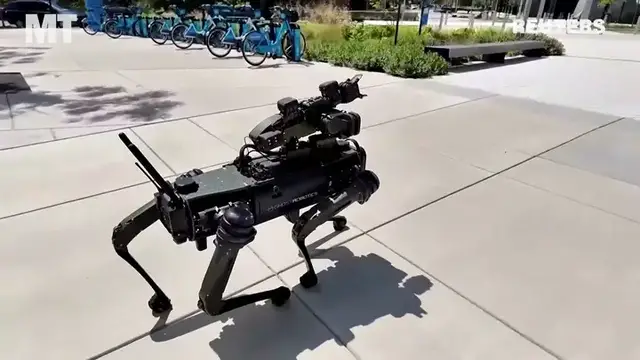
Experts and robotics makers say China used Pentagon-funded work to design robot dogs and then proliferated them beyond U.S. capabilities to keep up.
Show More Show Less View Video Transcript
0:00
China's Unitree Robotics, the world's biggest producer of humanoid and canine robots
0:05
base designs for its most successful four-legged machines on innovations funded by the U.S. military
0:11
According to three top robotics researchers and a former U.S. defense official
0:16
the Chinese company's $1,600 Go-To model, launched in 2023, helped the company rapidly dominate the global quadruped robot market
0:24
The firm's imminent Shanghai stock market debut has drawn frenzied demand. The success of these robots draws on breakthroughs in quadruped movement
0:33
financed by the U.S. Army Research Laboratory and other military programs, the researchers and the former official told Reuters
0:42
That core technology is at the heart of all of the Chinese-legged robots
0:47
that I've actually seen be successful to date. It's a completely different paradigm that we were a part of developing
0:53
as part of our academic careers. There were papers published, and then these papers were very closely studied by Chinese companies like Unitree
1:03
And these principles were put to work and then scaled in an exceptional way using amazing manufacturing and supply chain technology
1:11
to where now you see companies like Unitree and other companies in China are shipping way more legged robots than American companies are
1:19
I think the biggest factor in China's advantage for developing its robotics industry is its massive industrial base
1:29
You know it a vast ecosystem of manufacturing factories and things that provide both kind of demand side support for its robotics industry as well as cheap access to all the components it needs to manufacture those And I think the military side of the robotics ecosystem really is kind of riding on the benefits
1:56
of that much broader commercial ecosystem. And when I look at where the US has fallen behind
2:02
I see that loss and hollowing out of the manufacturing sector as being a really big driver of why
2:09
the kind of corresponding national security applications have fallen behind as well. The episode underscores broader problems with the United
2:18
States' ability to compete with China's state-directed manufacturing sector in high-tech strategic industries, including those critical to national security. Backed by subsidies
2:30
Chinese companies have seized market share across industries such as solar panels
2:34
drones, EVs, and quantum communications, many of which were first developed in the U.S
2:39
with government or military backing. There's no way we're going to do this completely on our own as the U.S
2:46
We need to work closely with our allies. In particular, at Ghost, we work very closely with companies in Korea, in Taiwan, in Japan
2:55
where they have some of this manufacturing and supply chain expertise. So there's absolutely no path forward without them
3:01
I do think that we also have to have a strategic ability to source these products strategically in the U.S. as well
3:09
So I think some amount of strategic supply is going to be critical as well
3:14
and then the ability to service these products. In June, the Pentagon added Unitry to a list of Chinese military companies
3:22
calling it a, quote, contributor to the Chinese defense industrial base. That designation falls short of a sanction
3:29
but limits the U.S. military's future use of Unitry's technology. The PLA did not respond to a comment request
news