0:00
The U.S. Army took a new step recently in the realm of autonomous mine laying
0:04
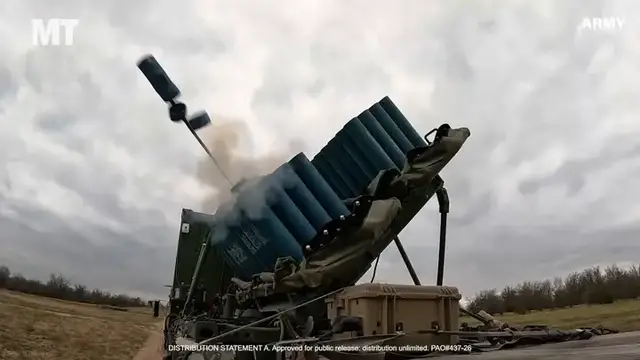
During May demonstrations at Camp Grayling, Michigan, soldiers remotely fired the autonomous volcano for the first time
0:10
before later having it lay two separate minefields without human assistance. The feat was achieved by pairing the service's decades-old volcano mine dispenser
0:19
with a driverless palletized load system truck, an upgrade designed to keep combat engineers out of danger
0:26
The system also automatically logs mine locations and uploads it to the Army's shared battlefield map or common operating picture
0:34
Soldiers from 4th Engineering Battalion remotely fired inert mine canisters from the dispenser in the demonstration's first live-fire scenario
0:42
Then, the system autonomously and simultaneously emplaced two minefields. When mounted to a vehicle, the volcano dispenser can blanket roughly 32 acres with up to 960 mines
0:53
The test represents the Army's latest move to modernize legacy equipment, systems tactics, and munitions with emerging technology
1:01
In the combat engineering world, the Service is experimenting with using unmanned aerial systems
1:06
to drop grappling hooks, and it is trying to send drones—instead of humans—into the breach
1:12
The Army has also tested autonomous vehicles for mortar resupply and autonomous boats for information gathering