Up next in 10



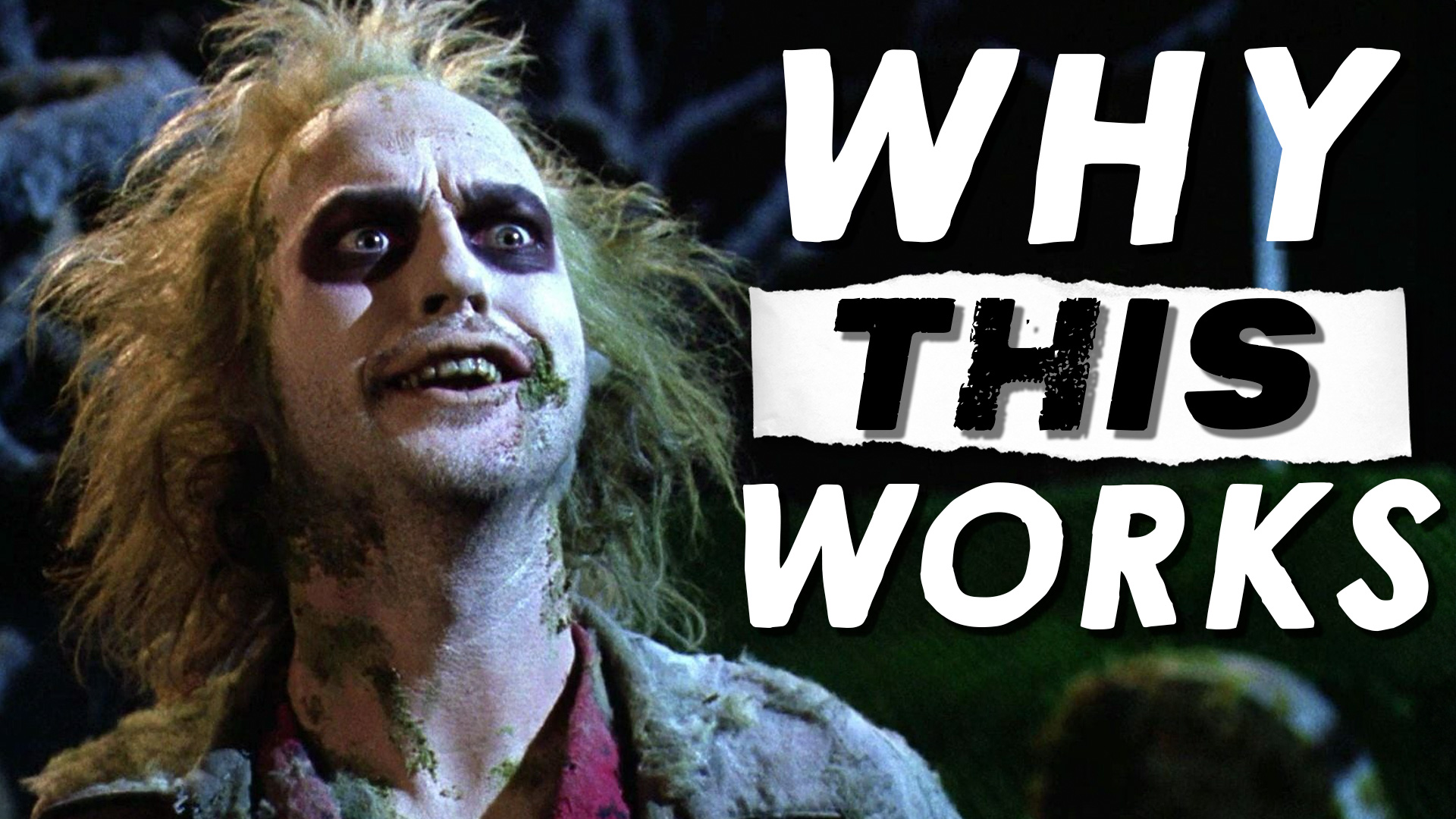
Released in 1988, Beetlejuice remains one of Tim Burton’s most beloved and influential films, earning a massive cult following that has only grown over time. Nearly four decades later, the movie still feels fresh—thanks not only to Michael Keaton’s iconic performance, but to the wildly imaginative world Burton brought to life.
Show More Show Less View Video Transcript
0:00
I've seen The Exorcist about 167 times, and it keeps getting funnier every single time I see it!
0:06
Beetlejuice is a perfect example of a movie that just wouldn't be made today. Its offbeat
0:12
high-concept, garish colors, and wacky characters would seem to be kryptonite to any modern studio exec
0:18
We're very unhappy. What did you expect? You're dead. However, even when it was released in 1988, the film's slapstick comedy and shockingly unique
0:28
visuals knocked audiences on their ears. The film is now viewed as a classic, but how does something
0:34
this jarringly original actually get made? And why does it look like this
0:38
What do you think of this? You like it? Beetlejuice's uniqueness can all be drawn back to one place and one place alone. The visuals. Yes
0:48
the script was interesting, the actors cast superbly, and the score by Danny Elfman is eerie
0:53
and otherworldly. But the most succinct reason to point to in support of the film's enduring success
0:58
is the surprising melding of production design, costuming, and animation which add up to something
1:05
greater than the sum of its parts. The quick and simple answer is Tim Burton. Originally from
1:10
Burbank, California, from a young age he particularly loved the works of English author
1:15
Roald Dahl and Dr. Seuss. I've always been fascinated by things that are fantasy but you
1:20
try to tap into some sort of real feeling with it. He attended CalArts to study animation
1:25
During his time there, he made two short films, Stalk of the Celery Monster and King and Octopus
1:31
The beginnings of his style would shine through in these fledgling efforts, but it wouldn't be
1:35
until Disney hired him and he completed his short film Vincent and his 30-minute featurette
1:40
Frankenweenie that his true creative fingerprints would become immediately recognizable. From the
1:45
black and white otherworldly design aesthetic of Vincent to the loving homages to Mary Shelley's
1:50
iconic horror classic in Frankenweenie everything about these early Burton efforts point back to a central creative influence German Expressionism The movement rejected realism and used distortions and exaggerations to attempt to speak to a
2:04
higher artistic truth. Meaning, the world of the movie doesn't necessarily visually conform to the rules of our own
2:11
Asymmetrical compositions, production design that is more expressive than literal, and outlandish makeup are hallmarks of the movement
2:19
Some notable entries include Cabinet of Dr. Calgary, Metropolis, and Nosferatu. You know, only some of the greatest films ever made
2:25
As you can see, these early films were equal parts experimental and ambitious
2:30
Two words that could be used to describe a lot of the early ovra of Tim Burton
2:34
So ambitious, in fact, that Frankenweenie got Burton fired from Disney. You bunch of losers
2:41
You're working with a professional here! The studio executives had no idea what to make of this childhood retelling of Frankenstein
2:48
and accused him of wasting company resources. But we know differently. We can see that he was striving toward an aesthetic that was just maybe ahead of its time
2:58
After making his big screen debut by directing the feature film Pee-wee's Big Adventure
3:02
Burton began to set his sights on directing something that was more an accurate reflection
3:06
of his inner soul. And when the script for Beetlejuice showed up on his doorstep, he knew he could make
3:11
something special with it. It's showtime. Initially pitched as Ghostbusters in reverse, the story would focus on a recently deceased
3:20
couple trying to expel a living family from their home. And unwittingly enlisting an extra-corporeal
3:33
prankster who might be a little more than they bargained for. But it's the execution of this idea
3:38
that makes it so memorable. The production design, as well as the art direction, would take Burton's
3:43
raw influences and hyper-evolve them into something much more fantastical and unique
3:50
Don't you think I want to die like this? Look at how this crew of creatives used this stew of creative influences in the scene where Beetlejuice is introduced From the brilliant narrative idea of having Alec Baldwin and Geena Davis ghost be sucked into a model to allow for a more surrealistic approach to narrative to the actual way the
4:07
camera booms up, revealing the larger-than-life set. Everything is orchestrated so the viewer is
4:12
slowly eased into an ever-increasingly weird world. Here's the true genius of this sequence
4:17
The American moviegoer in the 1980s is obviously going to be less open to something that is this
4:23
They've had 50 years of watching movies that present a literal reality
4:27
They're conditioned to not be able to accept when something exceeds the limitations of our world
4:32
So what does Burton and company do to offset this? They make the unreality of the film the literal joke
4:38
When the Maitlands are asked by the model itself to start digging, Well, where is he? What do we do
4:46
Looks like we dig, Barbara. They don't plunge their shovels into fresh sod and grass
4:51
They peel back plastic mottled grass and dig through cardboard and particle board
4:55
They're digging into the table itself in order to uncover Beetlejuice's grave
4:59
Are they in a reality in between realities? Yes. And that elasticity of the narrative allows the filmmakers to stretch the laws of physics
5:08
This doesn't make sense on a literal level, even though it absolutely is the most literal way of showing this
5:13
But because the audience can see the fabricated world is literally fabricated
5:17
it allows them to be more open-minded to surreal imagery. This subliminal messaging that everything isn't on the level of a typical movie
5:24
is fully realized when, in his grand entrance shot, Beetlejuice literally flies out of his grave like a Chuck Jones cartoon
5:32
Boy, do you know how to pick up? Let me ask you something. Is this relationship really solid? Do I have a shot at her at all
5:36
Excuse me. Sure. Am I overstepping my bounds? Just help me. Come on. You can see Burton's animation background in full force
5:42
No other director would build a scene like this. And that juxtaposition of strange horror imagery and classic animation visual language
5:49
is what truly has propelled Michael Keaton undead prankster into a perennial classic And Beetlejuice being a classic is nothing short of a miracle Beetlejuice Yes that it Name Beetlejuice
6:02
Ah, use it twice, just say it once more, come on. From the film's cynical origins of attempting to coast off the success of Ghostbusters
6:09
to the fact that the wrong actor cast in the leading role would have capsized the boat
6:13
to the fact that the ambition of the project was large and therefore expensive
6:18
This film just had about everything going against a project that you can
6:22
And even so, it worked. And a large share of that is thanks to the magical pairing of Keaton and Burton
6:28
that really made things work. Yeah, it's definitely trusting a director, though
6:33
I didn't even care about him pulling me back. I just listened to what he was saying and why he was saying
6:39
yeah, that's a good idea. It's Keaton's strange, caustic, gravelly-voiced performance that allows the audience to buy into the world of Beetlejuice
6:47
Are you a ghost too? I'm the ghost with the most, babe
6:52
And according to him, many of the visual ideas for the look of the characters were his
6:57
And I said, I want hair that looks like I stuck my phone in an electrical outlet
7:03
And in the great V-Neil wardrobe, I said, I want mold. Because Tim said he lives like under rocks and stuff
7:09
I said, I want mold somewhere. Of course, Beetlejuice is more than its German expressionist influences
7:15
the visual inspirations and creative fingerprints that Burton figured out through his early short
7:20
films and Beetlejuice are all over many of his most successful films. Has he successfully returned
7:26
to his creative roots? That answer remains far more dubious, with a new direct sequel to Beetlejuice
7:31
that sees Keaton, Burton, and many of the key players returning to the world established so
7:35
long ago, and yet, it's the visuals of the original film, the physical tactility of the
7:40
sets constructed that made it work so well. Who knows? Maybe the new film will look just as good and be amazing, but the fact that we live in an
7:47
artificially constructed digital world inherently contradicts the very reason why the exaggerated
7:53
universe of the first one worked so well
#Comedy Films
#Cult & Indie Films