Up next in 10



Unfortunately, most laws aren't put in place until they have to be put in place (i.e., something bad has happened). Usually, an event causes such a public uproar that legislation is nearly forced into having to enact some kind of law.
Show More Show Less View Video Transcript
0:00
Most laws evolve from a trial and error process
0:03
We don't know we need them until, well, we know we need them, often after something awful happens and people get upset about it
0:10
Public outcry against a perceived threat or injustice is responsible for many of the laws
0:14
that create the working and living conditions we're accustomed to today. And there's a story behind each one of them
0:20
So today, we're throwing the book at the actual origin stories behind major laws
0:25
Okay, legal eagles, let's fly. Ever hear Billy Joel's We Didn't Start the Fire and wonder what that Children of Thalidomide line
0:37
was about? Well, it's about something pretty bad, so brace yourself. Thalidomide is an oral
0:43
medication first introduced in West Germany in 1957 as a treatment for tension, insomnia, anxiety
0:49
and nausea. After initial testing, manufacturers and regulators and doctors felt confident enough
0:54
to promote the medicine to expectant mothers. Soon, the drug was available in 49 countries
0:58
around the world, but not the United States. The Food and Drug Administration, or FDA
1:04
wasn't sold on the testing, especially after some patients claimed they developed nerve damage
1:08
after taking the drug. Despite hesitancy in the US, the medicine sold widely in the rest of the world for five years
1:14
And during this time, it was found that babies born to mothers who took thalidomide during pregnancy
1:19
had a 40% mortality rate and a high incidence of birth defects
1:24
including problems with their eyesight, internal organs, and even flipper hands. Thalidomide was identified as the culprit, but only after it was discovered, thalidomide
1:34
was a chiral molecule, meaning a left-handed molecule of thalidomide was safe
1:39
But its mirror image, a right-handed molecule, behaved much differently and was highly toxic
1:45
Thalidomide was pulled off the shelves, but it's believed that upwards of 5,000 babies
1:49
passed due to their exposure in the womb. In the wake of the tragedy, laws were implemented to ensure that expected mothers and unborn
1:56
babies were considered separately when testing new medications. In 1905, Upton Sinclair wrote
2:03
The Jungle in hopes of drawing attention to the poor treatment of workers in meat plants
2:08
But instead of focusing on the plight of the workers, the public focused on the revelation
2:12
that they were being sold rotten meat containing things like rat droppings, sawdust, and chemicals
2:18
The public outcry was met with the introduction of the Pure Food and Drug Act, which would require
2:21
a stricter regulation of food quality. But whether by accident or political design
2:26
the act was ignored for months. Finally, Illinois Representative James Mann lost his cool, deciding to make his colleagues
2:33
sit and listen to examples of the tainted food that Americans ate every day, including
2:38
in Mann's own words, a bottle of cherries originally picked green in order that they might be firm
2:44
with the green color all taken out with acid until they were perfectly white, and then
2:48
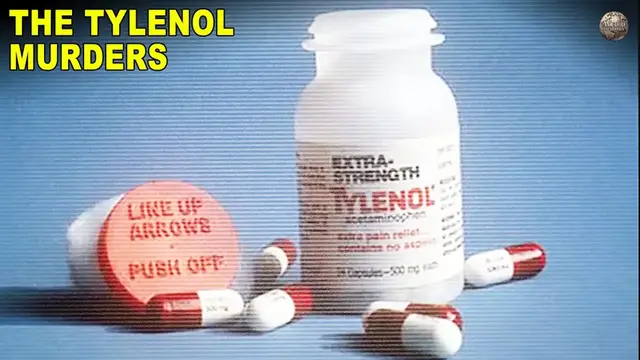
colored with an aniline dye, which is poisonous in any quantity. That was enough to turn Congress stomachs and votes in favor of the act If you were born after 1982 you likely used to the tamper foil seals over each medicine bottle you buy
3:05
But did you know those seals were developed in response to a frightening series of murders
3:10
I mean, I can't actually hear you. But if you said no, keep watching. It all began in Chicago when a 12-year-old girl
3:16
and young postal worker perished suspiciously in close succession. Shortly after, the postal worker's visiting brother
3:23
and sister-in-law were also found deceased. The latter two had mysteriously died
3:27
after complaining of a headache and taking some Tylenol. Upon further investigation, all four people
3:34
had ingested capsules containing cyanide, which had been dropped into their Tylenol bottles
3:39
Within a week, three more people had fallen victim, causing mass panic
3:43
The manufacturer of Tylenol, Johnson & Johnson, quickly ordered a recall of over 31 million Tylenol bottles
3:50
Police eventually figured out that someone had been hand-placing these tainted capsules into Tylenol bottles in Chicago pharmacies
3:56
However, despite a massive investigation, the culprit of the Chicago Tylenol murders
4:01
was never found. But federal laws surrounding product tampering and proper packaging were
4:06
quickly passed. When it comes to unsafe working conditions, miners and their pesky canaries are often at the front lines. This inherent danger was
4:16
highlighted in a damning 1960 report, which stated that veteran uranium miners suffered from lung
4:22
cancer at five times the expected rate. If you think that news would result in immediate action
4:28
we're sorry to disappoint you. Uranium was a highly sought substance, so rather than take any
4:33
kind of action, everyone just kind of decided to do nothing. Public concern finally reached an apex
4:38
after a West Virginia coal mine explosion claimed 78 lives in 1968. Just a few months later, a miner's
4:44
brought attention to another deadly disease, black lung. Finally, in 1970, the Occupational Safety and Health Act
4:52
was passed under President Richard Nixon, carrying strict guidelines for workplace safety
4:59
In 1937, a medicine called sulfamilamide, an antibacterial drug, was found to be successful
5:06
in treating a host of ailments, like strep throat and scarlet fever. But then it was released in a liquid version
5:11
And at the time, the FDA didn't require toxicity testing when a proven existing product was
5:17
offered in a new form. After all, it was the same medication, just mixed with 70% diethylene glycol, or DEG
5:24
which was assumed to be harmless. They ramped up production and shipped out the new liquid
5:29
Unfortunately, as it turns out, DEG is not harmless. It's so dangerous, in fact, that 105 people perished after ingesting the liquid version
5:37
of sulfanilamide. After the medical establishment realized what had happened, they teamed up with lawmakers to
5:43
create a comprehensive overview of drug safety standards. This shifted the FDA to enforcing
5:48
the pharmaceutical safety protocols we know today If something too good to be true it usually is For example in the late 1800s the Carbolic Smokeball Company created a container that clears the nasal passages
6:04
similar to a modern neti pot. Now, that's actually a useful invention. But the company also boasted that their products users
6:10
would be immune to the flu. They even took out a newspaper ad stating
6:14
they would pay 100 pounds to any customer who used the product and still got the flu
6:20
Funny enough, when user Louisa Cargill caught the flu and requested compensation, the company refused payment
6:26
claiming the offer in the ad wasn't legally binding. Unfortunately for them, the British Court of Appeal
6:32
ruled that an advertisement could, in fact, be a binding contract. The case set an important precedent in modern contract law
6:39
that's still relevant today. In 1928, May Donahue met up with a friend at a cafe
6:46
The friend ordered for the both of them, getting Donahue a ginger beer float. After nearly finishing the drink
6:52
Donahue was horrified to find a decomposing snail at the bottom of the glass
6:56
She was treated for gastroenteritis and sued the cafe owner, because Gordon Ramsay's kitchen nightmares didn't exist yet
7:03
The owner argued that since Donahue had not actually purchased the drink herself
7:07
he didn't know her anything. In other words, any proposed duty of care was void since the drink was given to her
7:14
Understandably determined to make sure somebody paid for making her down a bottle of surprise snail juice
7:19
Donahue sued the manufacturer. Since the snail had likely gotten into the ginger beer bottle in the factory
7:25
Donahue's lawyer argued that the company had a responsibility to take reasonable care
7:30
to ensure his products were safe for human consumption. After a four-year battle, Donahue came out victorious
7:37
She was awarded 200 pounds, which is the equivalent of about 9,500 US dollars today
7:42
And thanks to her case, laws regarding corporate negligence and duty of care were enacted
7:47
In 1900, 18% of all American workers were under the age of 16
7:54
So in 1908, a reform group hired sociologist Louis Hine to capture pictures of children working in factories
8:00
mines, and anywhere else he saw fit. While Hine's photos created a public outcry
8:05
attempts to pass child labor legislation, including the Keating-Owen Act of 1916
8:10
were blocked by the Supreme Court. Luckily, depression hit. The Great Depression, that is
8:15
And by the 1930s, the government was so desperate to get out-of-work adults back into the workforce
8:20
they passed the Fair Labor Standards Act, which prohibited children from being employed in mining
8:25
and manufacturing. Best depression ever. On April 28, 1996, Australia experienced its worst-ever
8:35
mass shooting at the hands of 28-year-old Martin Bryant. First, Bryant drove to a cottage and slew
8:42
the owners. He then drove to a popular tourist destination, Port Arthur
8:46
After eating a meal at one of the cafes, Bryant pulled out a semi-automatic weapon
8:50
and took the lives of more than 20 people. The police eventually tracked Bryant to the aforementioned cottage When the dust settled there were 35 deceased and 23 wounded Bryant pled guilty and is now serving 35 consecutive life sentences plus 1 years
9:06
without the possibility of parole. So if you were wondering, yes, he's still in prison
9:11
After the massacre, the Australian government radically changed its outlook on guns
9:15
through the National Firearms Agreement. This agreement includes strict registration protocols, a 28-day waiting period after purchasing
9:22
a gun, and the near total ban of semi-automatic or fully automatic weapons
9:28
Ever been so hungry you could eat one of your friends? Well, in 1884, four men were sailing
9:34
on a yacht from England to Australia when they encountered a nasty storm. The ship went down
9:40
but the men managed to get on a small lifeboat with limited supplies. After weeks of rationing
9:44
a few tins of turnips, the men were desperate. The youngest crew member, 17-year-old Richard
9:50
Parker, took to drinking seawater, and became very ill. So the other three decided to hold a vote on
9:56
whether or not to kill him and eat him for sustenance. And the majority won. Since Parker
10:01
was already sick, had no dependents, and didn't get a vote, he was chosen as the next hot and
10:07
ready meal. The surviving three were rescued a few days later. They candidly explained what happened
10:12
to Parker, believing they were protected by the custom of the sea, an understanding among sailors
10:17
regarding the extreme measures that must sometimes be taken in the face of a shipwreck
10:22
They were very wrong. Two of the sailors were charged with Parker's death
10:26
in a case that set the precedent that necessity does not justify murder
10:31
Despite the court ruling, the public outcry was overwhelming in defense of the sailors' impossible choice
10:36
and they were released from jail six months later. On March 25, 1911, 600 workers, mostly teenage immigrant women
10:46
were inside the New York City Triangle Shirtwaist Factory when a small fire started in a rag pile
10:52
A manager tried to douse it out with a fire hose, but the water valve was rusted shut
10:57
The owners of the factory had a history of burning properties down for the insurance money
11:01
And since they wanted to keep that option open, they refused to install sprinkler systems
11:06
There was only one working elevator, and of the two staircases, one had its ground floor door
11:11
locked from the outside to prevent theft. There was one fire escape
11:16
but it was so narrow it was nearly impossible to navigate. So women started jumping to their doom down the elevator shaft
11:22
trying to escape the fire. Others were trapped in the staircase by the locked doors
11:26
and still others started leaping out the windows. In just 18 minutes, 144 people had perished
11:34
with two more succumbing to their injuries a few days later. But fortunately, the factory owners escaped criminal indictment
11:40
Not only that, while the factory owners paid a mere $75 to the families of each victim, they pocketed $400 in insurance payments themselves
11:49
However, the public outcry and worker strikes led to the implementation of a fire prevention law that still saves lives to this very day