Up next in 10



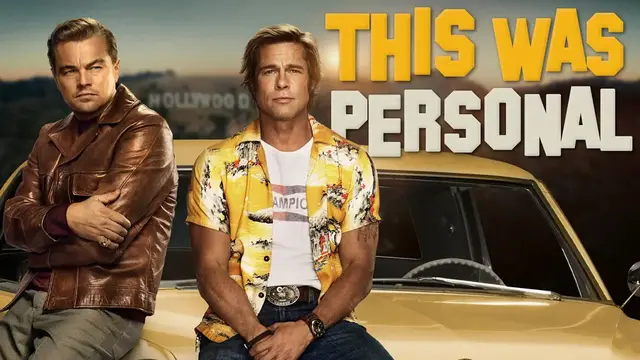
Quentin Tarantino is by far one of the most prolific directors of the last 30 years. Films like Resevoir Dogs, Pulp Fiction, Kill Bill, and Inglourious Basterds have cemented him as a master of genre. But his 9th film, Once Upon a Time in Hollywood is by far Quentin Tarantino's loneliest film. Gone are the genre trappings, and instead there is a story about what he thinks is the Golden Age of Hollywood, wrapped in one of the most gruesome crimes in the towns history. But what exactly makes Once Upon a Time in Hollywood Quentin Tarantino's loneliest films?
Show More Show Less View Video Transcript
0:00
Sounds like a good friend
0:02
I try. Quentin Tarantino's Once Upon a Time in Hollywood is an ode to the importance of having just
0:07
one good friend. The only thing is, this movie, about the supposed unbreakable bond between an aging star and
0:13
his stuntman, is drenched in loneliness. Today, Tarantino is revered and speculated about as much as his films are
0:20
Will he retire after 10 movies? Will he ever get around to making Kill Bill Vol. 3
0:24
Do we really need another footshot in this film? The answers to these questions are anyone's guess
0:29
the only thing that is certain about him is that he loves movies. Tarantino's oeuvre is populated by callbacks, head nods, and homages to just about every period
0:46
in film history. We all know the story about his salad days working at a VHS rental store
0:51
and his supposed encyclopedic knowledge, and his films propel this myth. They're composed of deep
0:55
cut film references, one after another. Django, Inglourious s, and Kill Bill, they're all
1:00
b with references to film history. Some might even say detrimentally so. Because of this
1:05
predilection to become the filmic equivalent of a DJ, most of his body of work has been heavily
1:10
steeped in genre. Crime, Western, Kung Fu, and war films have shaped both his worldview and
1:16
artistic output. I love that stuff, you know, the killing. A lot of killing. But when it comes time
1:20
to produce his ninth film, which centered on the apparatus of the filmmaking industry, he would
1:25
pull out all the stops. This time, he would not be able to rely on any of the genre conventions
1:30
that he typically twists and turns to make his story work. It's immediately apparent that
1:34
Tarantino aspired to do something different with Once Upon a Time in Hollywood. During an Esquire
1:39
magazine interview, he revealed that during the writing process, he used the working title of
1:44
Magnum Opus to refer to his burgeoning epic. Set against the backdrop of the late 1960s
1:49
Once Upon a Time in Hollywood follows an aging movie star, Rick Dalton, and his best friend
1:53
stuntman and literal valet Cliff Booth as they attempt to navigate the seedy underbelly of an industry that is quickly moving on from its golden age It official old buddy And it has been
2:05
On the surface, setting this movie in the late 60s and early 70s might seem like a pure
2:09
nostalgia play for Tarantino, who has spoken at length about how he loves that time period
2:13
But it's not. It's actually core to the thematic underpinnings of the film. Tarantino goes to great lengths to educate the audience about Rick Dalton, his iconic
2:21
alter ego, Jake Cahill, the star of the beloved black and white Western Bounty Law
2:25
Whether you're dead or alive, you're just a dollar sign to Jake Cahill on Bounty Law
2:31
And how Rick is a relic of a bygone era. The two main characters are two halves of
2:35
Tarantino's persona. It's obvious that from an authorial perspective, Cliff is who Tarantino
2:40
wishes he was. And Rick is who he's afraid he actually is. You know what they say
2:45
Every writer's true medium is autobiography. And that truism is pretty accurate here
2:50
Tarantino wishes he could be a blonde Adonis who has a simple job, a loyal dog
2:54
and be cool under pressure. To say nothing of the fact that it's apparent that he loves the aspirational element
2:59
of Cliff's hand-to-hand combat skills. However, that's pretty much the furthest you can get from Tarantino
3:04
Rick, on the other hand, suffers from bouts of insecurity, anxiety, and worries that his time in the sun has passed
3:10
He's got an addiction problem and a stutter that only shows up when he's nervous
3:14
It's with these pulls of the emotional spectrum that Tarantino builds his story
3:18
and where the story he thinks he's telling and the way it comes across diverge pretty significantly
3:23
It's obvious that Tarantino sees the picture as a treatise on film's ability
3:27
to forge meaningful connections, to inspire joy, and to help people connect to one another
3:31
In fact, human connection and friendship specifically is at the root of this film's reason for existing
3:37
There's only one problem. Tarantino's perspective on what makes a friend is skewed
3:41
Rick, I'm your driver, man. I'm your gopher. Tarantino wants us to perceive Rick and Cliff's relationship
3:46
as a friendship for the ages, But it just isn't. Cliff is Rick's employee
3:51
After multiple drunk driving accidents and his license being revoked, Rick literally just pays Cliff to drive him around and fix stuff around his house Now that not to say there can be a connection forged in this environment Over the course of its two and 40 runtime we see Cliff and Rick work in the
4:06
industry, take part in discursive conversations about film, and even just hang out and watch
4:11
TV together. Oh, here I come. Oh, here I come. But there's an unspoken and unobserved power dynamic differential between these two men
4:19
that Tarantino just seems completely oblivious to. You know, that's not my car
4:23
That's my boss's car. And if something were to happen to my boss's car
4:27
well, I'd get in trouble. Tarantino sees these two men as the twin exemplars of a bygone era
4:33
the final paragons of the classic Hollywood way of making films and of a traditional sense of masculinity
4:38
And the time period that the film is set in is crucial to that. The Manson family tragedy
4:42
was a key turning point in the history of American culture. Within Once Upon a Time in Hollywood
4:47
they symbolized the oncoming cynicism, darkness, and corruption that the 70s would be inextricably linked to
4:53
after that fateful day when Sharon Tate lost her life. However, at its core, Once Upon a Time in Hollywood
4:59
is a deeply lonely story written by a man who is essentially writing a laundry list
5:04
for what he wishes he had in a best friend, not an account of having a best friend, mind you
5:09
an extended, man, wouldn't it be cool, game of make-believe. The way male bonding happens in Once Upon a Time in Hollywood
5:15
says more about Tarantino's views on friendship and relationships than it does about the character's actual relationships
5:21
Take the finale of the film, for example. The whole movie has been leading up to this point
5:25
Charlie Manson's followers are going to commit the horrible crime of murdering Sharon Tate and Jay Sebring
5:31
just like it happened in real life. However, due to a series of events, they end up deciding to attack Rick Dalton's house instead
5:37
This doesn't go well for them. They're greeted by Cliff, his dog Brandy, and a decidedly lethal can of dog food
5:43
The point of this balletic display of carnage is, aside from satisfying Tarantino's much-discussed love of hyperviolence
5:49
that the presence of one good friend in your life can change not only your life but the course of history Thanks to Cliff heroic actions Sharon Tate and the rest of her house guests survive Rick Dalton career is resurrected and the course of American history is altered forever What the f happened
6:06
Oh, these f***ing hippie weirdos, they broke into my house. And yet, Tarantino thinks that it's an honorable display of a loyal friendship that
6:15
after literally putting his life on the line for Rick, Cliff asks nothing of his supposed friend
6:20
And Rick just agrees to let his friend spend the night in the hospital alone
6:24
He selfishly stays behind instead of going to the hospital to support the man who saved his wife's life
6:30
and undeniably his own. And what does he have to offer in exchange? You're a good friend, Cliff
6:36
I try. Those are the words of an employer, not an actual best friend
6:41
Once Upon a Time in Hollywood has been celebrated as one of Tarantino's greatest cinematic efforts
6:45
and it is, because it's so personal in absentia. Tarantino thinks he's writing a love letter to the medium that's given him riches
6:53
status, and an artistic output. But in reality, he's writing a journal entry
6:57
about how deeply lonely it is when you're at the top. He's constructed a metaphorical mirror with his film
7:02
that he usually doesn't have the opportunity to with his others. There's no genre trappings to hide behind
7:07
no tropes to burrow into. He's forced to show parts of himself that he wouldn't normally have the narrative real estate for
7:13
which makes this film both deeply sad and compelling to watch. Why does Tarantino give Cliff a tragic backstory
7:19
about possibly murdering his wife? Is that a commentary on the commentary of his penchant for hyperviolence on film
7:25
Why is it that Rick Dalton's best acting is only showcased when a child pierces the veil
7:29
of celebrity and pushes him to take the craft seriously? That was the best acting I've ever seen in my whole life
7:36
These questions and more lurk within the textured and multifaceted folds of Once Upon a Time
7:41
in Hollywood. And yet, it all comes back to the simple fact that at the end of the day, this film is still
7:46
ostensibly Tarantino's fan fiction of what it would be like to have friends
7:50
but not be a friend. Relationships are two-way streets. They require work, responsibility, and care
7:56
They need to be nurtured, but in Tarantino's world, that's not the case