Up next in 10



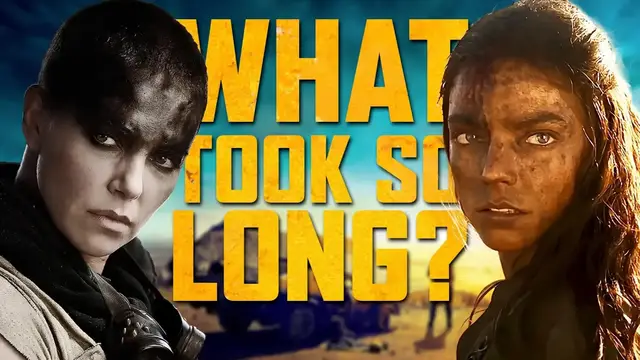
30 Years after George Miller gave us the original Mad Max movies, Fury Road took audiences by storm. Mad Max Fury Road is now considered one of the best films made in the last decade, and one of the best action movies of all time. So why did it take so long for the next installment in George Millers apocalyptic world? And why is he shifting focus from the titular character, Max, to the now beloved Furiosa? Will Furiosa: A Mad Max Saga live up to Fury Road?
Show More Show Less View Video Transcript
0:00
It was hard to know who was more crazy, me or everyone else
0:05
Imagine this. You've returned to a genre-defining franchise 30 years after your last film
0:10
It's critically lauded and beloved by audiences, redefining what an action movie can be
0:15
It becomes a blueprint of how visual storytelling marries with character-driven stakes and plot
0:20
On top of all that, you have ideas for universe-expanding sequels and prequels
0:25
all of which are demanded with open arms by the audience. So why does it take another nine years for the next film's release
0:31
You will ride eternal, shiny, and chrome. Released in 1979 and created by Doctor of Residency George Miller and college friend
0:40
Byron Kennedy, Mad Max was an independent Australian film that pretty much defined the
0:45
post-apocalyptic genre. The first film was set in a near future where society has begun to crumble due to depleting
0:51
resources, where an ex-cop named Max Rokitansky patrolled the wasteland. Due to Miller's experience working in an emergency room, he had a clear idea of what he wanted to see on screen
1:02
Realistic car crashes and gruesome violence. He pictured the film more as a silent feature, partly due to his inexperience as a writer
1:09
and partly due to his love of Buster Keaton and Harold Lloyd. But in order to help with the former, he enlisted the help of reporter and first-time screenwriter James McCausland
1:19
McCausland would work off a one-page treatment written by Miller for over a year until they had a full shooting script
1:24
After working together doing emergency medical calls to raise money for funding
1:29
they recruited real biker gangs and weekend stunt people to shoot a low-budget, high-octane thriller
1:35
And the movie was a resounding financial success. Grossing over $100 million, and thanks to its small budget
1:42
it held the record for profit versus budget until the Blair Witch Project released in 1999
1:47
It was clear the audience wanted more. Do you want to get out of here? You talk to me
1:53
Due to its financial success and Miller passion Mad Max 2 or The Road Warrior was released in 1981 The Road Warrior would be a bigger more ambitious project Louder faster and more self
2:06
the movie was a critical darling when it was released. I could barely sit back in my chair
2:11
I can't think of another film that's as constantly moving as this one is. Tight action scenes, daring stunts that would maybe
2:18
not be legal today, and efficient storytelling took the movie from its pulp origins
2:22
and elevated it into contemplations as to what a mythological figure could be
2:28
That was the last we ever saw of him. He lives now only in my memories
2:32
While 1985's Mad Max Beyond Thunderdome is often maligned as too cartoonish
2:37
it's hard not to see Miller's world building on full display. Two men enter, one man leaves
2:43
Thunderdome. How do I get in there? That's easy. Pick a fight
2:47
Max finds a community in the desert with a titular Thunderdome complete with acrobatic death matches where grudges are settled
2:54
It's easy to understand why this was a harder film to make too, as Miller's co-producer and longtime friend Byron Kennedy
3:00
unexpectedly passed in a helicopter crash in 1983. In speaking with Paul Burns, Miller stated
3:06
So that had a big effect, and I remember sort of feeling this sort of
3:11
this very zombie-like state going through the film. That's hard to judge someone for
3:16
At this point, Miller and Kennedy had built a beloved franchise together
3:19
and Miller was left to now try and figure out how to do this on his own
3:23
We were like filmmaking brothers. While Miller would work on several projects in the interim
3:29
including Happy Feet and the Babe films, the director would finally return in 2015 with Mad Max Fury Road
3:36
Oh, what a day! What a lovely day! Fury Road would be based on an idea he had in the early 80s
3:42
about a movie that was just one chase scene. That's honestly just a wild idea
3:46
but maybe not any more wild than a doctor fashioning a post-apocalyptic film based on the accidents he'd seen
3:53
at work. Much like Mad Max Fury Road paid off in chrome spades It said the script for this film is more like storyboards the movies built from the ground up on visuals and boots on the ground stunt work We there
4:07
While the timeline of Mad Max has always been more abstract, with some folks even believing the Max presented in Fury Road
4:13
is actually the kid from beyond Thunderdome, Miller has never been as much a stickler for continuity
4:18
as much as he is concerned with mythology, and more importantly, how that mythology impacts
4:23
the everyday people in its periphery. Fury Road was a resounding success with both critics and
4:37
audiences grossing over $380 million worldwide, and many critics hailing it as the greatest action
4:44
film ever made. It's a bold claim and a pretty fair one to make. At this point, Miller had
4:49
mastered visual storytelling using shorthand, long takes, and staggering camera work. Each scene is
4:55
textbook ratcheting tension that tightens around the audience's chest as the movie bounces from
5:00
set piece to set piece, each one moment stretched out further than we can possibly imagine while
5:05
still leaving us wanting more. If I'm gonna die, I'm gonna die historic on the Fury Road
5:11
It's easy to think that with such a long gestation period between Fury Road and Beyond Thunderdome
5:16
that Miller would have a myriad of ideas for follow-ups. And he did
5:20
Shortly after the movie's release and overwhelming success, Miller announced Mad Max 5, The Wasteland
5:26
He then surprised us again, quickly announcing a prequel, Furiosa, a Mad Max saga
5:31
But that momentum quickly ground to a halt in 2017. It was announced Miller's production company
5:37
Kennedy Miller Mitchell, was suing the production studio Warner Brothers. In November of that year
5:41
Miller told Sydney Morning Herald, Simply put, The basic argument Miller was making was that they were insured a million bonus if the film came in under budget which it did While Warner Brothers later stated that the movie had not in fact come in under budget and they were promised a PG movie under 100 minutes
6:08
This sort of money shell game is sadly an all too familiar one in Hollywood
6:12
Peter Jackson's well-documented lawsuit against New Line Cinema was a watershed moment
6:16
for a lot of fans when we became privy to the sort of financial manipulation
6:20
large corporations commit in regard to arts and entertainment. In Jackson's case, it was a matter of New Line claiming the Lord of the Rings trilogy
6:28
was somehow never profitable enough to issue royalties to Jackson and company
6:32
But it is another depressing, all too familiar instance of corporations just cutting every corner they're able to in order to have less payouts
6:40
They are not your property! Miss Kitty! You cannot own a human being
6:47
You might not even feel sorry for Miller. What is another $3 million to a man who is a company unto himself
6:52
It is, however, the money that was promised, and the deal that Warner Brothers willingly went into
6:58
Instead, like New Line did to Jackson, they tried to find a way to outmaneuver their agreement
7:03
Also, like with Jackson, Miller's production company settled out of court with Warner Brothers
7:08
In those cases, we're not privy to the exact details other than each has returned to the studio to work again
7:14
But we're much more optimistic Miller is making a more welcome return with Furiosa, a Mad Max saga
7:19
There will always be war, but to get home, Furiosa fought the world
7:24
Making any sort of art is hard. There's emotional stress coupled with creative fulfillment
7:29
personal responsibility to past work, and the financial stress of being able to create what you hope will be meaningful in some sort of way
7:37
Often, artists find themselves working in a machine that is content to grind their bones into money
7:42
just to sweep up the debris and do it again. What we can all hope for the world is that the successes are louder than the machines
7:49
that the revving engines of pure entertainment and popping exhaust of creative fulfillment
7:54
are more powerful than the hungry wallets of corporations. When that fails, at least we've learned you can always sue
#Movies