Up next in 10



Once upon a time, the word blockbuster meant something big — a summer tentpole film with an A-list star, a visionary director, and massive box office expectations. But in today’s streaming era, the term has shifted… and not for the better.
Show More Show Less View Video Transcript
0:00
There's a moment in The Electric State, a sweeping, effects-heavy sci-fi road movie about Millie Bobby Brown
0:05
and a robot that looks like a sentient Keurig where you might feel a strange sense of deja vu
0:11
Not because you've seen this movie before, you haven't, but because you've seen every part of it before
0:16
It's just a movie-shaped product, something built off the bones of ytics and data, and this is the Netflix blockbuster
0:24
There's a formula for writing loglines for movies. Inciting incident plus protagonist plus action plus antagonist
0:31
You can work this for most movies. When a hacker learns he's trapped inside of a simulation
0:35
he must join a rebellion against his computer overlords, etc. Netflix has adapted this into their own Mad Lib movie generator
0:42
Aid list actor plus big budget action premise plus big sci-fi fantasy with snarky humor and or brooding
0:49
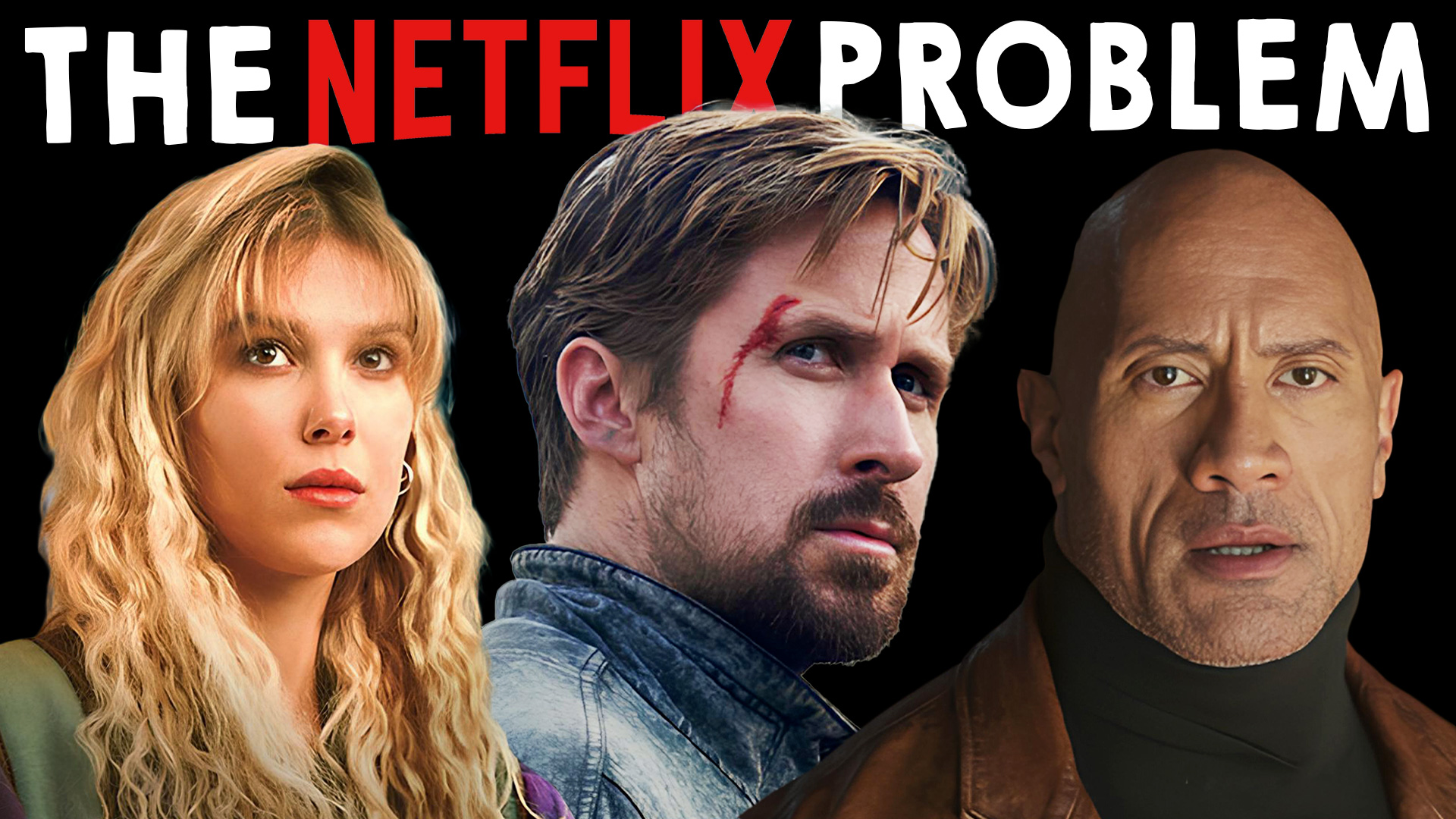
Take Red Notice. A movie starring Dwayne Johnson glaring and Ryan Reynolds snarking
0:53
who stumble around the shaggy plot of a globetrotting heist with eggs
0:57
Interpol, double crosses, triple crosses, and a final twist that feels less like a revelation and more like an obligation
1:03
Do you trust me? Always. Do you love me? Big time. That's all we need
1:11
The entire thing feels like it was storyboarded with sticky notes and assembled in a lab designed to hold your attention for exactly one hour and 58 minutes
1:20
This isn't a new phenomenon exactly. Hollywood has always had formulas. There are entire books dedicated to save the cat story
1:27
structures and beat sheets and hero's journeys. What's new is how hyper precise the Netflix model
1:32
has become. Their user data allows them to tailor content to the exact tastes of their subscribers
1:38
only as audiences, we don't always know what we really want. Legendary record producer Rick Rubin
1:43
once said, the audience comes last. The audience only knows what came before. Think about the
1:47
Gray Man. Ryan Gosling as the silent killer with a tragic past, Chris Evans as the psychotic foil
1:53
with a mustache, and a de Armas somewhere in between. The movie is loud, fast, and visually
1:58
slick, but weirdly hollow. It's not that it's bad, it's just simply a regurgitation of the movies that
2:04
came before it. While it can and should be argued that all art is an amalgamation of influence and
2:10
love, all of that is tempered by authorial life experience and perspective. Hunter S. Thompson was
2:16
not the first writer to ride with the Hell's Angels, but he was at his core himself when
2:21
riding with them Imagine what the Netflix blockbuster of that story is Someone with too sharp of cheekbones quipping about carbs or making a pun about saddlebacks But that is the defining trait of this genre algorithmic inoffensiveness
2:34
Every choice, from the set design to the score to the pace of dialogue, is fine-tuned for maximum
2:39
accessibility. These films are smooth and frictionless. They lack the texture of human
2:53
weirdness. There's no grit, no flavor, just processed entertainment ready to stream. You can
2:59
feel this most acutely in the way these movies treat genre. Bright could have been a gritty urban
3:04
fantasy about race, power, and policing. Instead, it's a buddy cop movie with orcs. Six Underground
3:09
could have been Michael Bay Unchained, but it ends up as a hyper-edited montage of fast cars
3:14
and quippy banter. What's wild is that these movies often have sky-high budgets. Red Notice
3:19
cost a reported $200 million. The Gray Man cost around $250 million
3:24
That's more than Doom, more than Barbie, more than Oppenheimer. But you wouldn't know it by watching
3:29
because despite the expensive CGI, exotic locations, and name brand actors, the end result feels cheap
3:35
not in terms of production value, but in terms of ambition. If there's a singular movie
3:40
that feels like the final polished product of everything Netflix's algorithm-driven blockbuster model
3:45
has been building toward, it's The Electric State, A film that, on paper, had great potential
3:50
Directed by the Rousseau brothers, adapted from Simon Stullenhog's haunting dystopian graphic novel
3:55
starring Millie Bobby Brown, Chris Pratt, Stanley Tucci, and Jason Alexander. The Electric State isn't a bad movie, it's just an empty one, which kind of makes it worse
4:04
It's a greatest hits album of tropes and tones and aesthetics engineered to feel familiar
4:09
It's deja vu, misfiring memory, or one side of the brain processing information before the other
4:14
However you define it, it's something you know in the most boring way possible
4:19
But here's the thing. Stalinhag's original book is not familiar. It's haunting, sparse, tonally ambiguous
4:25
His artwork, which first rose to fame in Tales from the Loop, contains digitally painted scenes of rusting robots and decaying Americana
4:32
It carries the heavy stillness of a civilization already gone. The story is about a girl and her robot traveling across a dying country
4:40
Yes, but more than that, it's about grief, memory, isolation. the strange loneliness of being the last one still dreaming in a place where dreams have already died
4:50
Netflix version throws that out the window almost immediately because wondering about purpose means questioning The electric state doesn want that to get in the way of visuals that work in every way except excitement The dialogue is punchy in that passive Marvel way
5:05
and the world is just big enough to be interesting for two hours and never again
5:13
It's another slice of that post-apocalyptic genre, microwaved and served with a drizzle of, remember that from the 90s
5:19
And yet, it feels like a significant moment. The Electric State is Netflix's gamble to prove that their model can do more than just disposable entertainment
5:28
That it can handle art. That with the right team and hundreds of millions of dollars, it can adapt something visionary and make it work for a mass audience
5:36
But after its release, it reveals just how deep the limitations go
5:41
Where the book is introspective, the movie is plot-driven. Where the original artwork lingers in eerie silence, the film pushes for momentum
5:48
Where Stalinhag gave us robots that felt like sad ghosts from a better time
5:53
the movie gives us merchandisable sidekicks and trailer-ready action beats with cameo voices
5:58
And that's a tragedy, because it didn't have to be. This was source material with teeth, with vision, with quiet rage and overwhelming sorrow
6:05
A story about the slow death of a culture too obsessed with its own decline to notice it was already over
6:11
The movie doesn't engage with that, probably out of fear of being too on the nose
6:15
It's a perfect metaphor for what Netflix does to art. It takes the shape, the outline, the IP, but guts the interior, removes the ambiguity, replaces the mystery with lore dumps, and trades in mood or momentum
6:28
In a way, that's what makes the electric state kind of terrifying. It's not an outlier, it's a misstep
6:33
It's the blueprint. It's the Netflix blockbuster refined to its purest form
6:37
Name brand casting, recognizable aesthetics, big idea made small, art direction without artistic risk
6:43
This isn't just the direction things are going. This is where we already are
6:47
It's easy to imagine a future where every streaming platform has a factory churning out these things, where books, games, comics, and tweets are rapidly optioned, fed through IP to screenplay converters, smoothed out by sensitivity readers and AI story ysts, and rendered in Unreal Engine 9.2
7:05
Directors as figureheads, actors as widgets, movies as tiles. And the electric state, with its aching potential and antiseptic delivery, is the poster child for it
7:15
It should have made us feel something. Instead, it made us feel nothing at all
7:19
There are some people who blame this on what's called the post-cinema era. It used to refer to stepping further away from the movie theaters or multiplex cinemas and watching movies at home or on streaming services There nothing wrong with however you want to enjoy your movies whether that a theater drive phone television or movie in the park on blankets
7:36
What is of concern is who is showing you these movies? Who is pushing them
7:41
In the post-cinema era, the movie itself is no longer the point. What matters is what it does to your engagement cycle
7:47
Does it get you to open the app? Does it keep you watching? Does it trigger the small hit of dopamine when you see a familiar actor
7:53
or hear a familiar story beat. Great, it worked. And according to Hollywood itself, Netflix knows this
7:58
Speaking to The Hollywood Reporter, one writer and director said, I've heard from showrunners who are given notes
8:03
from the streamers that this isn't second screen enough, meaning the viewer's primary screen
8:08
is their phone and their laptop, and they don't want anything on your show to distract them from their primary screen
8:13
because if they get distracted, they might look up, be confused, and go turn it off
8:17
I heard somebody use this term before. They want a visual Muzak. In this world, the electric state
8:22
isn't a story, it's a data point. A combination of recognizable IP, bankable stars, and algorithm
8:28
approved themes. And if it doesn't quite work, if it's just okay, that's fine. Because Netflix
8:33
didn't need it to be great, they just needed you to finish it. That's why these movies feel
8:37
interchangeable. It's not just the casting, it's the visual language, the tone, the pacing. They
8:42
all have the same muted color grading, the same emotional piano trailer music, the same blend of
8:47
jokey quips and serious glances. They're designed to be background proof, pleasant enough to not
8:52
offend, bland enough to not distract. And here's the terrifying part. It's working. These movies
8:57
rack up views. Red Notice had more first-week streams than most major theatrical releases
9:03
The Gray Man reportedly hit 88 million hours watch in three days. But what does that number mean
9:08
In the post-cinema era, success is measured in impressions, not impact. In total watch time
9:14
not cultural relevance. No one cares if you liked the movie, only that you didn't turn it off
9:18
And what's sacrificed in this model is risk, because risk means unpredictability
9:23
It means trusting a director's instincts, letting a scene breathe, following a story into strange or uncomfortable territory
9:29
Risk means faith, and the algorithm has no faith. It only has patterns
9:33
Netflix does still fund auteurs. You'll get the occasional Roma, Beasts of No Nation, The Trial of Chicago 7, or I'm thinking of ending things, but those are the exceptions
9:42
the ceremonial offerings, the main course, the algorithm movie, the autoplay blockbuster
9:48
the clickable content, a world where the future of movies looks more like a menu screen than a marquee
9:54
It's not the end of the world, but it might be the end of something beautiful