Up next in 10



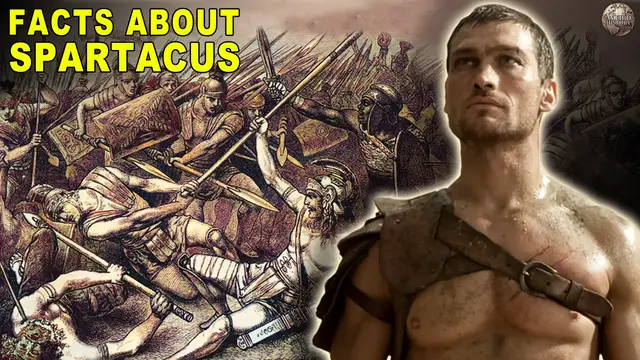
Sure, you might know the famous movie quote "I am Spartacus!," but who was the real gladiator Spartacus? He was a Thracian-born mercenary-turned-probable deserter who was sold into slavery in the first century BCE, becoming a gladiator at a famed school in Italy. In 73 BCE, Spartacus and about 70 of his pals fled their bondage; over the next few years, they gathered tens of thousands of slaves in a conflict against Rome.
Show More Show Less View Video Transcript
0:00
Spartacus was a Thracian-born mercenary-turned probable
0:04
deserter who was sold into slavery in the 1st century BCE and who later became a gladiator at a famed school in Italy
0:12
In 73 BCE, Spartacus and about 70 of his pals fled their bondage and over the next few years
0:18
gathered tens of thousands of slaves to fight in a revolt against Rome
0:22
But who was Spartacus? Well, we're going to tell you. Today, we're going to take a look at some facts
0:29
about the life of the real Spartacus, the gladiator and slave who led an uprising
0:38
Spartacus was born in a country called Thrace, which was an ancient land made up of various chunks
0:42
of what today is southeastern Europe. Almost nothing is known of his early life
0:47
And the classical sources aren't always consistent. But the writer Plutarch hints he may have hailed
0:52
from the Mahdi tribe. It is also believed that Spartacus might have been a soldier in his youth
0:57
And the historian Appian wrote that Spartacus had once served as a soldier with the Romans
1:03
The ancient writer Florus also recorded this version of Spartacus's early life
1:07
Although, whether one writer was merely copying the other can't be known. According to the histories, Spartacus was a paid auxiliary before allegedly turning on
1:15
his former employers. Some ancient sources dubbed him a traitor, bandit, and deserter
1:21
Plutarch also tells us that Spartacus was enslaved along with his wife, who was a prophetess
1:26
from his native tribe. I guess you didn't see that one coming. After turning against his purported former employers
1:32
in the Roman army, Spartacus was captured and sold as a slave
1:36
The Thracian became the property of a school that trained gladiators for combat in the arena
1:40
which was located in Capua, near modern Naples. At the school, which was owned by one Gnaeus Lentulus Batiatus
1:49
Spartacus was trained until he presumably got super buff. He also befriended a couple of fellow gladiators
1:55
named Crixus and Oinemaus, relationships that would serve him well in the future
2:01
The friendships he cultivated weren't the only things that boded well for his future feats
2:05
According to Plutarch, Spartacus's wife saw him sleeping with a snake coiled up on his face
2:10
shortly after his capture in Rome. His wife, a prophetess, declared this unlikely scenario
2:16
the sign of a great and terrifying force which would attend him to an issue
2:21
Whether this story was true or not, a great and terrifying force aptly describes the revolt
2:26
that Spartacus would eventually incite against Rome In 73 BCE understandably fed up with being a slave
2:38
Spartacus and 78 of his peers fled the gladiator school. According to ancient accounts, they were, at first
2:45
armed with only kitchen knives and spits. However, it wasn't too long until they acquired a cache
2:50
of gladiators' weapons, including swords and tridents. The small band fled Capua, to the slopes of Mount Vesuvius
2:57
which would explode and coat Pompeii in molten lava about 150 years later
3:02
Over time, Spartacus and his initial group of rebels would rally more slaves to their cause
3:08
He became not only a symbol of freedom, but also of Rome's corrupt political system
3:13
In the two years after his initial escape and flight to Vesuvius, Spartacus' army swelled to include almost 90,000 disaffected slaves from all over Italy
3:22
During this time, Rome sent several military forces to defeat Spartacus. But against all odds and predictions, the wily Thracian was able to beat them all
3:32
The first Roman leader to fall to the slaves was Praetis Clodius Glauber
3:37
who probably didn't think much of the rebel forces, regarding them more as disorganized no-accounts than an army
3:43
Spartacus and his forces were besieged on a vine-covered hill, but they escaped by climbing down the vines
3:49
Then, they attacked the rear of the Roman camp, and in doing so, they were able to defeat Glauber
3:55
Next up against Spartacus was Praetor Publius Varinius. By the time he arrived on the scene, Spartacus and his rebels had already defeated 2,000 men
4:05
led by Varinius' legate, Lucius Furius. This, ahem, fast and furious defeat made Varinius split his forces and lose the battle
4:15
Spartacus captured him and then had a little fun by parading Varinus naked through camp
4:20
The final campaign before the end was a giant consular force. Spartacus had become quite formidable by this point, and his army had learned to make its own
4:29
weapons. Two consuls went up against Spartacus, who squashed both of their armies
4:38
After defeating the Roman consular armies, Spartacus aimed to get his soldiers back to
4:43
their homes, so he headed north. He chose north because the south was controlled by the Roman
4:48
military, so he couldn't sail from there. Why Spartacus and his troops didn't try to pull a
4:53
Hannibal and escape Rome by crossing the Alps is one of the great mysteries of history. Had they
4:57
headed over the mountain they might have been home free Once they were clear of the Italian peninsula it is believed that Spartacus planned to disperse his army and all slaves would be on their own to get home as best they could But Spartacus soldiers possibly experiencing
5:11
a surge of confidence because of their many victories, seemed to be less interested in going home
5:16
than they were in getting rich, pillaging the land around them, and wasting time wreaking havoc throughout Italy
5:22
Since his Alps plan didn't work, Spartacus changed tactics, and instead tried to get to the Italian coast
5:28
so he and his men could sail away. He even seized an entire southern town in the hopes of providing
5:34
a safe haven to sail to Sicily, an island full of disaffected slaves who possibly could be
5:39
persuaded to join the rebels. It was at this point that, in pursuit of the Sicilian goals
5:45
Spartacus made a deal with the devil, or devils. He forged an alliance with Cilician pirates
5:51
groups of sea bandits from Asia Minor who had ravaged the Mediterranean coastline for decades
5:56
and who wanted to establish a base on Sicily so they could plunder Italy itself
6:01
The pirates could, in turn, help Spartacus sail into the sunset. Spartacus got to the Strait of Messina around 71 BCE, but all wasn't as it seemed
6:11
In fact, the Cilician sailors didn't show up to ferry the army across to Sicily
6:15
as they had promised. Something had gone horribly, horribly wrong. The pirates may have been bought off by the Romans or just given up
6:23
No one knows why the deal fell through, but it did. and it was very, very bad news for Spartacus and his army
6:37
Once the pirates betrayed him, Spartacus was in a bad spot, and he was quickly confronted by Marcus the Quineus Crassus
6:45
Rome's richest man and an important political figure. Crassus brought eight legions and even revived the long-abandoned practice of decimation
6:53
which entailed executing every 10th man in two of the units who'd been previously defeated by
6:58
Spartacus. Why did Crassus kill his own men? To send a pretty stern message. He wanted it to be
7:05
crystal clear that another defeat would not be tolerated. Spartacus knew Crassus meant business
7:10
so he offered to make a peace treaty with the Roman, which Crassus rejected. To inspire his
7:16
own troops, Spartacus crucified a Roman soldier in front of them. After barely escaping some of
7:21
Crassus' traps and losing some men to a rebellion, Spartacus faced off with Crassus in 71 BCE
7:28
Ultimately, Roman troops overwhelmed Spartacus soldiers especially his key cavalry Spartacus himself perished in the battle After the ultimate battle Crassus decided to make an example of the rebels so that Rome slaves who drove the imperial economy would learn a lesson
7:45
To accomplish this, he crucified 6,000 of Spartacus' soldiers along the Appian Way between Capua and Rome
7:53
While Stanley Kubrick's 1960 film Spartacus, which starred Kirk Douglas as the titular rebel
7:58
depicted Spartacus among those crucified, he was not, in fact, among them
8:02
The historian Appian of Alexandria records that Spartacus' body was never found
8:13
We don't know a great deal about Spartacus' real-life wife, but the facts we do have indicate she was a formidable lady
8:19
Although later fictional versions have dubbed her Varinia, we don't actually know her real name since the ancients left that part out of their histories
8:27
Our one big source for her is Plutarch. What is known is that his wife was from the same Thracian tribe as her husband
8:34
and was also a priestess of Dionysus, and a prophetess. According to Plutarch, she became possessed by the god Dionysus
8:41
and foretold that Spartacus would have a great and terrible power, which would end in misfortune
8:47
Spartacus's fight against the Romans may not have liberated his army or ended the institution of slavery in Rome, but it did inspire later heroes
8:55
For example, in the 18th century, Toussaint Louverture fought the French to free what would
9:01
later become Haiti from its imperial overlords, as well as to abolish slavery. A truly inspirational
9:07
figure then and now who defeated his French enemies to declare freedom, Louverture sadly
9:12
died in French captivity, but his legacy lives on. His impressive life even earned him the nickname
9:17
the Black Spartacus. According to historian and author Barry Strauss, the story of Spartacus and
9:23
his army is quite a bit more complex than often comes through in Hollywood retellings of the tale
9:28
For one thing, Spartacus and his men were both good and bad. On the one hand, the slave army
9:33
was fighting for their own freedom, which we can all probably agree was a noble cause. But they
9:38
were also pillaging and destroying innocent people's homes and lives as they rampaged up
9:42
and down Italy, even after they had the chance to escape, which most of us would consider slightly
9:48
less noble. In addition, it's difficult to make the claim that Spartacus was motivated to lead the
9:53
revolt because he had the intention of ending slavery in Italy. In fact, not a single ancient writer even suggests that Spartacus cared about ending the
10:01
practice of slavery. And while most modern historians haven't spent time specifically trying to contradict
10:05
this idea, few have put forth any evidence that suggests this was his purpose
Movies
Social Issues & Advocacy
Social Sciences